
 ARIES
 CURT
 LUVERNE
 UWS





Types of Trucks: Understanding the Differences
From weekend DIY projects to commercial construction sites, trucks are built to accomplish one thing: move people, equipment, and materials efficiently. However, not all trucks are designed for the same purpose. Some are engineered for everyday commuting with occasional hauling, while others spend their lives towing heavy machinery, transporting freight across the country, or supporting specialized industries.
Understanding the different types of trucks helps buyers choose the right vehicle for their needs while also making it easier to select the right accessories, including truck tool boxes and storage solutions that improve organization and productivity.
Although there are dozens of truck designs, most fall into three primary categories based on their size and intended use:
- Light-duty trucks
- Medium-duty trucks
- Heavy-duty trucks
Within those categories are several different pickup truck types, commercial vehicles, and specialty applications. This guide explains how trucks are classified, what separates each category, and how various tool box options complement different truck configurations.
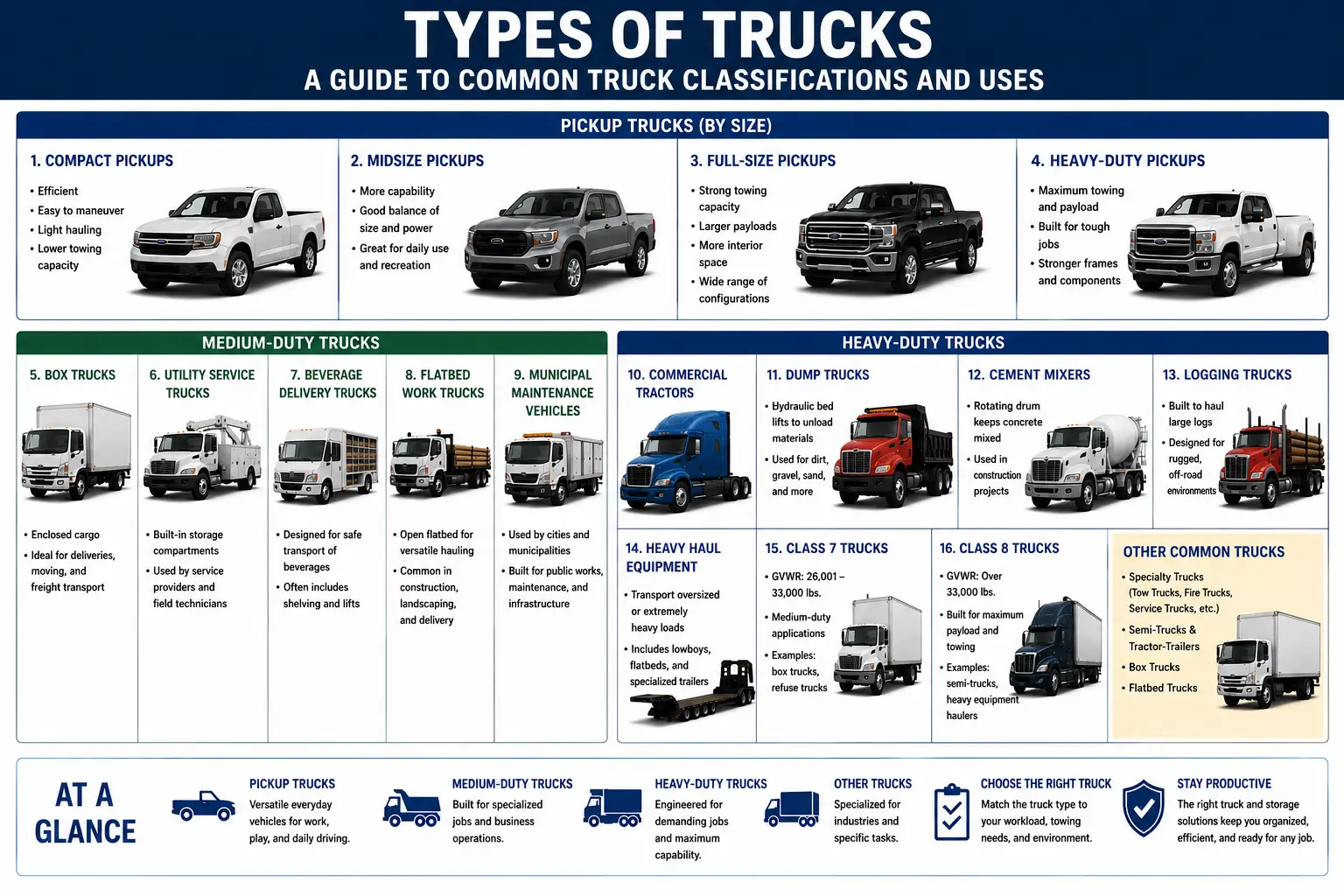
- How Trucks are Classified?
- Why Truck Class Matters
- Pick-Up Trucks The Most Versatile Truck Type
- Types o Pickup Trucks By Size
- Pickup Truck Configurations & Capabilities
- Bed Lengths & Styles
- Drivetrain Options
- Electric Pickup Trucks
- How Configuration Affects Storage
How Trucks Are Classified
When people discuss trucks, they often refer to them as half-ton, three-quarter-ton, or one-ton pickups. While these descriptions remain common, manufacturers and regulators actually classify trucks using their Gross Vehicle Weight Rating (GVWR).
GVWR represents the maximum allowable weight of the truck, including:
- The vehicle itself
- Passengers
- Cargo
- Fuel
- Accessories
- Tongue weight or trailer pin weight where applicable
This classification system places trucks into eight different classes.
| TRUCK CLASS | GVWR (lbs.) | TYPICAL APPLICATIONS |
| Class 1 | Up to 6,000 | Compact pickups, small utility trucks |
| Class 2 | 6,001 - 10,000 | Half-ton and many three-quarter-ton pickups |
| Class 3 | 10,001 - 14,000 | One-tone pickups, chassis cabs |
| Class 4 | 14,001 - 16,000 | Delivery trucks, service bodies |
| Class 5 | 16,001 - 19,500 | Utility and vocational trucks |
| Class 6 | 19,501 - 26,000 | Box trucks and larger work trucks |
| Class 7 | 26,001 - 33,000 | Dump trucks, refuse trucks |
| Class 8 | 33,001 and above | Semi-trucks and tractor-trailers |
These classes help determine:
- Payload capacity
- Towing capability
- Licensing requirements
- Commercial regulations
- Equipment compatibility
While truck class is important from an engineering perspective, most consumers shop based on vehicle type rather than GVWR. That's why pickup trucks remain one of the most popular categories in North America.
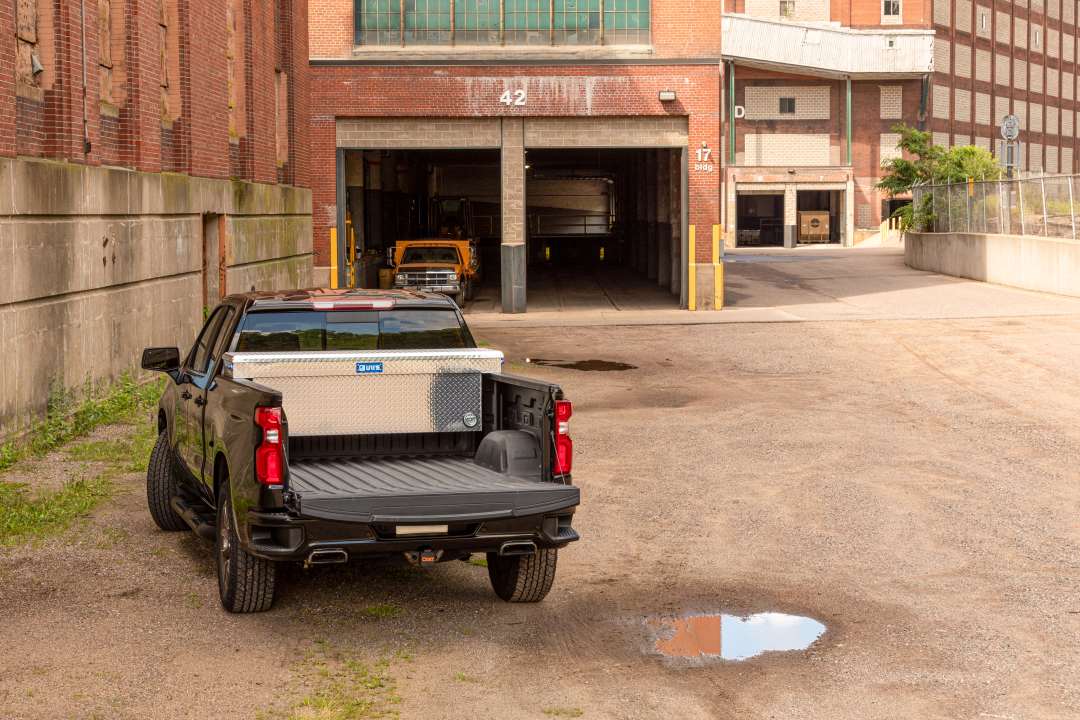
Light-Duty Trucks
Light-duty trucks are the most common trucks on the road today, combining everyday drivability with the capability to handle a wide range of hauling and towing tasks. Designed to be comfortable enough for daily commuting while remaining practical for work and recreation, they have become the go-to choice for homeowners, contractors, outdoor enthusiasts, and families alike.
They typically include:
- Compact pickups
- Midsize pickups
- Full-size half-ton pickups
- Some three-quarter-ton trucks
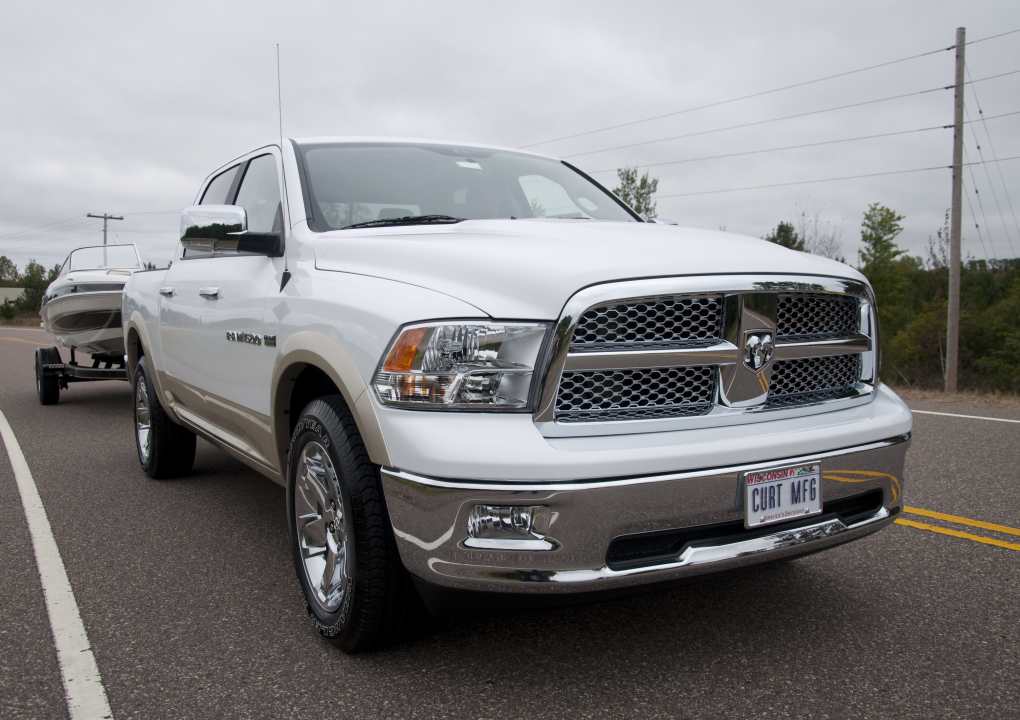
One of the biggest advantages of a light-duty truck is its versatility. It can serve as a daily driver during the week and then tow a boat to the lake, haul landscaping materials, or transport camping gear on the weekend. For many owners, a single truck replaces the need for multiple specialized vehicles.
Common uses include:
- Landscaping
- Home improvement
- Boat towing
- Camping
- Daily commuting
- Small business operations
Modern light-duty pickups also offer a wide range of configurations, including multiple cab styles, bed lengths, and drivetrain options. This flexibility allows buyers to choose a truck that fits their specific lifestyle and workload without sacrificing comfort or capability.
Because these trucks feature an open cargo bed, storage and organization are often important considerations. Loose tools and equipment can shift during transit, become damaged by the elements, or be vulnerable to theft. As a result, many owners add accessories such as crossover tool boxes, low-profile tool boxes, or wheel well storage systems to keep essential gear secure, organized, and easily accessible while preserving valuable bed space.
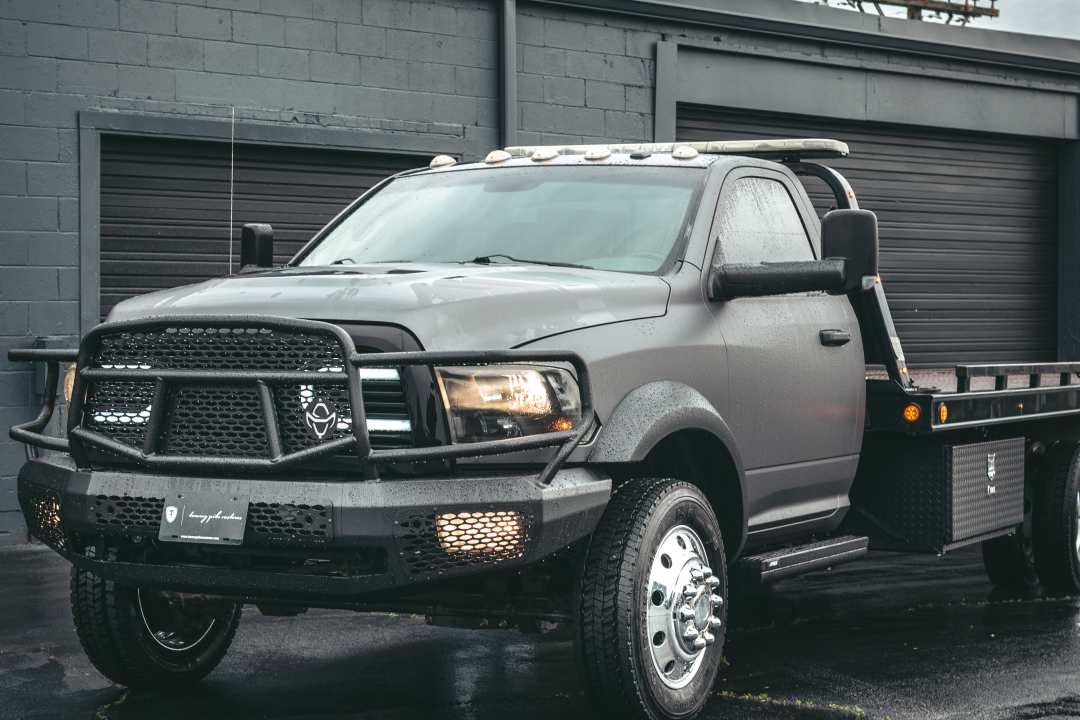
Medium-Duty Trucks
Medium-duty trucks fill the space between everyday pickup trucks and large commercial heavy-duty vehicles, offering greater payload capacity and specialized functionality without the size of a semi-truck. Built to handle demanding workloads, these trucks are commonly used by businesses, municipalities, and service professionals that need to transport both equipment and personnel efficiently.
This category often includes:
- Box trucks
- Utility service trucks
- Beverage delivery trucks
- Municipal maintenance vehicles
- Flatbed work trucks
- Chassis cab trucks equipped with specialized bodies
Unlike consumer pickups, medium-duty trucks are frequently designed around a specific job or industry. Rather than using a standard pickup bed, they may feature enclosed service bodies, flatbeds, refrigerated cargo boxes, or custom equipment compartments tailored to their application. The result is a vehicle that serves as a dedicated work platform rather than simply a means of transportation.
Medium-duty trucks are widely used by:
- Electricians
- Plumbers
- HVAC technicians
- Telecommunications crews
- Landscaping companies
- Utility providers
- Municipal and public works departments
These vehicles offer significantly greater carrying capacity than most pickup trucks while remaining compact enough to navigate city streets, residential neighborhoods, and busy jobsites. Their ability to transport large quantities of tools, replacement parts, and specialized equipment makes them invaluable for businesses that rely on efficiency in the field.
To maximize productivity, medium-duty trucks are often equipped with storage solutions such as:
- Side-mounted tool boxes
- Underbody tool boxes
- Integrated service bodies
- Ladder racks
- Lockable equipment compartments
- Shelving and drawer systems
Because these trucks essentially function as mobile workshops, organization is critical. Properly designed storage systems keep tools protected from weather and theft while allowing technicians to quickly locate the equipment they need. This improved organization can reduce downtime, streamline workflows, and help crews spend more time completing jobs and less time searching for supplies.
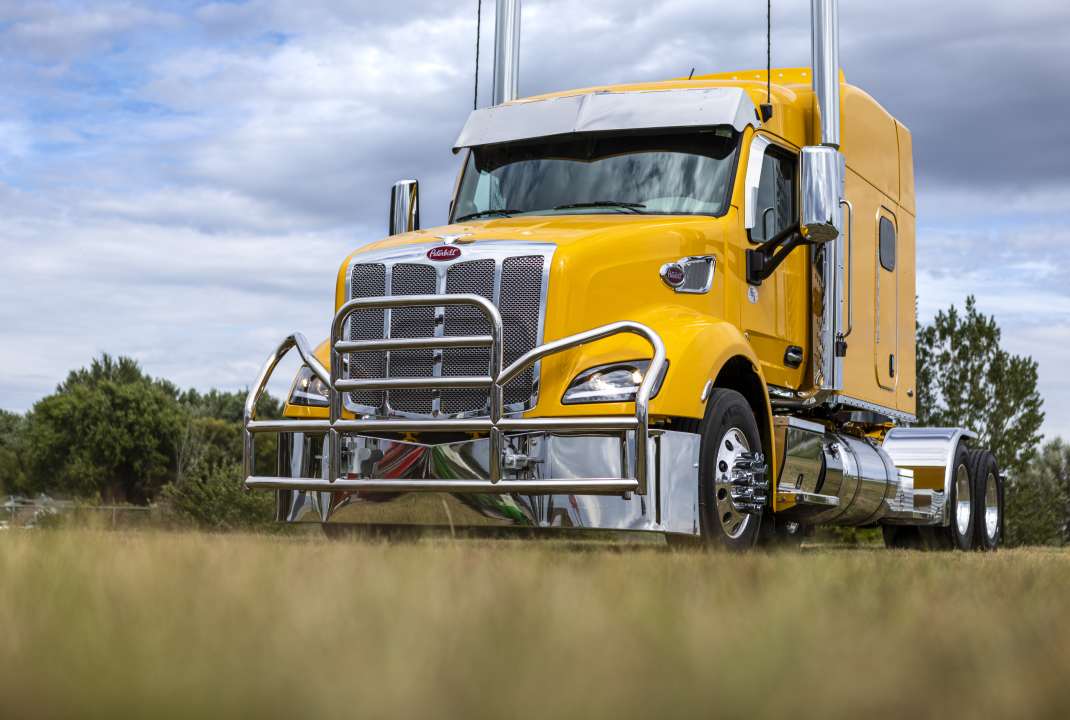
Heavy-Duty Trucks
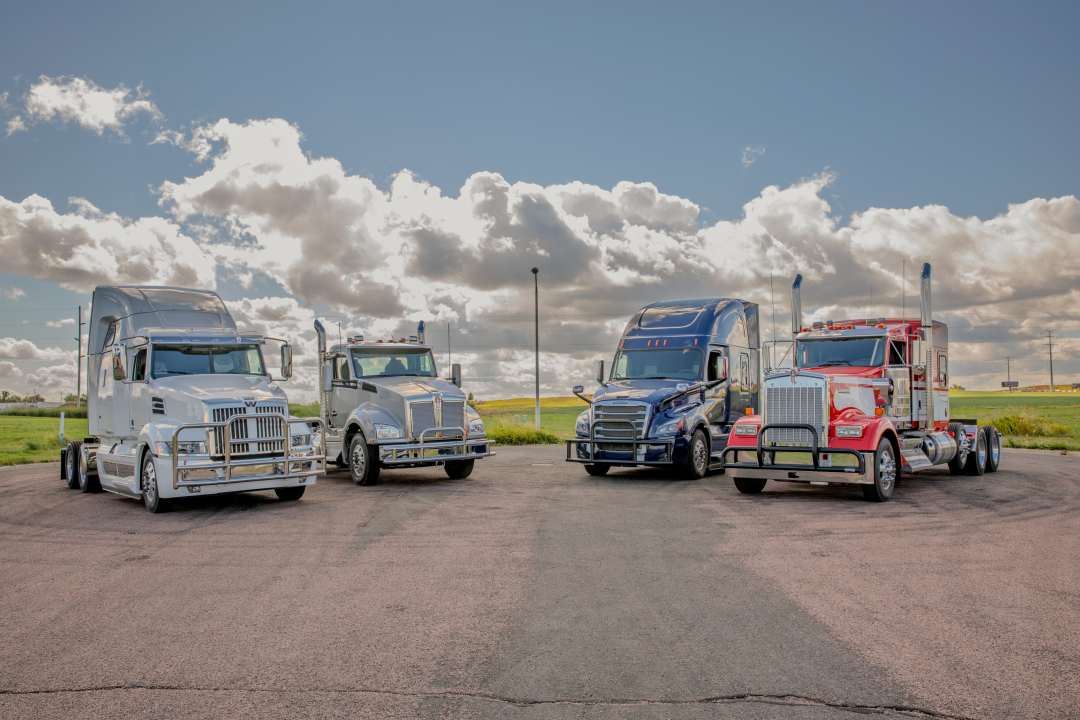
Heavy-duty trucks are built for the toughest jobs and the highest workloads. Engineered for maximum strength, durability, and towing capability, these vehicles are designed to transport massive loads, operate in demanding environments, and withstand the rigors of daily commercial use. When a job exceeds the capabilities of a light- or medium-duty truck, a heavy-duty truck is often the solution.
This category includes:
- Commercial tractors
- Dump trucks
- Cement mixers
- Logging trucks
- Heavy haul equipment
- Class 7 and Class 8 vehicles
Unlike consumer-oriented pickups, many heavy-duty trucks are purpose-built for specialized industries such as construction, mining, agriculture, freight transportation, and energy production. They are designed with reinforced frames, powerful diesel engines, heavy-duty suspensions, and advanced braking systems that enable them to safely move extremely heavy loads over long distances or through challenging jobsite conditions.
Heavy-duty trucks play a critical role in industries that require transporting large equipment, bulk materials, or commercial freight. Common applications include:
- Long-haul freight transportation
- Construction and infrastructure projects
- Mining and logging operations
- Agricultural production
- Oil and gas operations
- Municipal and industrial services
While commercial Class 7 and Class 8 trucks represent the upper end of this category, many heavy-duty pickup trucks blur the line between consumer and commercial vehicles. One-ton and dual rear wheel (dually) pickups offer impressive towing and payload capacities while remaining practical enough for daily use, making them popular among contractors, ranchers, and RV owners.
These heavy-duty pickups are frequently used to tow or haul:
- Large equipment trailers
- Horse trailers
- Gooseneck trailers
- 5th wheel RVs
- Agricultural equipment
- Heavy construction materials
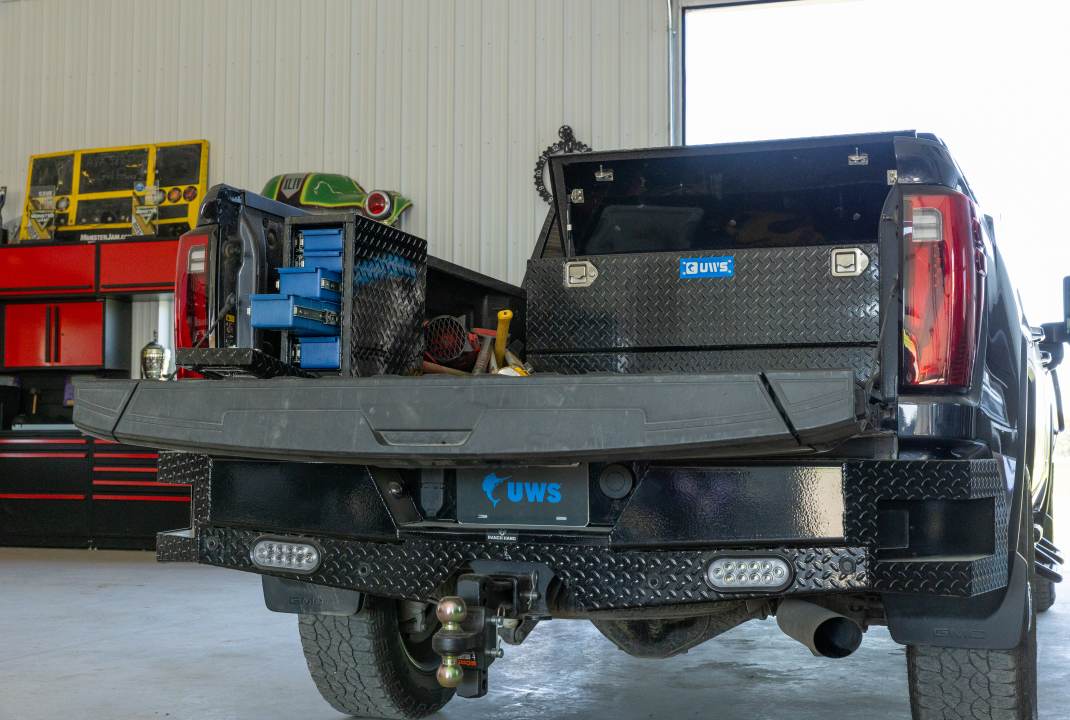
Because these trucks often serve as mobile work platforms, storage and organization are essential. Operators may carry expensive tools, recovery gear, chains, straps, hydraulic equipment, and replacement parts that need to remain secure and readily accessible. As a result, many heavy-duty trucks are equipped with durable storage solutions such as crossover tool boxes, underbody tool boxes, integrated service bodies, and specialized equipment compartments.
In harsh environments where downtime can be costly, a well-organized storage system helps protect valuable equipment from weather, theft, and damage while allowing operators to work more efficiently and keep projects moving.
Why Truck Class Matters
Truck classification is more than an engineering specification or a number listed on a manufacturer's data sheet. It serves as an important indicator of a truck's capabilities and helps determine how much weight it can safely carry or tow. Understanding truck classes allows buyers to choose a vehicle that matches their workload while avoiding performance issues and unnecessary wear.
Selecting a truck that is too small for the job can lead to a variety of problems, including:
- Insufficient payload capacity
- Reduced towing performance
- Excessive wear on the suspension and brakes
- Poor handling and stability
- Increased maintenance costs
- Regulatory compliance issues for commercial fleets
On the other hand, purchasing a truck with significantly more capability than necessary may result in higher operating costs, reduced fuel economy, and a less comfortable daily driving experience. The goal is to find a truck that provides the right balance of capability, practicality, and efficiency.
Truck class also influences the types of equipment and accessories that make sense for a vehicle. For example, a light-duty pickup used for home improvement projects may only require a crossover tool box for basic storage, while a heavy-duty work truck may benefit from multiple storage compartments, ladder racks, or integrated service bodies.
Ultimately, understanding truck classifications helps buyers make informed decisions based on payload, towing requirements, intended use, and long-term operating costs. For many consumers and small businesses, the ideal solution falls within the pickup truck segment, offering impressive capability while remaining comfortable and practical enough for everyday driving.
Pickup Trucks: The Most Versatile Truck Type
When most people think about the different types of pickup trucks, they picture a passenger cab paired with an open cargo bed. While the design is relatively simple, it has made pickup trucks one of the most versatile and adaptable vehicles on the road. They are equally at home commuting to work, towing a trailer, hauling construction materials, or heading out for a weekend camping trip.
Unlike enclosed cargo vans or SUVs, pickup trucks can easily accommodate oversized or irregularly shaped items that would otherwise be difficult to transport. Common examples include:
- Lumber
- Landscaping materials
- ATVs
- Motorcycles
- Furniture
- Construction supplies
The open bed also makes loading and unloading faster and allows owners to customize the truck for their specific needs. A pickup can serve as a basic transportation vehicle one day and a fully equipped mobile workstation the next.
One of the biggest reasons for the popularity of pickups is the enormous selection of aftermarket accessories available to increase their functionality. Owners can tailor their truck with products such as:
- Tool boxes
- Bed covers
- Ladder racks
- Bed slides
- Cargo management systems
- Fuel transfer tanks
These accessories allow the same truck to support a wide variety of jobs and hobbies while improving organization, security, and efficiency. A contractor may install a crossover tool box to secure expensive tools, while an outdoor enthusiast may add a bed cover and cargo management system for camping gear and recreational equipment.
This modular design enables one vehicle to perform many different roles throughout its lifetime, from family transportation during the week to towing equipment or hauling materials on the weekend. Because of that flexibility, pickup trucks continue to be a favorite choice for homeowners, contractors, farmers, municipalities, fleet operators, and countless other users who need a vehicle that can adapt to changing demands.
Types of Pickup Trucks by Size
Not all pickup trucks are created equal. Manufacturers offer several different sizes to accommodate a wide range of lifestyles, budgets, and workloads. While every pickup shares the same basic design of a passenger cab and open cargo bed, the size of the truck has a significant impact on its towing capacity, payload, maneuverability, and overall functionality.
Understanding the different pickup truck types can help buyers choose a vehicle that matches their daily driving habits while providing the capability they need for work or recreation.
Compact Pickups
Compact pickups are designed with efficiency and maneuverability in mind. Their smaller footprint makes them easier to drive through crowded city streets, fit into parking garages, and navigate tight job sites or trails. They also tend to be more affordable than larger trucks, both in purchase price and operating costs.
Compact pickups typically offer:
- Better fuel economy
- Easier parking and maneuverability
- Lower purchase price
- Light hauling capability
These trucks are well suited for urban environments and drivers who occasionally need the utility of a truck without the size of a full-size model. They can comfortably handle home improvement supplies, bicycles, small trailers, and everyday cargo, though they generally offer lower towing and payload capacities than larger pickups.
For owners looking to maximize limited bed space, compact trucks often benefit from space-efficient storage solutions such as low-profile or compact crossover tool boxes.
Midsize Pickups
Midsize pickups have become increasingly popular over the past decade, offering a balance between everyday drivability and serious capability. Many buyers appreciate that they provide more towing and hauling performance than compact trucks while remaining easier to maneuver than full-size pickups.
Common uses include:
- Weekend recreation
- Small trailer towing
- Camping
- Hunting
- Home improvement projects
- Light commercial work
For many outdoor enthusiasts and homeowners, a midsize pickup offers the versatility to tackle weekend projects while serving as a comfortable daily driver during the week.
Their beds are often well suited for crossover or low-profile tool boxes that provide secure storage without sacrificing valuable cargo space. Additional accessories such as bed covers and cargo management systems can further improve organization and versatility.
Full-Size Pickups
Full-size pickups represent the largest segment of the pickup truck market and have become the benchmark for balancing comfort, capability, and versatility. They are available in a wide range of cab configurations, bed lengths, engine options, and trim levels, allowing buyers to customize a truck for nearly any application.
Full-size pickups offer an excellent combination of:
- Comfortable interiors
- Strong towing capability
- Large cargo beds
- Extensive aftermarket support
These trucks are commonly used by contractors, small business owners, farmers, and families who need a vehicle capable of handling demanding work while remaining comfortable enough for everyday transportation.
One of the greatest advantages of a full-size pickup is the enormous selection of aftermarket accessories available. From ladder racks and bed covers to cargo organizers and truck tool boxes, owners can easily customize the truck to fit their specific workflow. For many tradespeople, pairing a full-size pickup with a quality crossover tool box creates an efficient mobile workstation that keeps tools secure, organized, and easily accessible.
Heavy-Duty Pickups
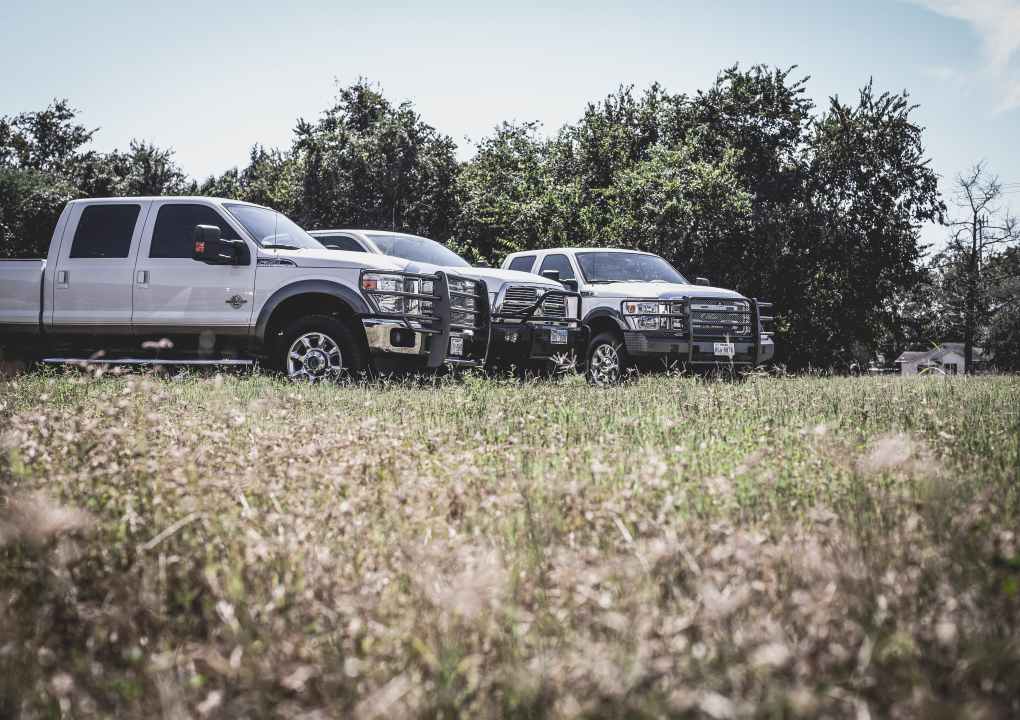
Heavy-duty pickups are engineered for drivers who need significantly greater towing and hauling capability than a standard half-ton truck can provide. Designed with reinforced frames, upgraded suspensions, and more robust powertrains, these trucks are built to handle demanding workloads day after day.
Compared to lighter trucks, heavy-duty pickups typically feature:
- Stronger frames
- Larger brakes
- Heavier suspension components
- Higher payload ratings
- Greater towing capacity
These trucks are frequently used for commercial applications, agriculture, construction, and heavy recreational towing. They commonly pull equipment trailers, horse trailers, gooseneck trailers, and large fifth wheel RVs while carrying substantial payloads in the bed.
Because heavy-duty pickups often function as mobile work platforms, storage becomes especially important. Many owners equip them with large crossover tool boxes, side-mount storage systems, underbody tool boxes, or auxiliary fuel tanks that allow crews to carry the tools and equipment needed to stay productive throughout the workday. The combination of exceptional capability and customizable storage makes heavy-duty pickups some of the most versatile work vehicles available.
Pickup Truck Configurations & Capabilities
Choosing the right pickup truck involves more than selecting a size. While compact, midsize, full-size, and heavy-duty trucks all serve different purposes, the configuration of the truck can be just as important as its overall classification. Cab style, bed length, drivetrain, and powertrain all influence how the truck performs, how much it can carry, and which storage accessories will work best.
A contractor who spends every day on a jobsite may prioritize maximum bed space and secure tool storage, while a family that tows a camper on weekends may value passenger comfort and versatile cargo organization. Understanding these configuration options helps buyers select a truck that fits both their lifestyle and their workload.
Most pickup trucks are available in three primary cab configurations, each offering different advantages depending on how the vehicle will be used. The right choice depends on whether the priority is cargo space, passenger capacity, or a balance of both.
Regular Cab
A regular cab features a single row of seating with two doors and typically offers the longest available bed options. Because the cab occupies less space on the frame, manufacturers can maximize cargo capacity without increasing the truck's overall length. These trucks are especially popular among commercial fleets, municipalities, and contractors who spend more time hauling equipment than transporting passengers.
Benefits include:
- Longer bed options
- Lower overall weight
- Simpler interior
- Excellent for work-focused applications
For many tradespeople, the extra bed space allows larger materials and equipment to be transported more easily. However, because interior storage is limited, loose tools and supplies often end up in the bed where they're exposed to weather and theft. As a result, many regular cab owners install crossover or chest tool boxes to provide secure, organized storage while preserving valuable cargo space.
Extended Cab
An extended cab adds a smaller second row of seating behind the front seats, typically accessed through rear-hinged or compact rear doors. While the additional seating area is not usually as spacious as a crew cab, it provides valuable flexibility for carrying coworkers, family members, or additional equipment.
This configuration strikes an excellent balance between work capability and everyday practicality. The smaller rear seating area can also serve as protected storage for tools, laptops, safety equipment, or other items owners prefer not to leave in the truck bed.
For buyers who occasionally need extra passengers but still want a manageable overall vehicle size, the extended cab often represents a practical middle ground between a regular cab and a crew cab.
Crew Cab
Crew cabs feature four full-size doors and a spacious second row, making them the most popular pickup configuration on today's market. Modern crew cab trucks often provide rear-seat comfort comparable to many SUVs, allowing them to serve as both family vehicles and capable work trucks.
They're ideal for:
- Families
- Work crews
- Fleet vehicles
- Recreational towing
- Daily commuting
The larger interior provides ample room for passengers as well as secure storage for backpacks, electronics, and valuable equipment. Because many owners prefer to maintain rear visibility and maximize usable bed space, crew cab trucks are commonly equipped with low-profile tool boxes that provide organized storage without obstructing sightlines or interfering with everyday usability.

Bed Lengths & Bed Styles
The cargo bed is one of the defining characteristics of a pickup truck and one of the primary reasons so many owners choose a truck over an SUV or cargo van. While all pickup beds serve the same basic purpose, their dimensions and layouts can dramatically affect hauling capability, maneuverability, and accessory compatibility.
Manufacturers commonly offer:
- Short beds
- Standard beds
- Long beds
Short Beds
Short beds are popular because they make the overall truck easier to drive and park. Combined with today's crew cab configurations, they create a vehicle that functions well as both a family vehicle and a capable work truck.
Advantages of a short bed include:
- Improved maneuverability
- Easier parking in garages and city environments
- Shorter overall wheelbase
- Comfortable everyday driving
The tradeoff is reduced cargo space. Longer building materials, ladders, or equipment may require the tailgate to remain open or additional trailer support.
Standard Beds
A standard bed provides a middle ground between cargo capacity and everyday practicality. It offers additional hauling space without significantly increasing the truck's overall length, making it one of the most versatile options available.
For many truck owners, a standard bed provides enough room for:
- Home improvement materials
- Landscaping supplies
- ATVs and motorcycles
- Camping equipment
- Work tools and equipment
Because of its balanced dimensions, a standard bed is compatible with a wide variety of truck tool boxes and cargo management accessories.
Long Beds
Long beds maximize cargo capacity and are often the preferred choice for commercial applications and heavy hauling. Contractors, farmers, ranchers, and equipment operators frequently choose long-bed trucks because they provide more usable workspace and better accommodate oversized materials.
Long beds are particularly advantageous when towing fifth wheel or gooseneck trailers, as the additional distance between the cab and hitch helps improve turning clearance.
While they offer exceptional utility, long-bed trucks also require more space to maneuver and park. Buyers should consider where they'll use the truck most often before deciding on bed length.
Bed dimensions also play a major role when selecting storage accessories. Not every crossover, chest, or side-mount tool box fits every bed configuration, so verifying compatibility before purchasing is always recommended.
Drivetrain Options
Another important consideration when choosing a pickup truck is drivetrain. The number of wheels receiving power affects traction, capability, operating costs, and the types of environments where the truck performs best.
The three most common options are two-wheel drive, four-wheel drive, and all-wheel drive.
Two-Wheel Drive (2WD)
Two-wheel drive trucks send power to either the rear wheels or, less commonly, the front wheels. In the pickup segment, rear-wheel drive is by far the most common configuration.
Two-wheel drive trucks generally:
- Cost less
- Weigh less
- Offer better fuel economy
- Require less maintenance
Because they have fewer drivetrain components, they are often less expensive to purchase and maintain over the life of the vehicle.
They're well suited for:
- Paved roads
- Daily commuting
- Light towing
- Moderate hauling
- Warm-weather climates
For owners who primarily drive on highways or well-maintained roads, a 2WD truck may provide all the capability they need while keeping ownership costs lower.
Four-Wheel Drive (4WD)
Four-wheel drive systems distribute power to both the front and rear axles, improving traction when road conditions become challenging. Many systems allow drivers to engage four-wheel drive only when needed, providing additional capability without constant operation.
Four-wheel drive excels in:
- Snow
- Mud
- Gravel
- Off-road environments
- Construction sites
For contractors, hunters, farmers, and outdoor enthusiasts, four-wheel drive often provides valuable peace of mind when traveling through unpredictable terrain.
Although 4WD systems typically increase purchase price, weight, and maintenance requirements, many owners consider the added capability well worth the investment.
All-Wheel Drive (AWD)
Some modern pickups and electric trucks utilize all-wheel drive systems that automatically distribute power among the wheels without driver intervention. Rather than selecting different drive modes manually, onboard computers continuously adjust power delivery based on road conditions.
These systems improve traction while maintaining excellent on-road driving characteristics and are especially beneficial in changing weather conditions where pavement may alternate between dry, wet, or icy.
As AWD technology continues to evolve, it is becoming increasingly common on electric pickup trucks and lifestyle-oriented models designed for year-round versatility.
Electric Pickup Trucks
Electric pickups represent one of the fastest-growing segments of the truck industry. As battery technology improves and charging infrastructure expands, more buyers are considering electric trucks for both personal and professional use.
Unlike traditional gasoline or diesel trucks, electric pickups rely on battery-powered motors that produce immediate torque and smooth, quiet operation.
Advantages include:
- Immediate acceleration
- Lower routine maintenance
- Reduced emissions
- Quiet operation
The instant torque delivered by electric motors can provide impressive towing and hauling performance, particularly from a stop. Without many of the components found in internal combustion engines, electric trucks also eliminate routine maintenance items such as oil changes and many engine-related service requirements.
Many electric pickups now offer onboard power systems capable of supplying electricity directly from the vehicle. This feature allows owners to operate:
- Power tools
- Air compressors
- Lighting
- Camping equipment
- Emergency backup devices
For contractors and outdoor enthusiasts, the truck effectively becomes a portable power source.
However, buyers should also consider several important factors:
- Charging availability
- Range while towing
- Payload impacts
- Long-distance travel needs
Heavy trailers can significantly reduce driving range, and charging infrastructure may vary depending on location. As technology continues to improve, these limitations are gradually becoming less significant, making electric pickups an increasingly practical option for many users.
Manufacturers and aftermarket companies are also expanding storage solutions specifically designed for electric truck platforms, ensuring owners can still benefit from secure and organized cargo management.
How Configuration Affects Storage
Every truck configuration influences storage requirements. The ideal storage solution depends not only on the type of work being performed but also on the truck's cab size, bed length, and daily use.
For example, a contractor driving a regular cab long-bed truck may prioritize maximum locking storage for expensive tools and equipment. A large crossover tool box or chest tool box can help protect valuable items while leaving plenty of room for building materials.
By comparison, a family using a crew cab pickup for camping or towing may only need secure storage for tie-down straps, recovery gear, jumper cables, and outdoor equipment. In that case, a low-profile tool box or wheel well storage system may provide sufficient organization without sacrificing cargo space.
Fleet vehicles often present a different challenge altogether. Companies operating multiple trucks benefit from standardized storage layouts that allow technicians to quickly locate equipment regardless of which vehicle they are assigned. Consistent organization improves efficiency, reduces downtime, and simplifies inventory management.
Storage planning should also consider how frequently equipment is used. Tools needed every day should be easily accessible, while seasonal or emergency equipment can be stored in less frequently accessed compartments.
Choosing the right tool box begins with understanding how the truck is actually used. A well-designed storage system supports daily workflow, protects valuable equipment, and makes the truck more productive for years to come.
Other Common Types of Trucks
While pickup trucks dominate the consumer market, several other truck categories serve specialized industries and commercial applications. These vehicles are designed around specific tasks, whether that's transporting freight, moving bulk materials, or functioning as mobile workshops. Understanding these truck types provides helpful context for how pickups compare and why they remain one of the most versatile options available.
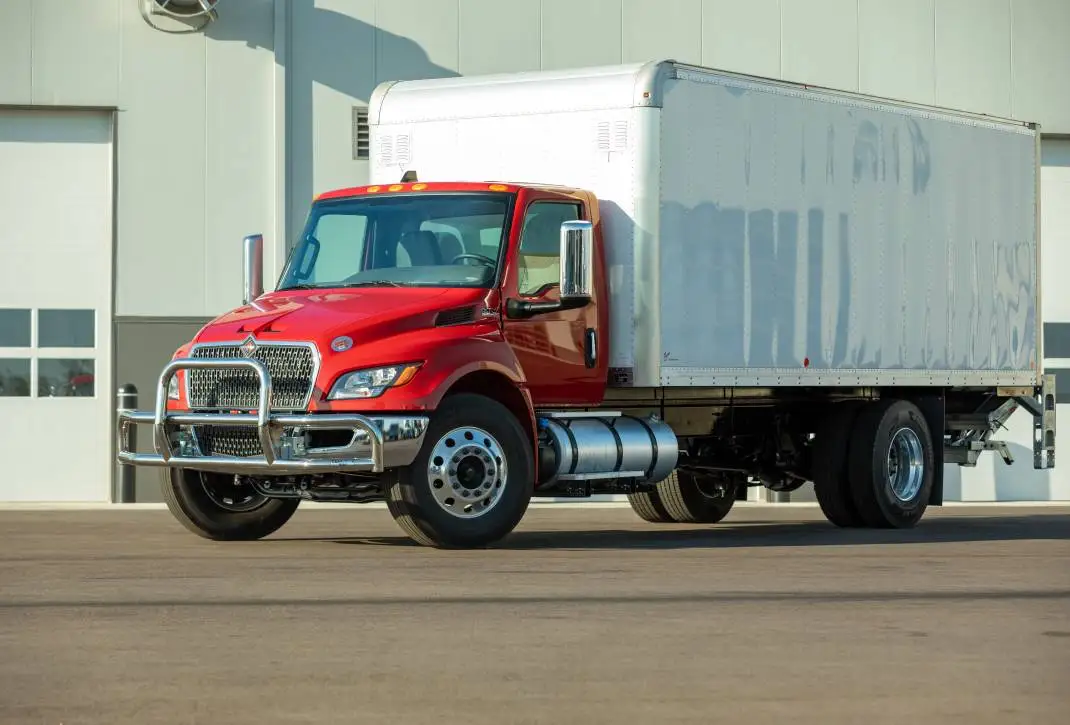
Box Trucks
Box trucks feature an enclosed cargo compartment mounted directly behind the cab, creating a secure and weather-resistant storage area. Unlike pickup trucks with open beds, box trucks protect cargo from rain, snow, dust, and theft, making them ideal for businesses that transport valuable goods.
They're commonly used for:
- Furniture delivery
- Appliance transportation
- Parcel services
- Moving companies
- Retail distribution
- Local logistics
The enclosed design allows businesses to organize inventory on shelves or racks while keeping products protected during transport. However, the fixed cargo box also limits flexibility when hauling oversized materials that extend beyond the dimensions of the truck.
For companies that primarily move packaged goods, a box truck is often the preferred solution. For those transporting irregularly shaped equipment or construction materials, a pickup or flatbed may offer greater versatility.
Flatbed Trucks
Flatbed trucks replace an enclosed cargo area with a completely open platform, allowing materials to be loaded from the sides, rear, or even above using forklifts or cranes.
This design accommodates cargo such as:
- Lumber
- Steel
- Equipment
- Building materials
- Machinery
- Palletized products
Because there are no walls restricting cargo dimensions, flatbeds are widely used in construction, agriculture, manufacturing, and heavy equipment transportation.
The tradeoff is that cargo must be properly secured using chains, straps, or other tie-down systems while remaining exposed to the elements. Proper load securement is essential for both safety and regulatory compliance.
Dump Trucks
Dump trucks are specifically engineered to transport and unload loose materials quickly and efficiently. Their hydraulic beds raise at an angle, allowing cargo to slide out without manual unloading.
Typical materials include:
- Gravel
- Dirt
- Sand
- Asphalt
- Demolition debris
- Aggregate
These trucks play an essential role in road construction, excavation, landscaping, and infrastructure projects where large volumes of material must be moved rapidly.
Because of their specialized purpose, dump trucks prioritize payload capacity and durability over passenger comfort or cargo organization.
Semi-Trucks and Tractor-Trailers
Class 8 tractor-trailers form the backbone of commercial freight transportation across North America. Every day, these vehicles move consumer goods, industrial equipment, food products, and raw materials between manufacturers, warehouses, and retailers.
These trucks are engineered for:
- Maximum towing capability
- Long-distance travel
- Continuous commercial operation
- Heavy payloads
Modern tractor-trailers often travel hundreds of thousands of miles during their service lives while hauling tens of thousands of pounds of cargo.
Unlike pickup trucks, which balance personal transportation with utility, semi-trucks are purpose-built commercial machines optimized for freight movement.
Specialty Trucks
Many trucks are designed for highly specialized industries where standard cargo beds simply aren't sufficient. These vehicles incorporate custom equipment and storage systems tailored to their specific roles.
Examples include:
- Tow trucks
- Utility trucks
- Fire trucks
- Emergency response vehicles
- Service trucks
- Municipal maintenance vehicles
Many specialty trucks function as complete mobile workstations. They often include integrated compartments, shelving systems, power generation equipment, lighting, and dedicated storage for specialized tools.
Although these trucks serve niche applications, they demonstrate how storage and organization become increasingly important as vehicle functionality expands.
Pickup Trucks & Tool Storage Needs
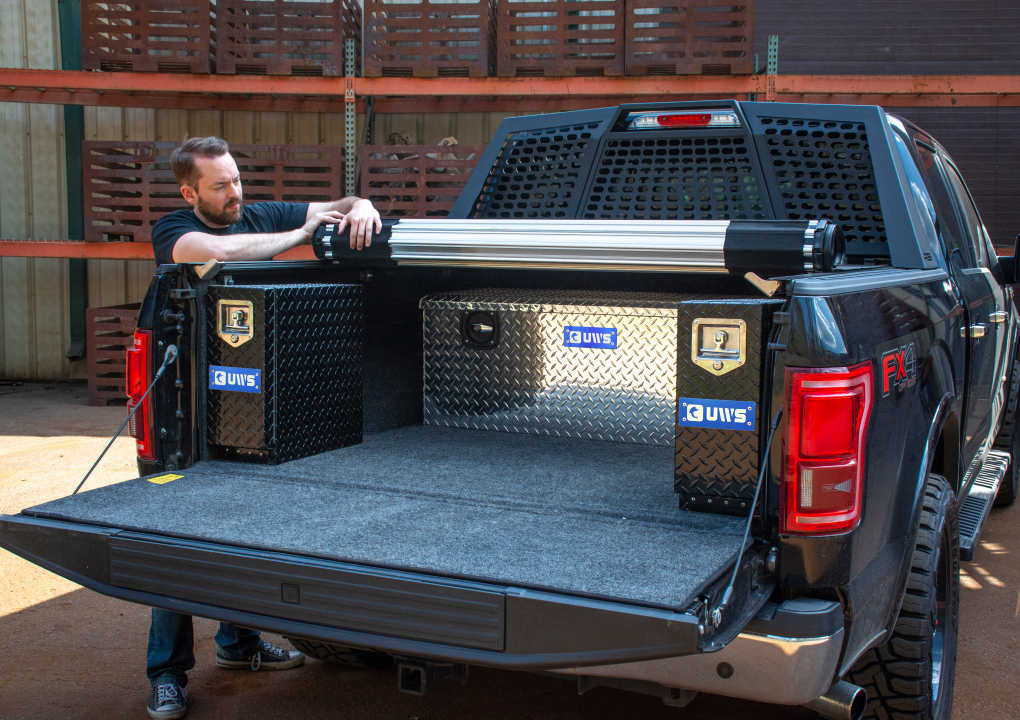
One reason pickup trucks remain so popular is their ability to adapt to changing needs through aftermarket accessories. The same truck that serves as a daily commuter can become a capable work vehicle or weekend adventure rig simply by adding the right truck tool box and equipment.
Among those accessories, truck tool boxes rank as one of the most practical upgrades available.
They provide:
- Secure storage
- Improved organization
- Protection from weather
- Faster access to equipment
- Better use of bed space
Without dedicated storage, tools and equipment often slide around the truck bed, become damaged during transport, or remain exposed to theft and harsh weather conditions. A properly selected tool box helps solve these problems while creating a cleaner and more efficient workspace.
Whether carrying hand tools, power tools, recovery gear, tie-down straps, camping supplies, or emergency equipment, organized storage reduces frustration and improves productivity. Instead of searching through loose cargo, owners can quickly locate exactly what they need.
For many truck owners, a quality tool box becomes one of the most frequently used accessories they ever install.
Common Pickup Truck Tool Box Options
Truck owners have a variety of storage solutions available depending on how they use their vehicles. Choosing the right style depends on cargo needs, bed size, accessibility requirements, and overall workflow.
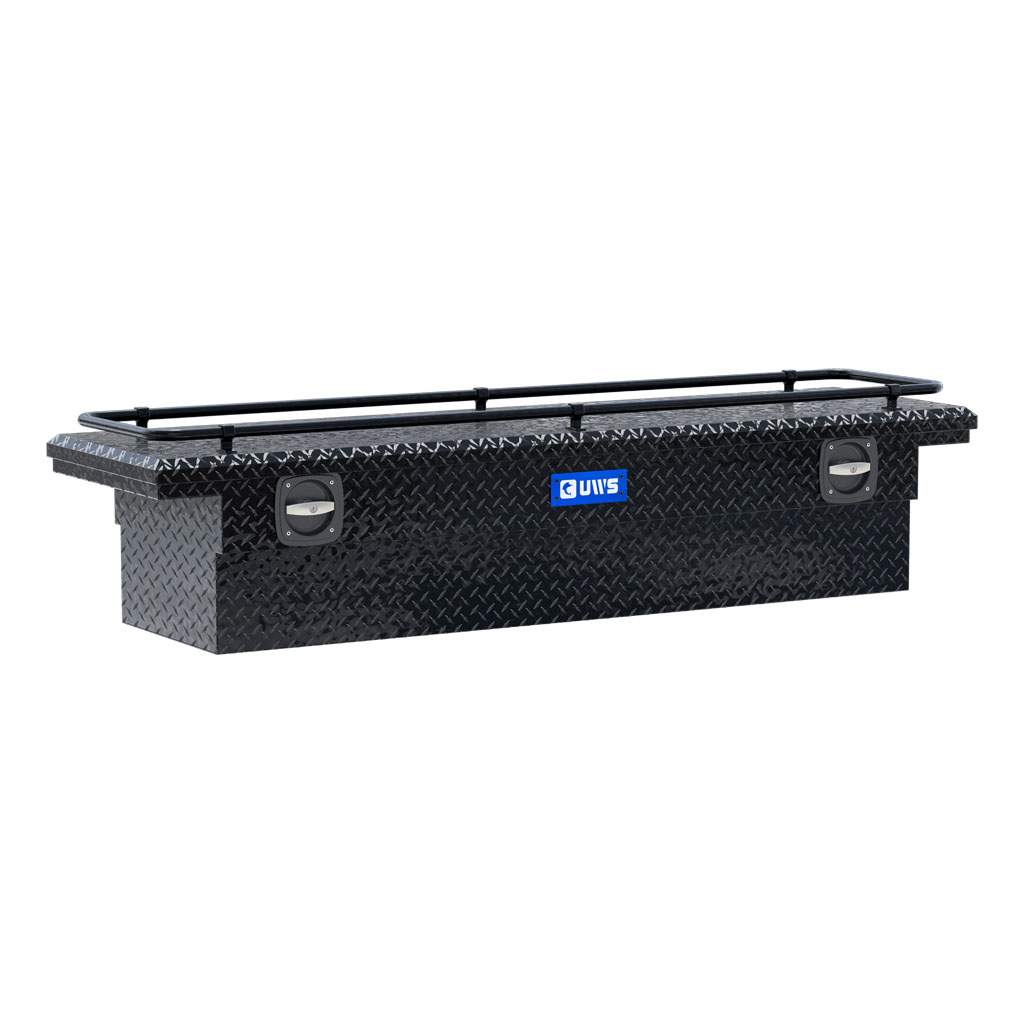
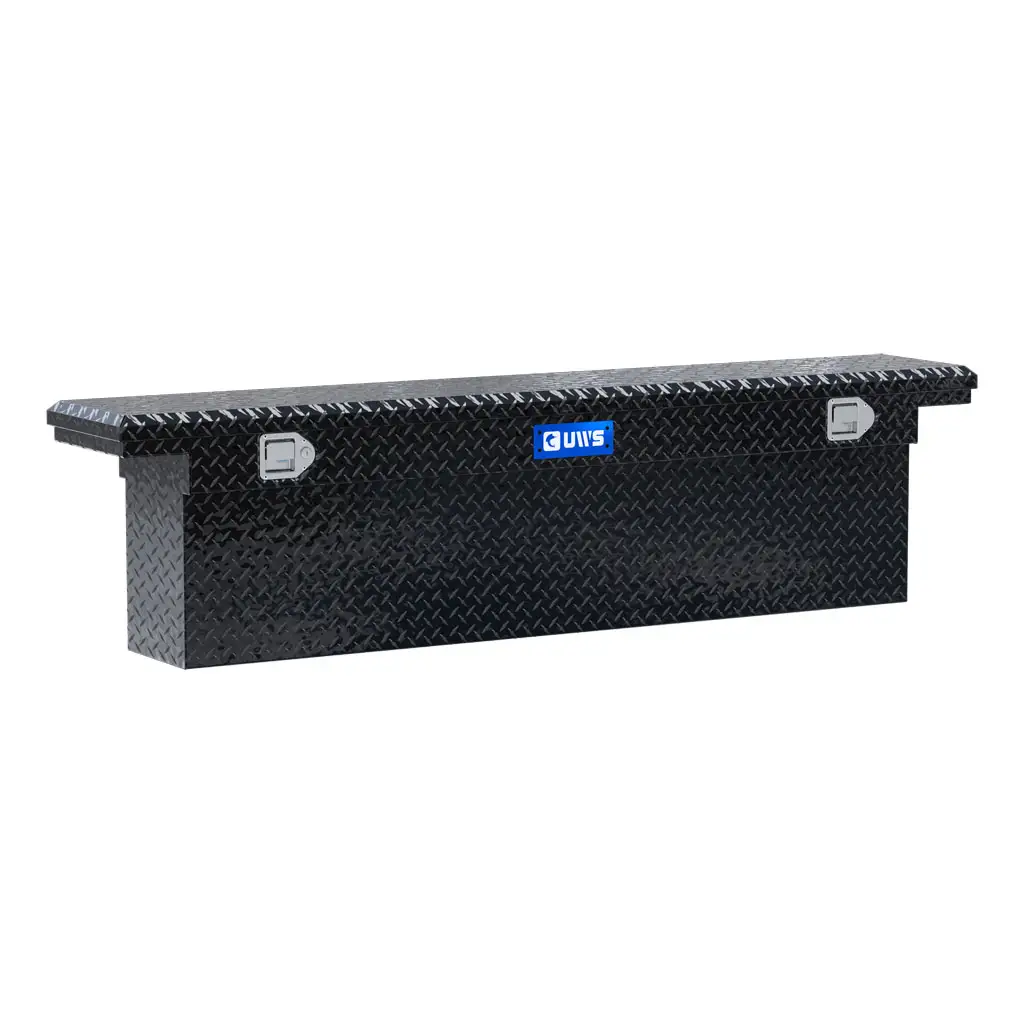
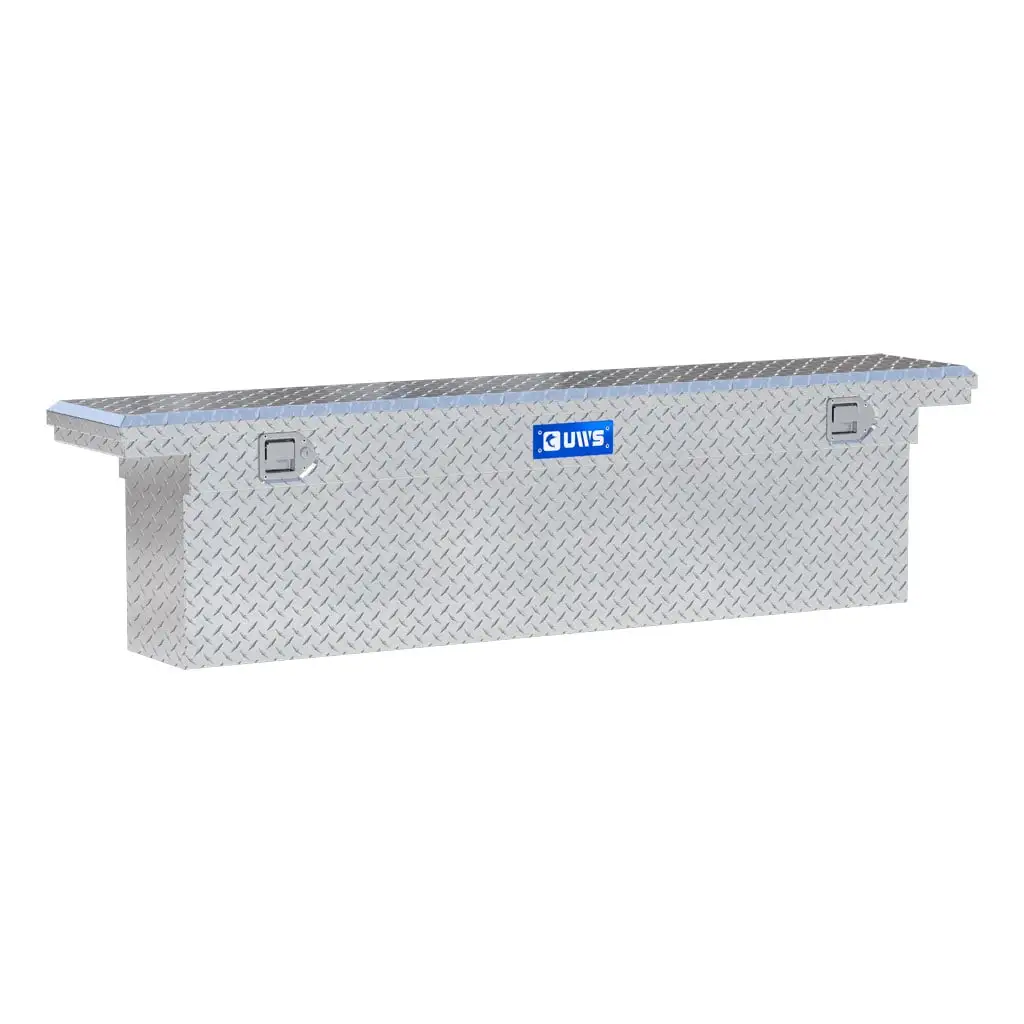
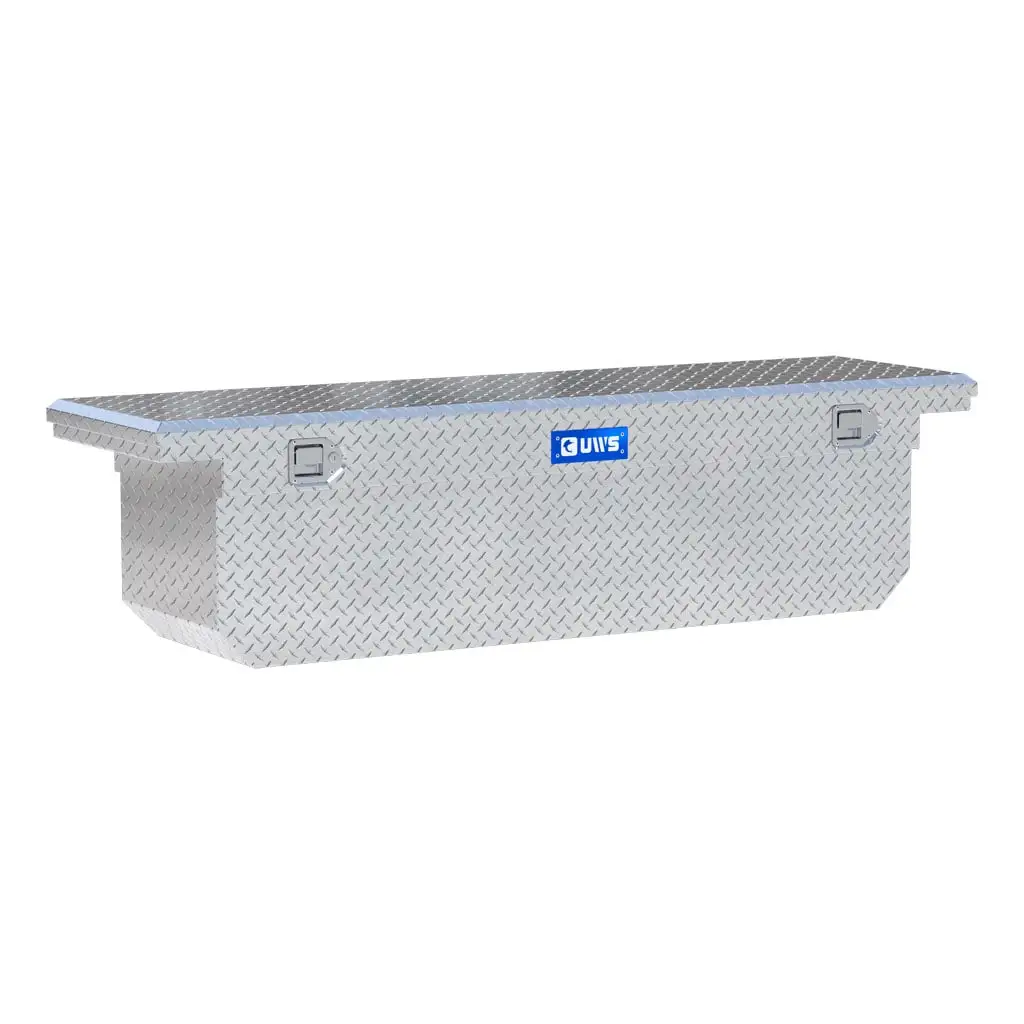
1. Crossover Tool Boxes
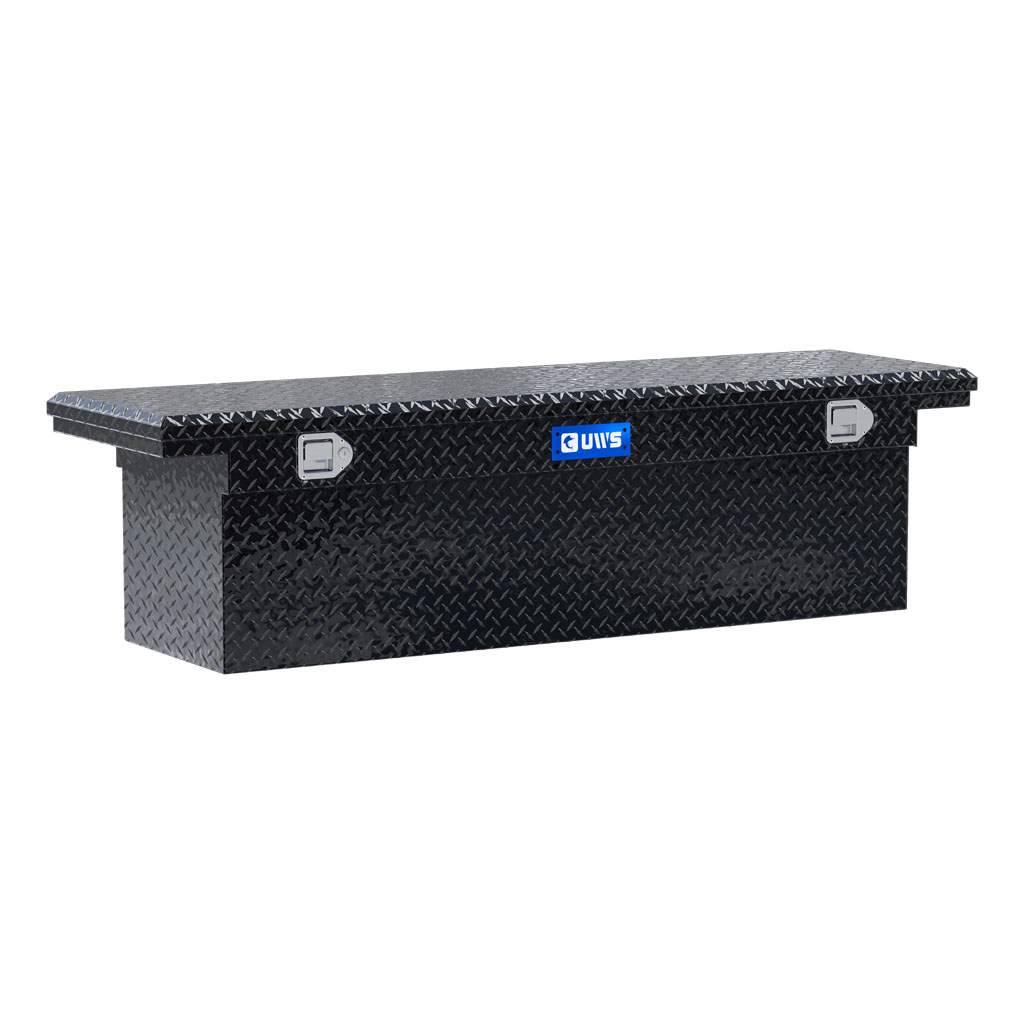
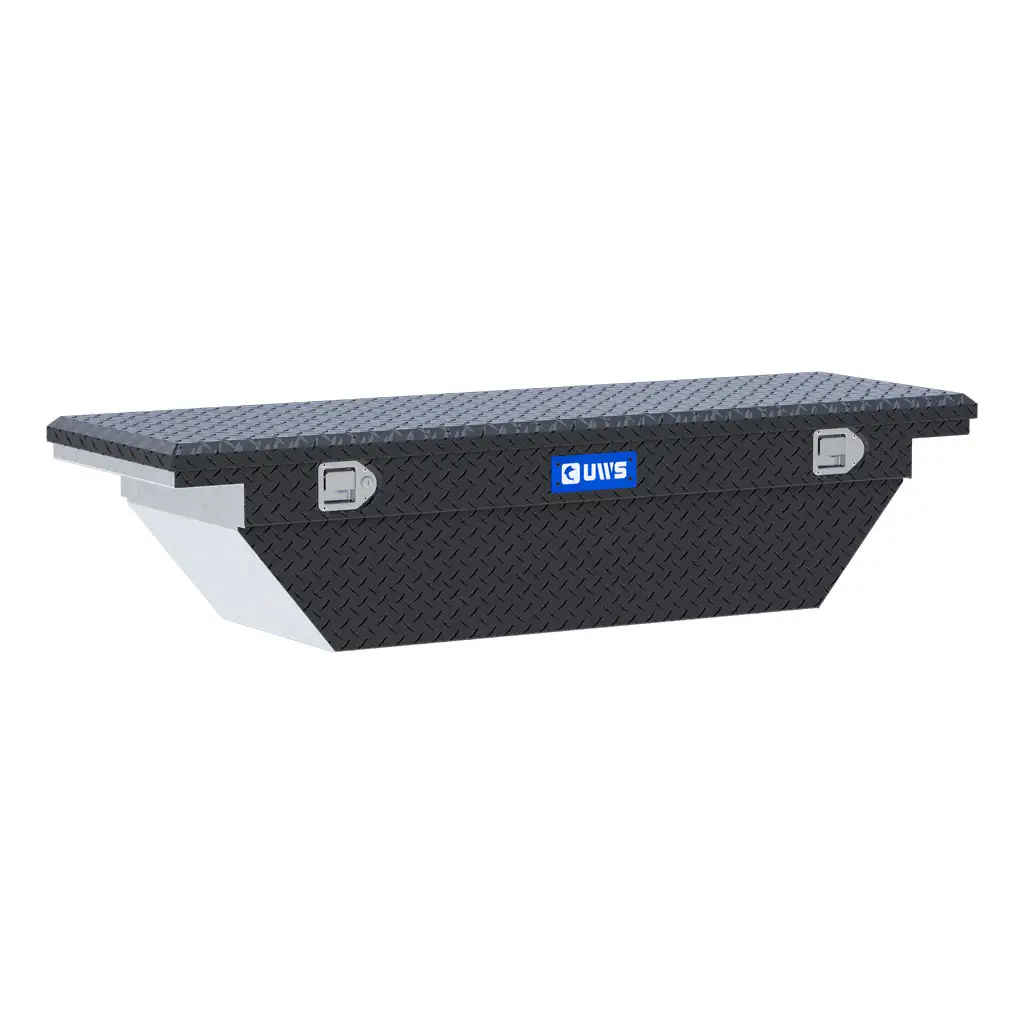
Also known as saddle boxes, crossover tool boxes span the width of the truck bed directly behind the cab. They remain one of the most popular storage solutions because they provide significant storage capacity while preserving most of the bed for cargo.
Advantages include:
- Maximum storage capacity
- Easy access from either side
- Efficient use of bed space
- Compatibility with many work applications
They're commonly found on contractor, fleet, agricultural, and maintenance trucks because they provide secure storage without sacrificing overall utility.
-
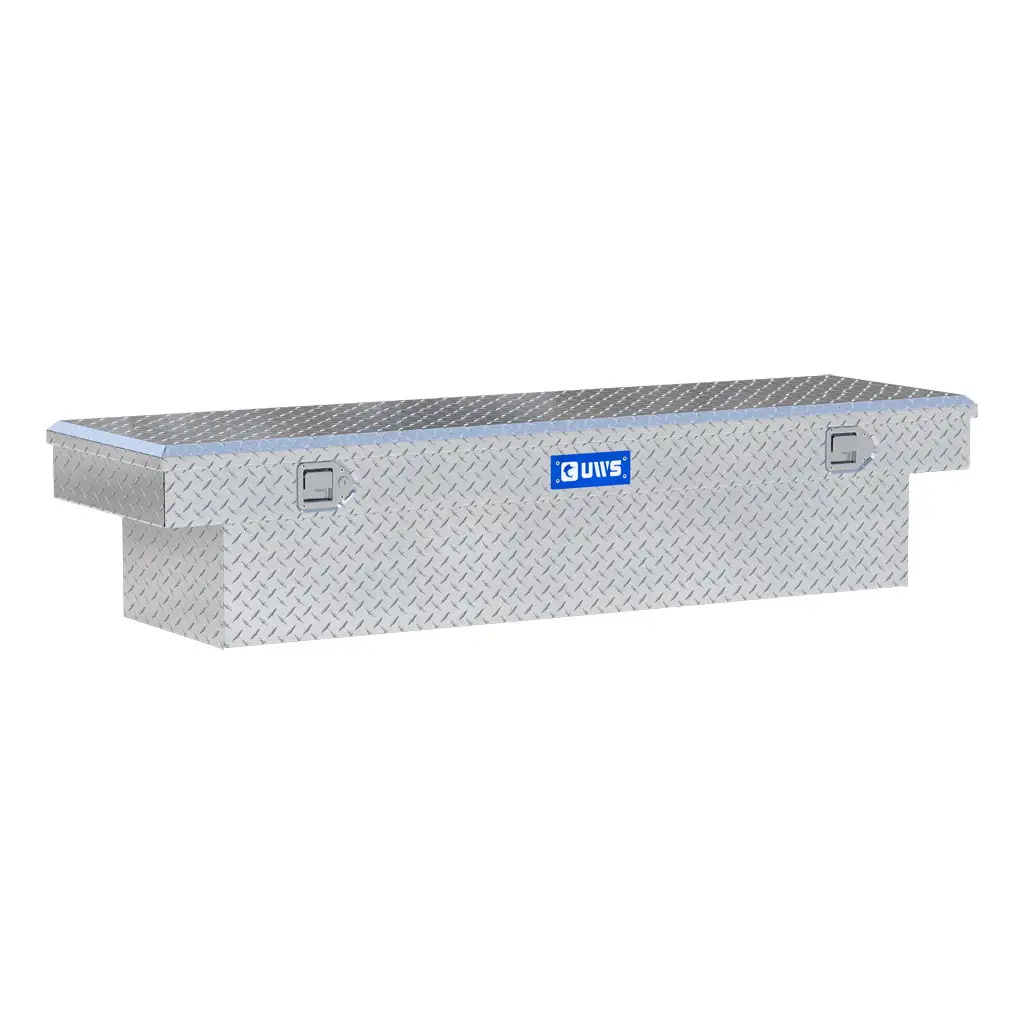 Bright Aluminum 69" Crossover Truck Tool Box (Heavy Packaging)Loading Price....
-
 Matte Black 72" Deep Angled Push Button Crossover Truck Tool BoxLoading Price....
-
 Bright Aluminum 72" Deep Angled Push Button Crossover Truck Tool BoxLoading Price....
-
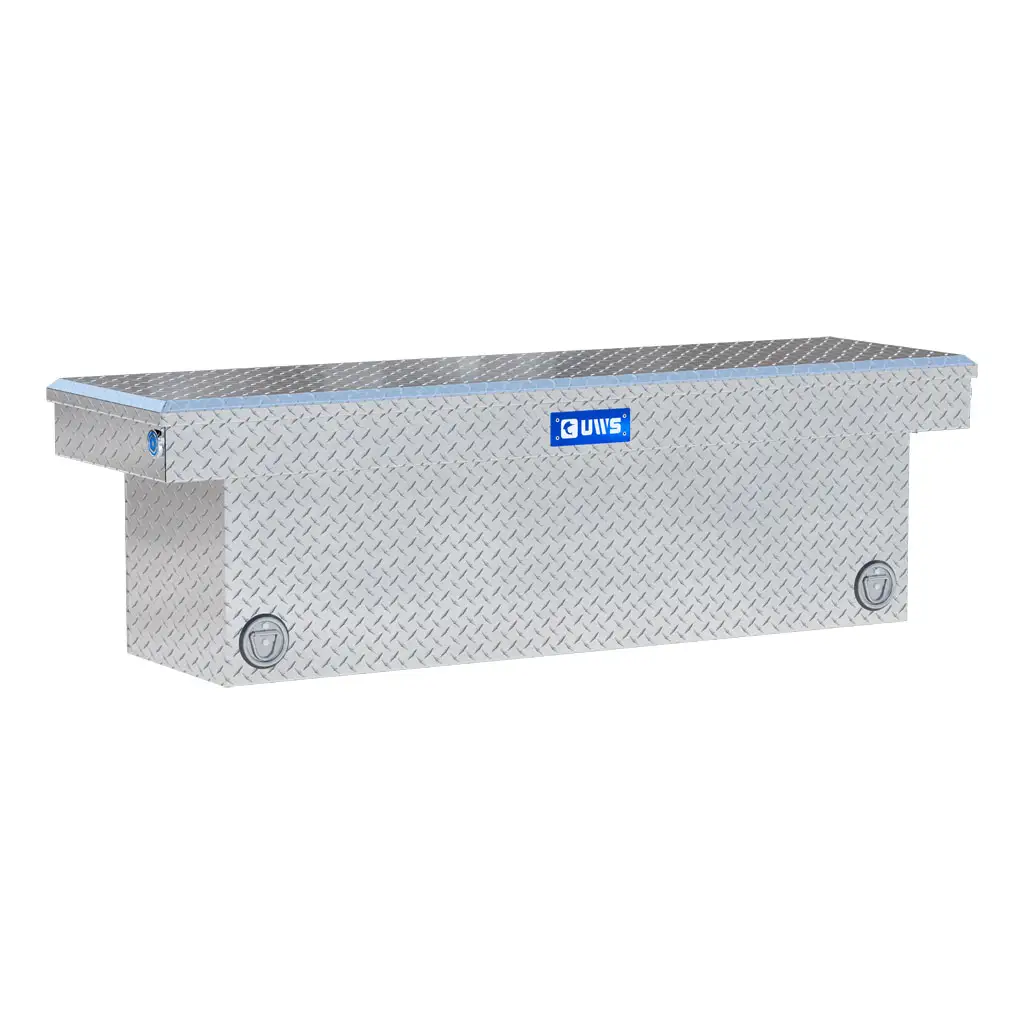 Bright Aluminum 69" Deep Push Button Crossover Truck Tool BoxLoading Price....
-
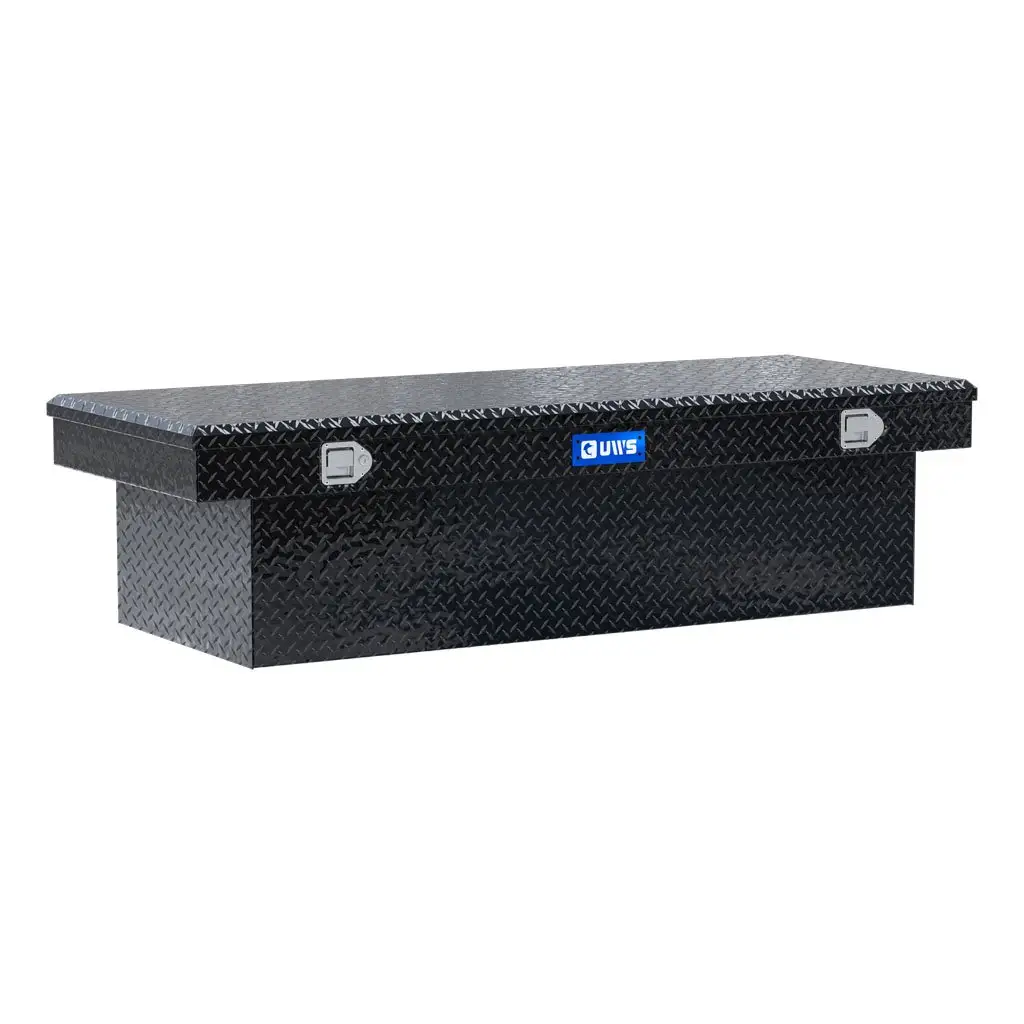 Gloss Black Aluminum 72" Deep Extra-Wide Crossover Truck Tool BoxLoading Price....
-
 Bright Aluminum 72" Deep Extra-Wide Crossover Truck Tool BoxLoading Price....
-
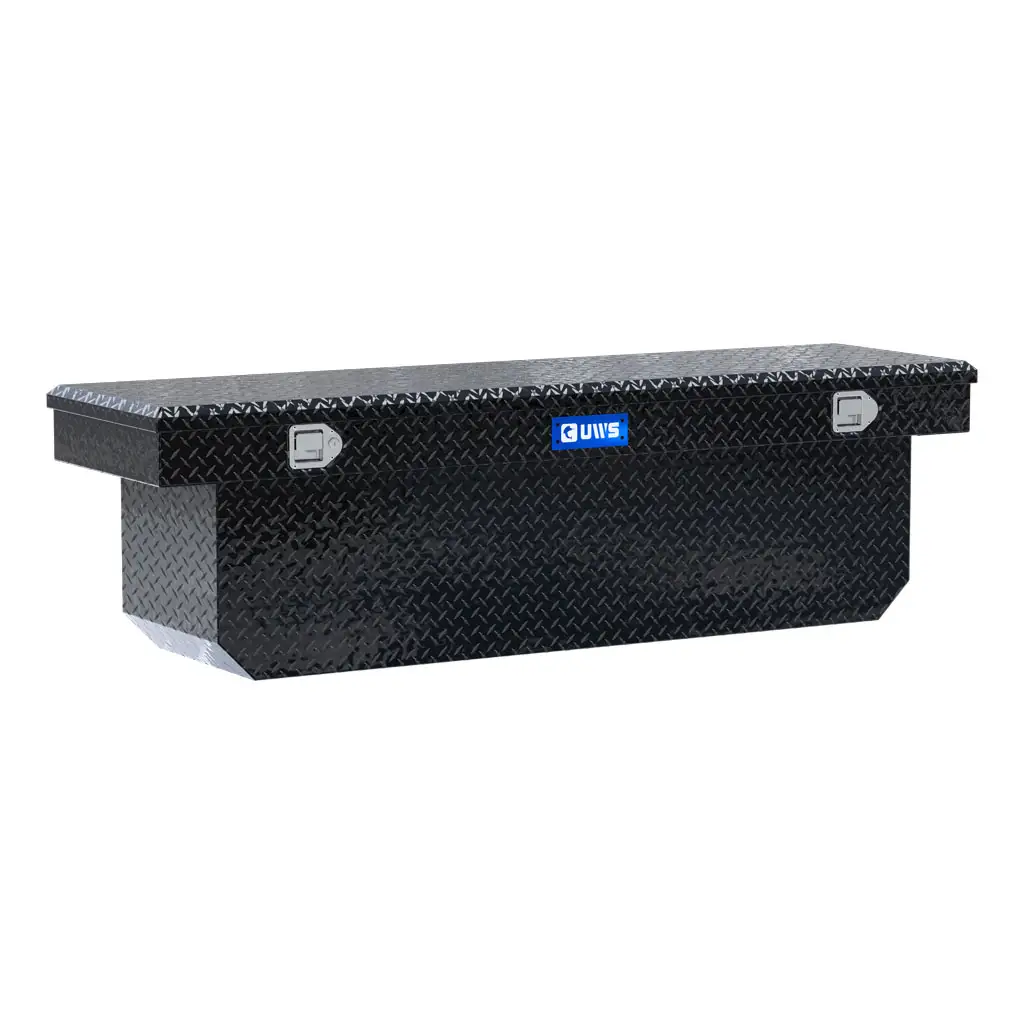 Gloss Black Aluminum 72" Deep Angled Crossover Truck Tool BoxLoading Price....
-
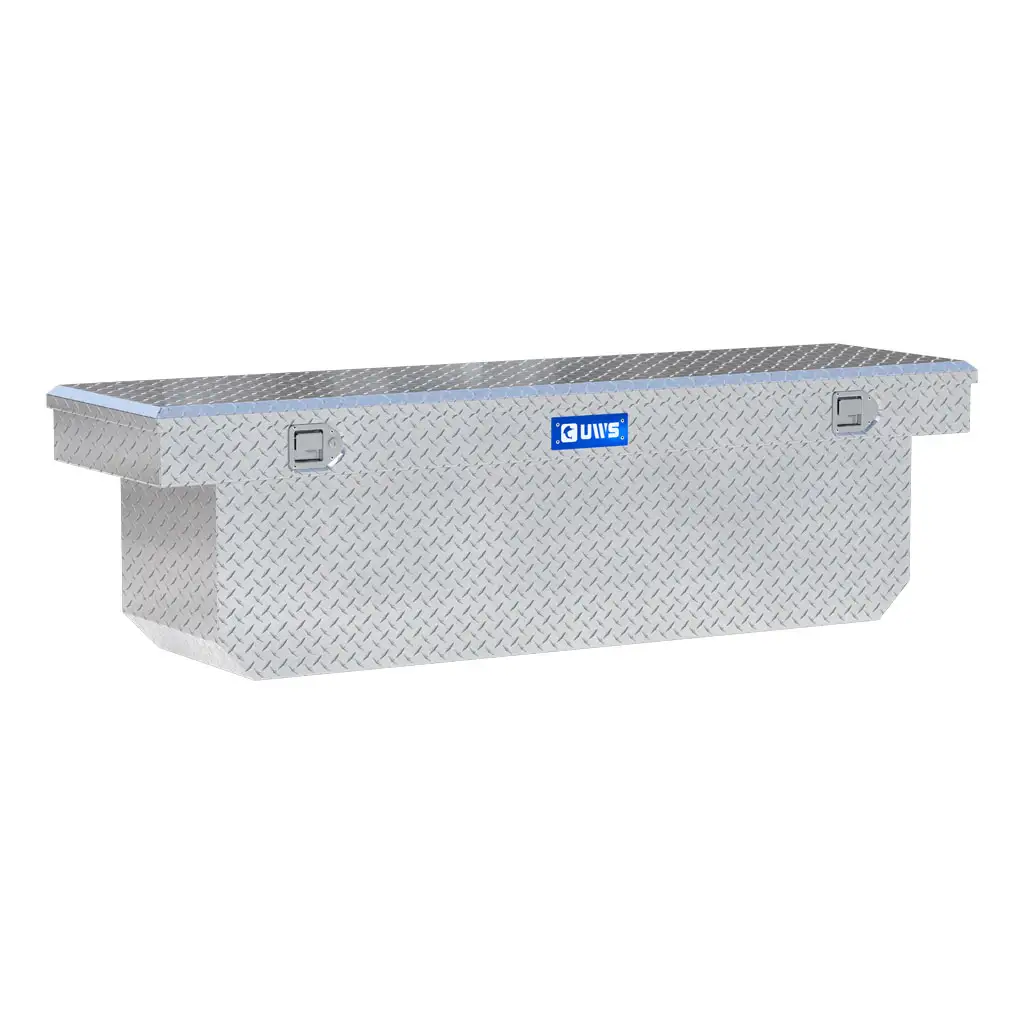 Bright Aluminum 72" Deep Angled Crossover Truck Tool BoxLoading Price....
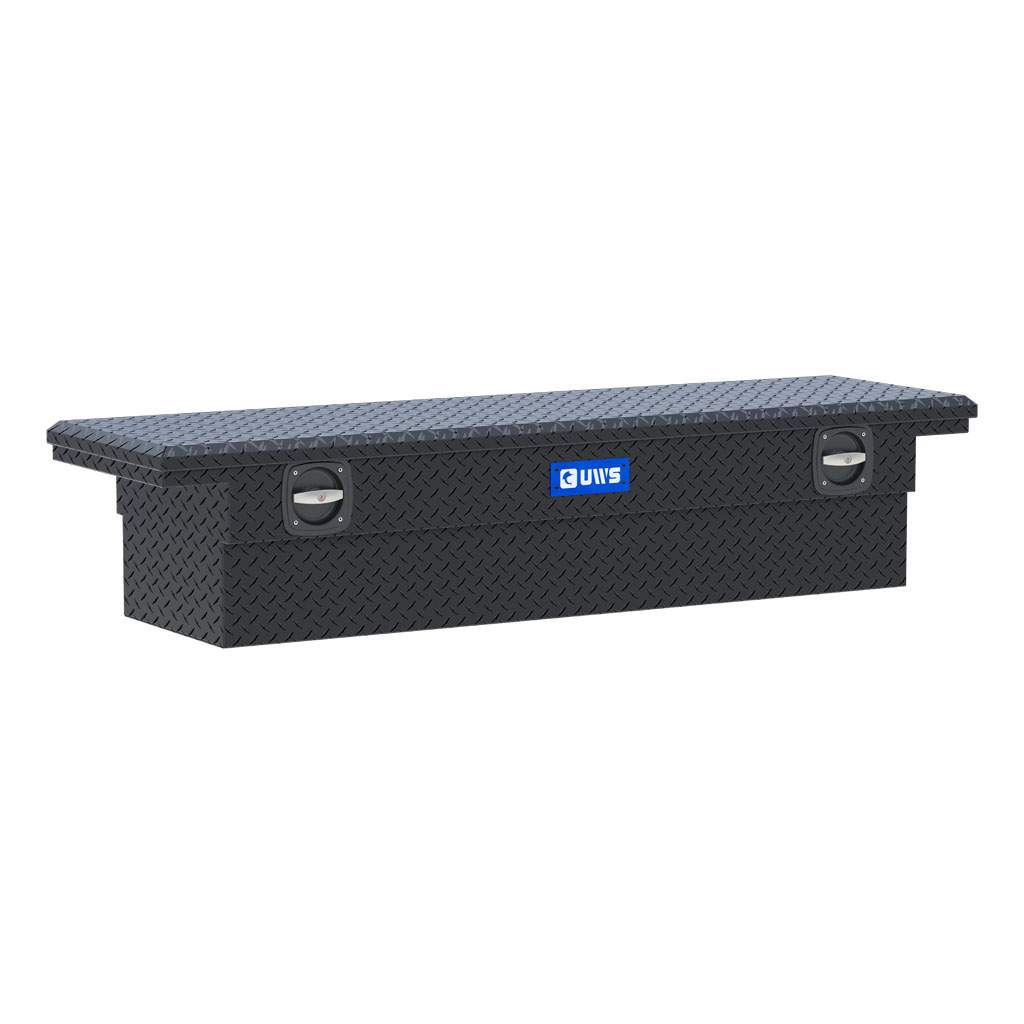

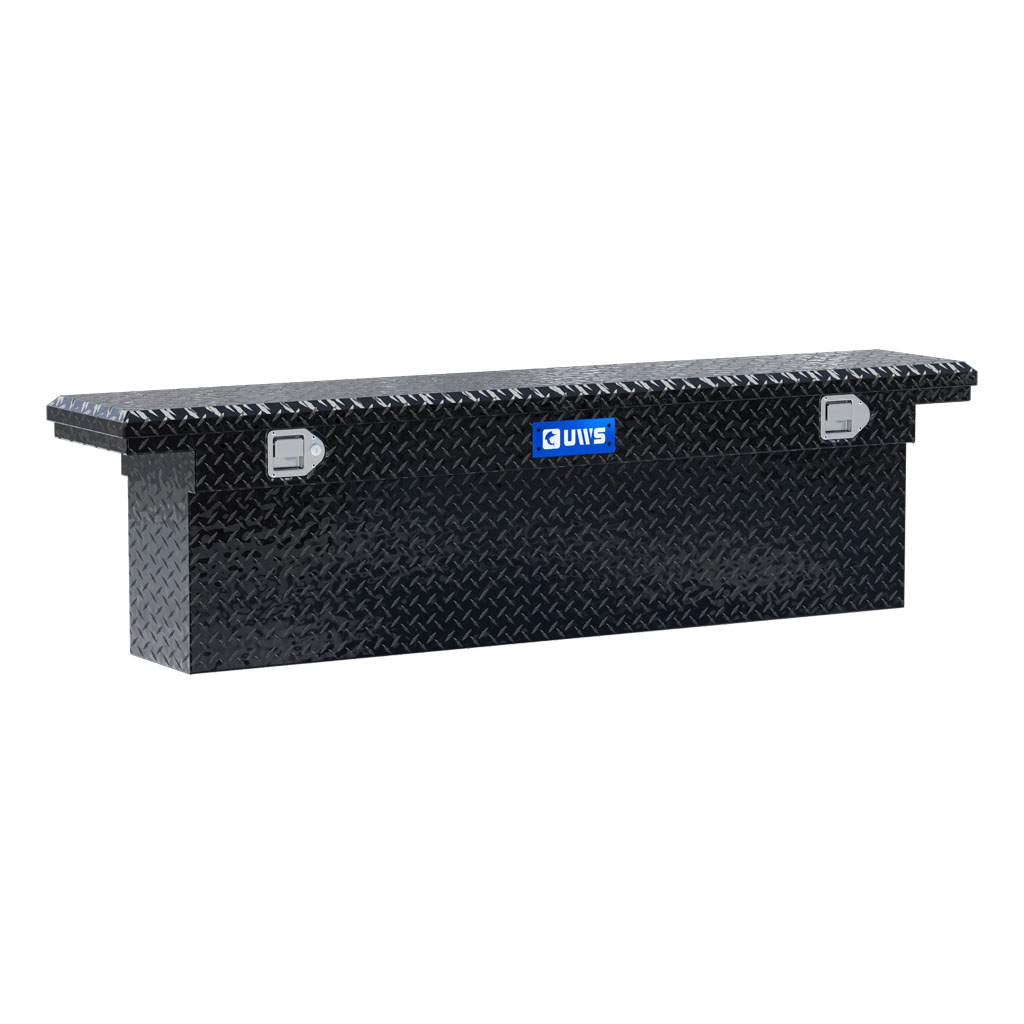
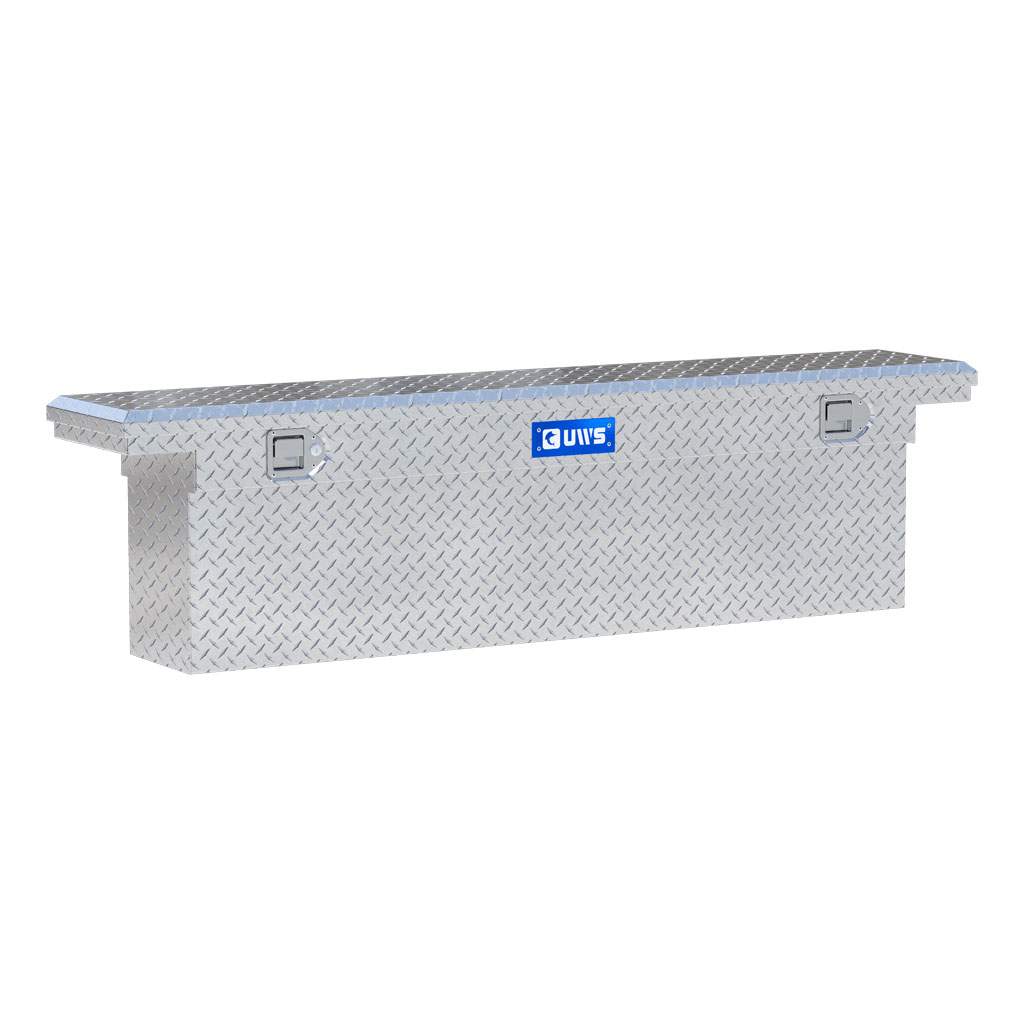
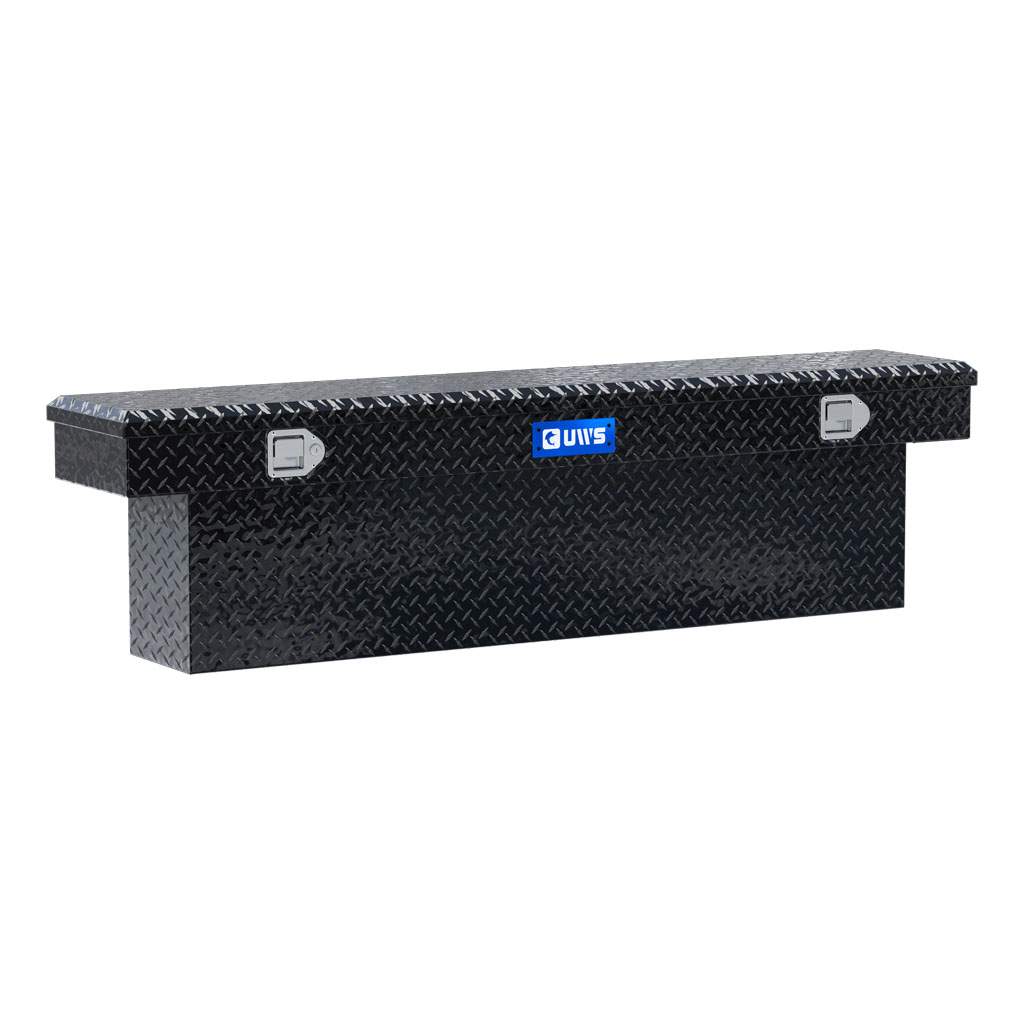
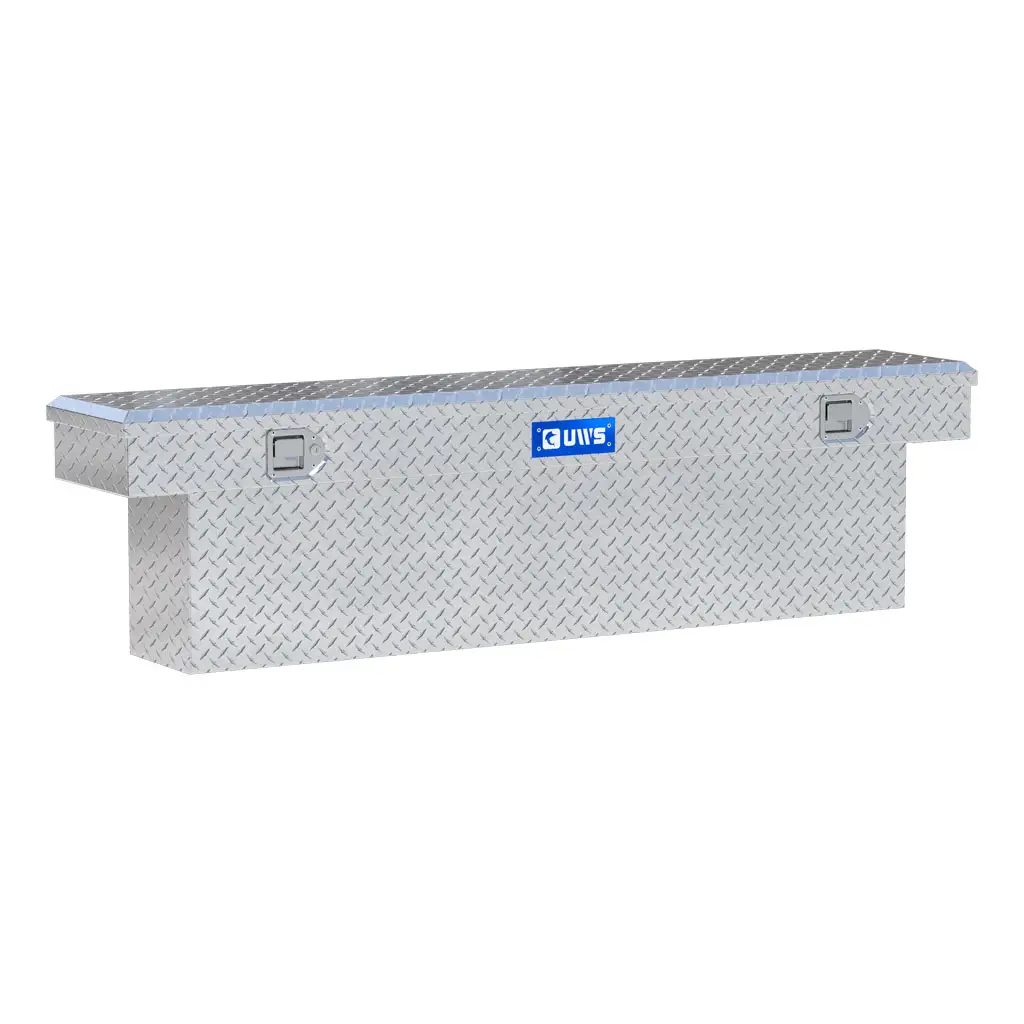

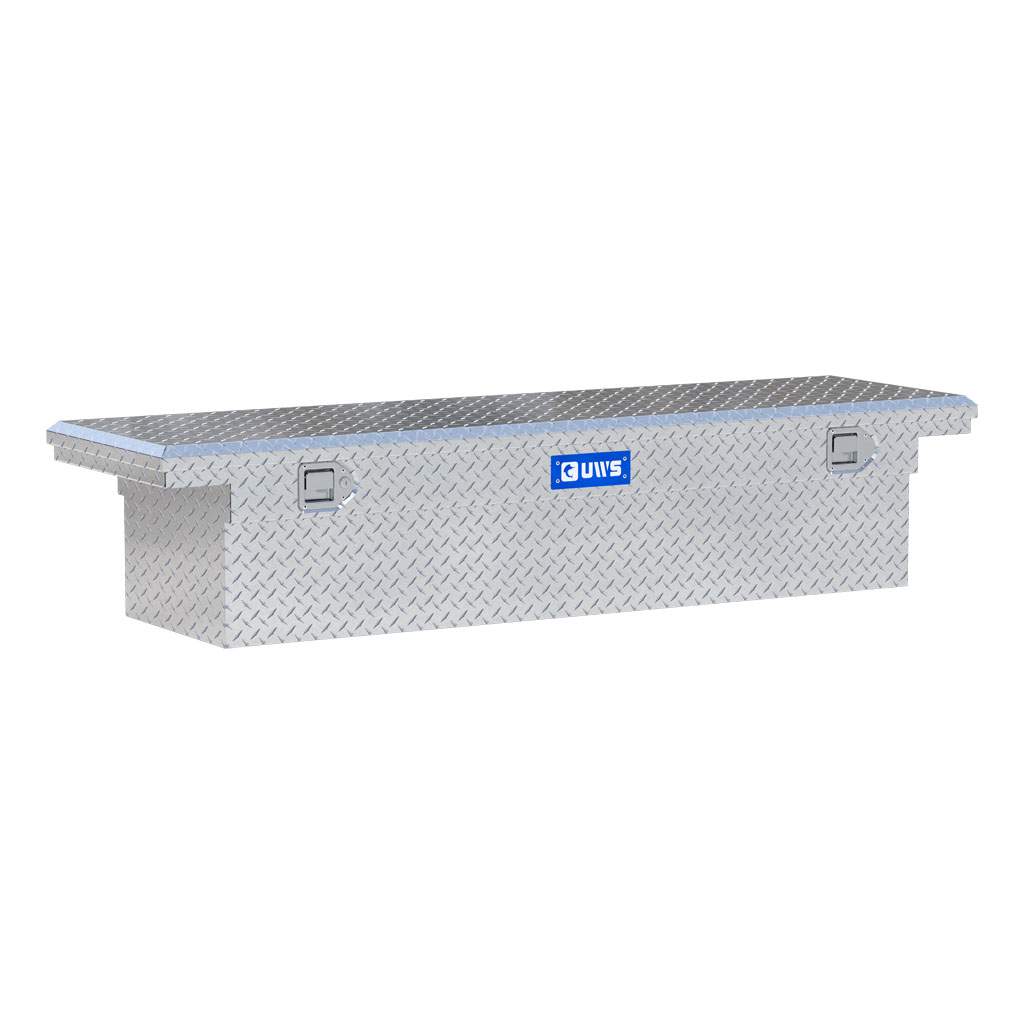
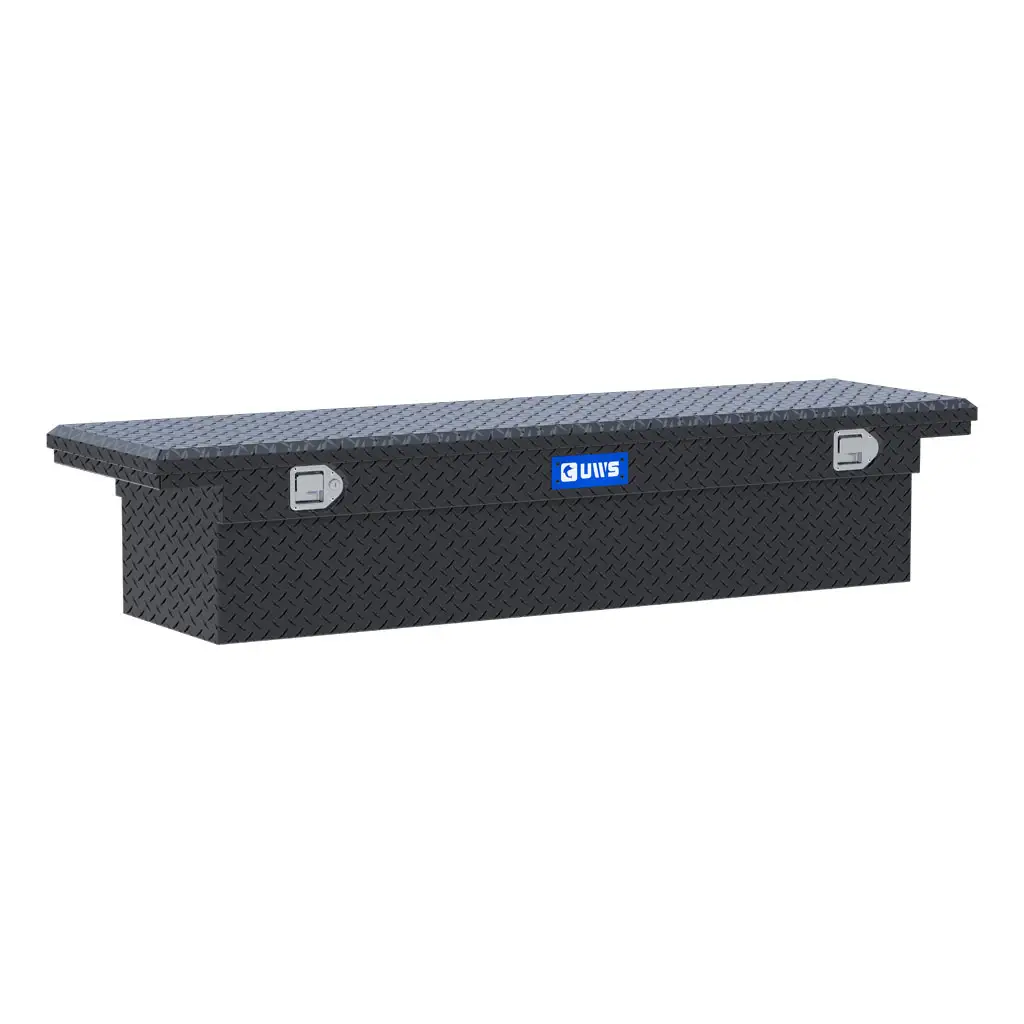
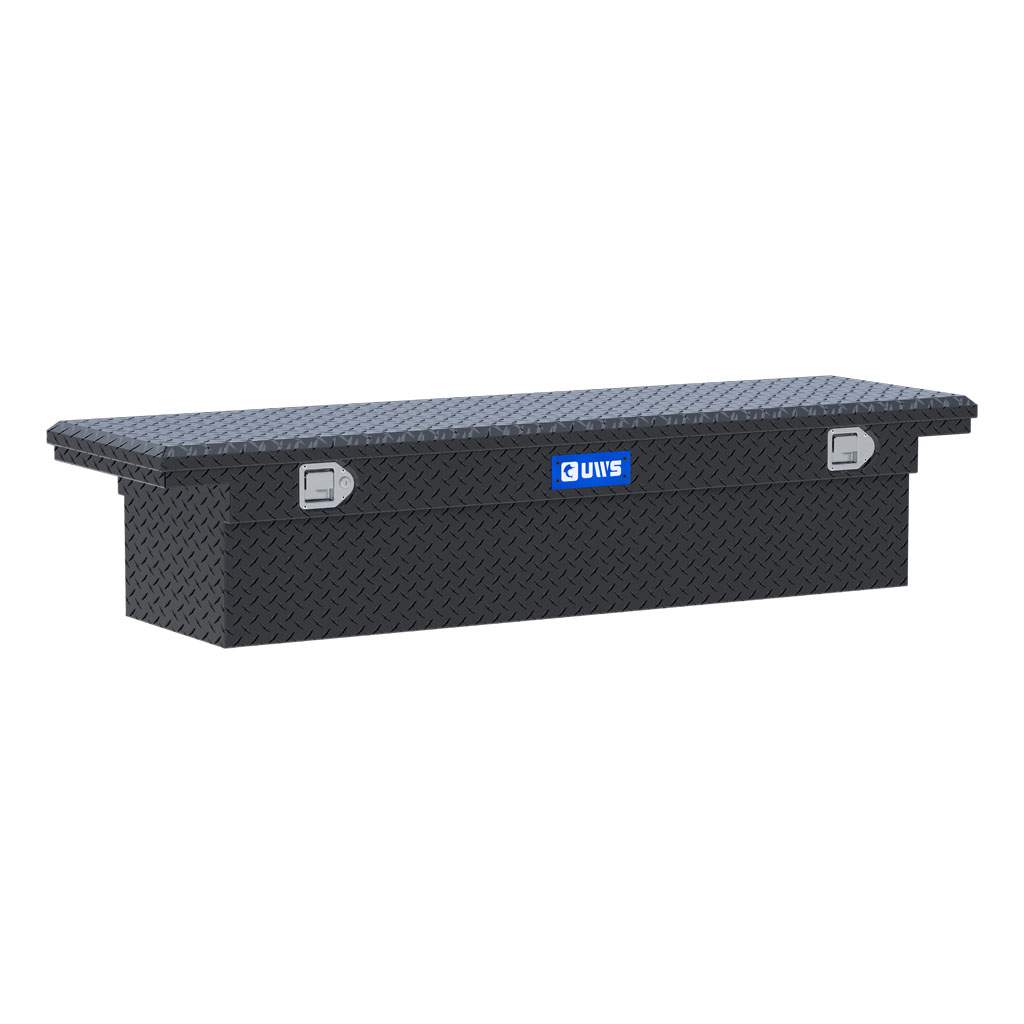
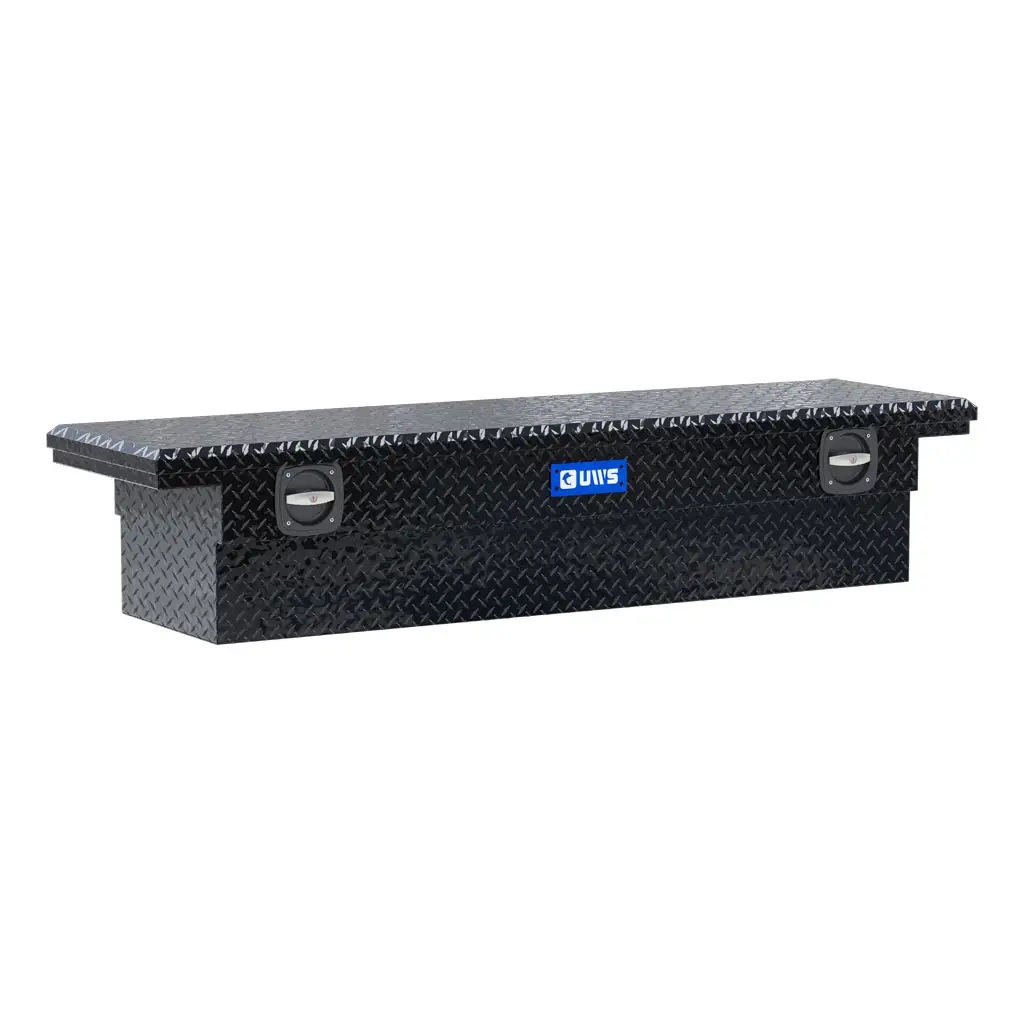
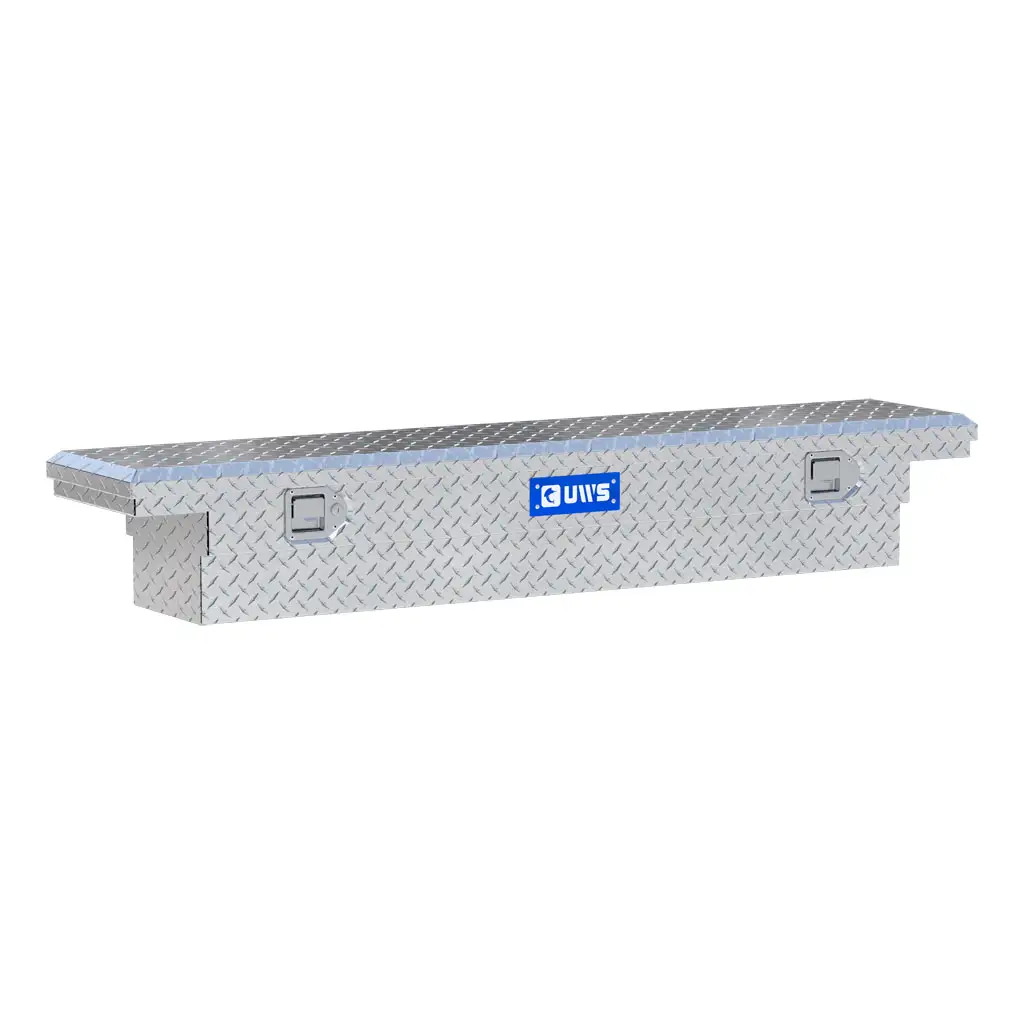
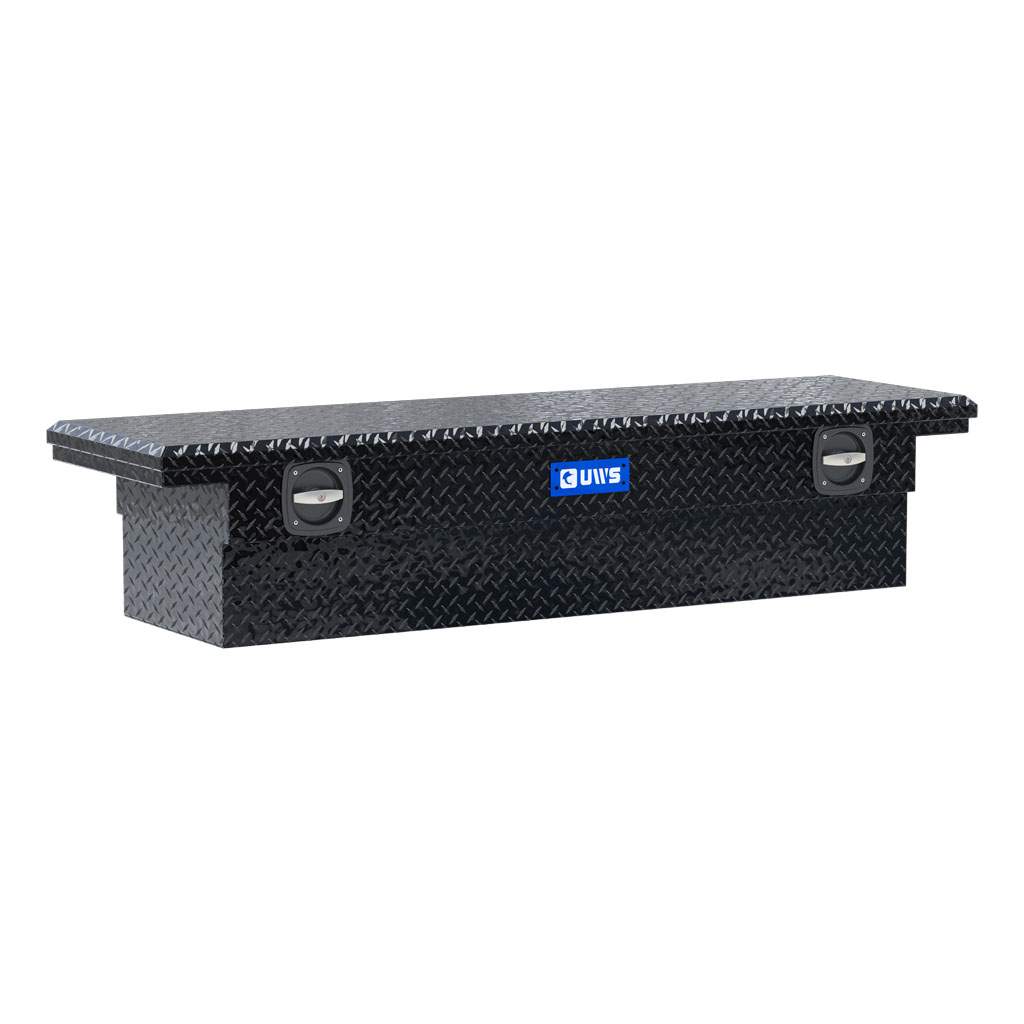
2. Low-Profile Tool Boxes
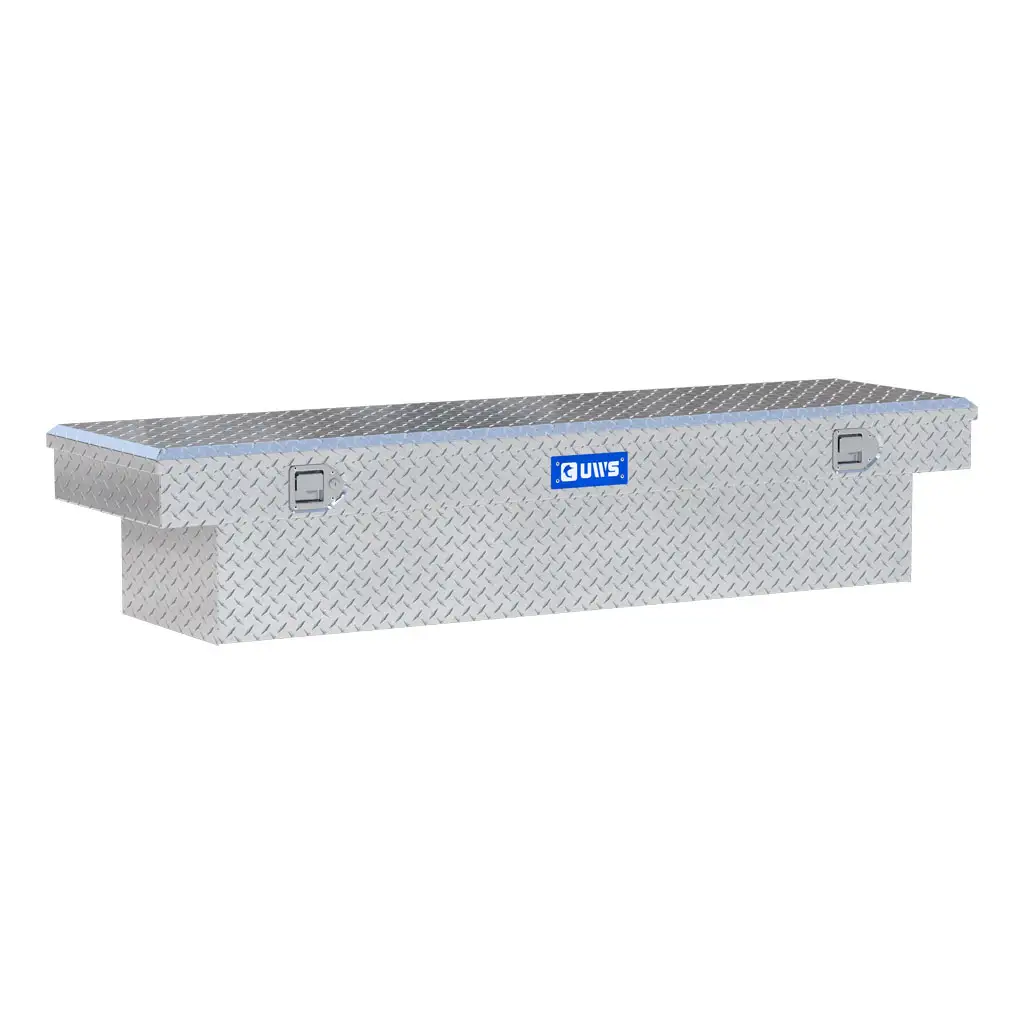
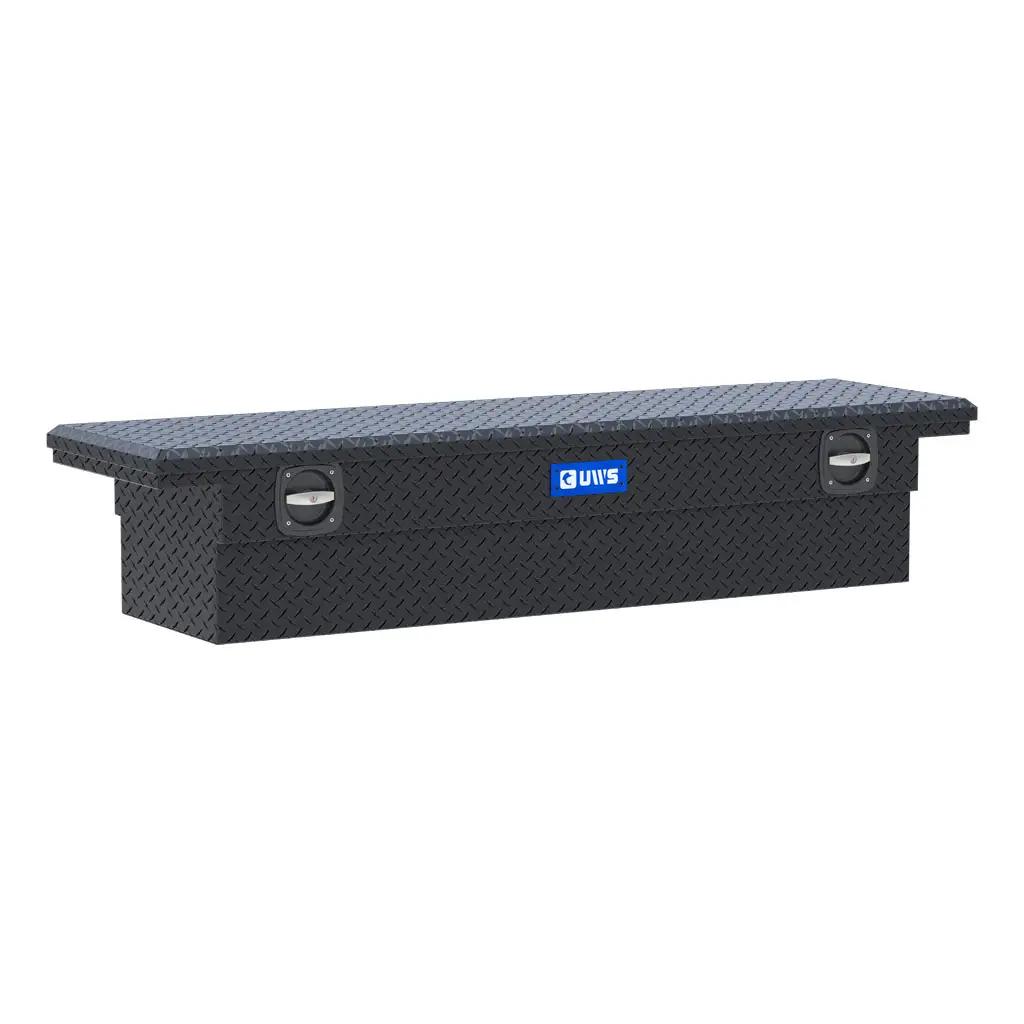
Low-profile tool boxes offer many of the same benefits as traditional crossover boxes but sit lower than the bed rails for a cleaner appearance.
Advantages include:
- Improved rear visibility
- Cleaner appearance
- Better compatibility with bed covers
- Reduced visual obstruction
Many daily drivers prefer this style because it provides valuable storage while maintaining a factory-like appearance and minimizing interference with sightlines.
-
Bright Aluminum 69" Crossover Truck Tool Box (Heavy Packaging)Loading Price....
-
 Bright Aluminum 72" Crossover Truck Tool Box (Heavy Packaging)Loading Price....
-
 Bright Aluminum 72" Crossover Box with Pull Handles (Heavy Packaging)Loading Price....


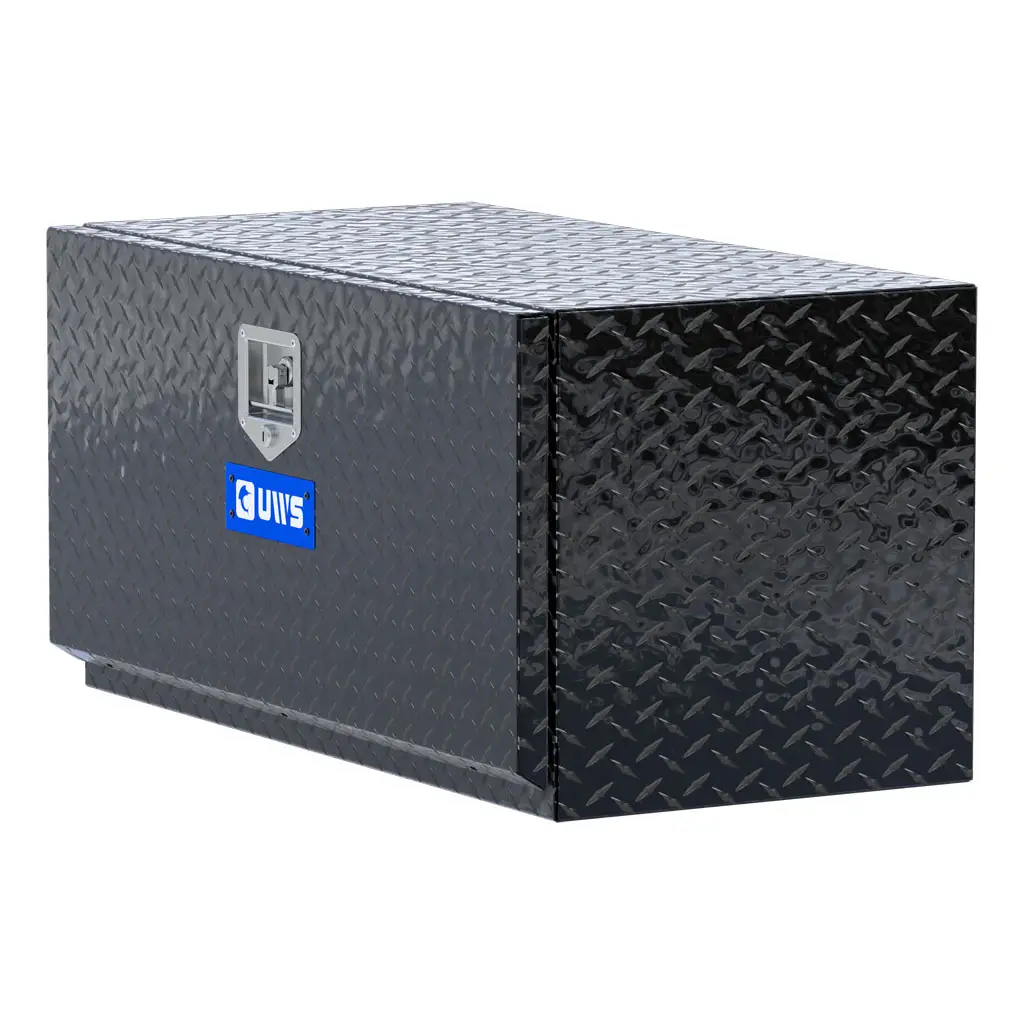
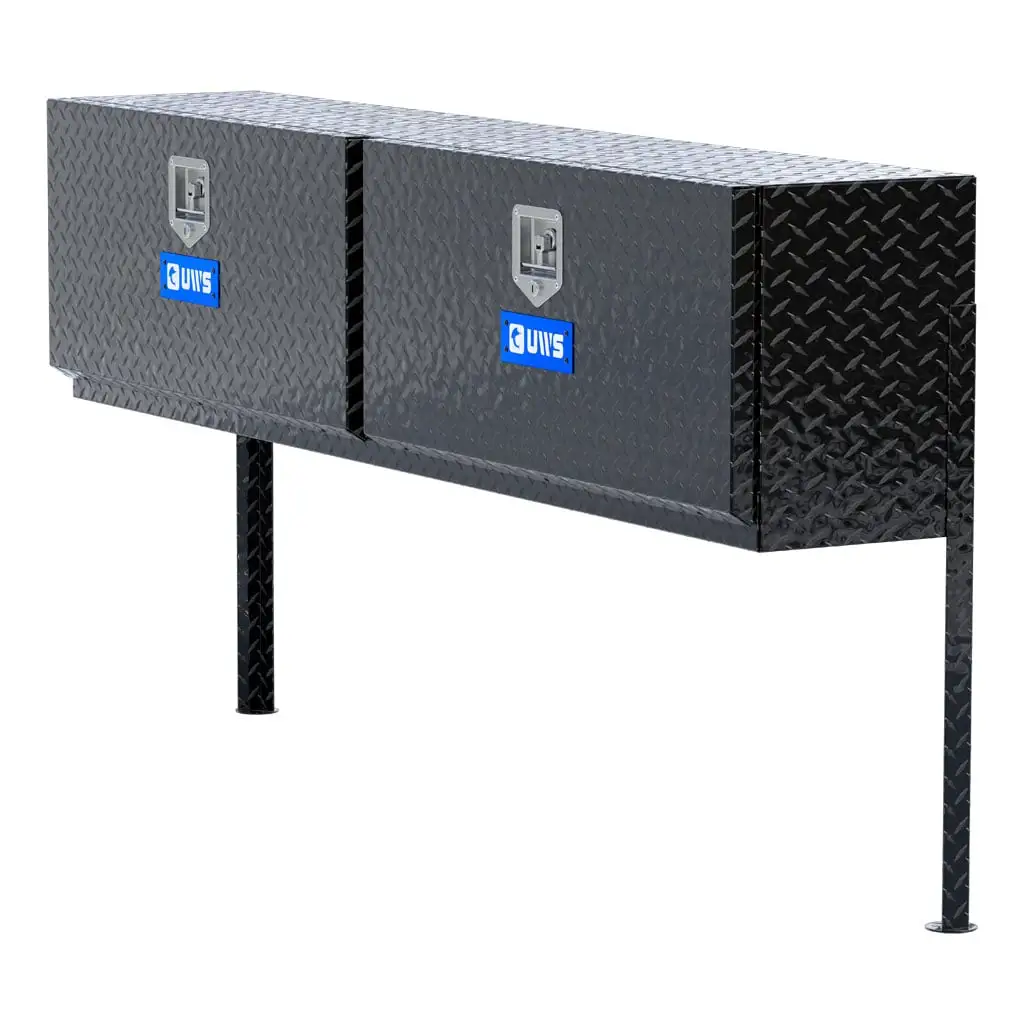
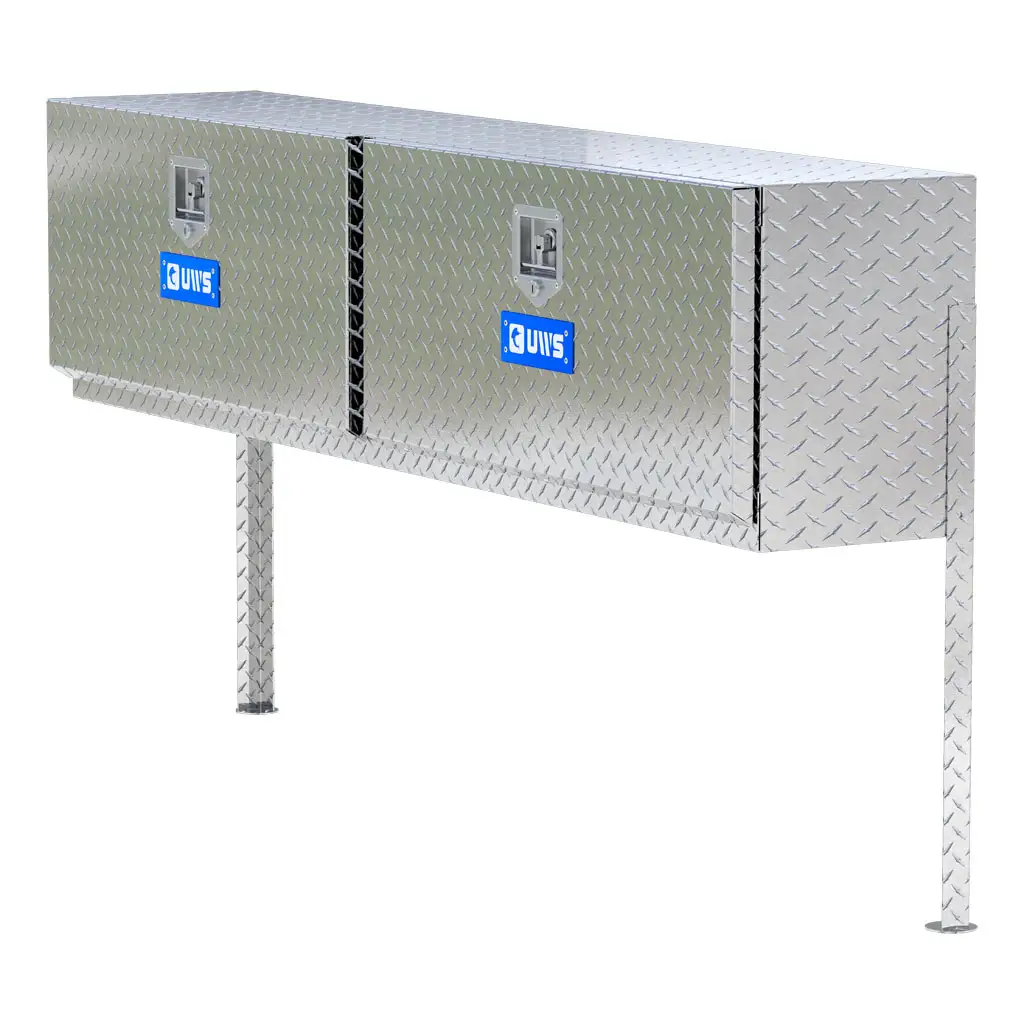
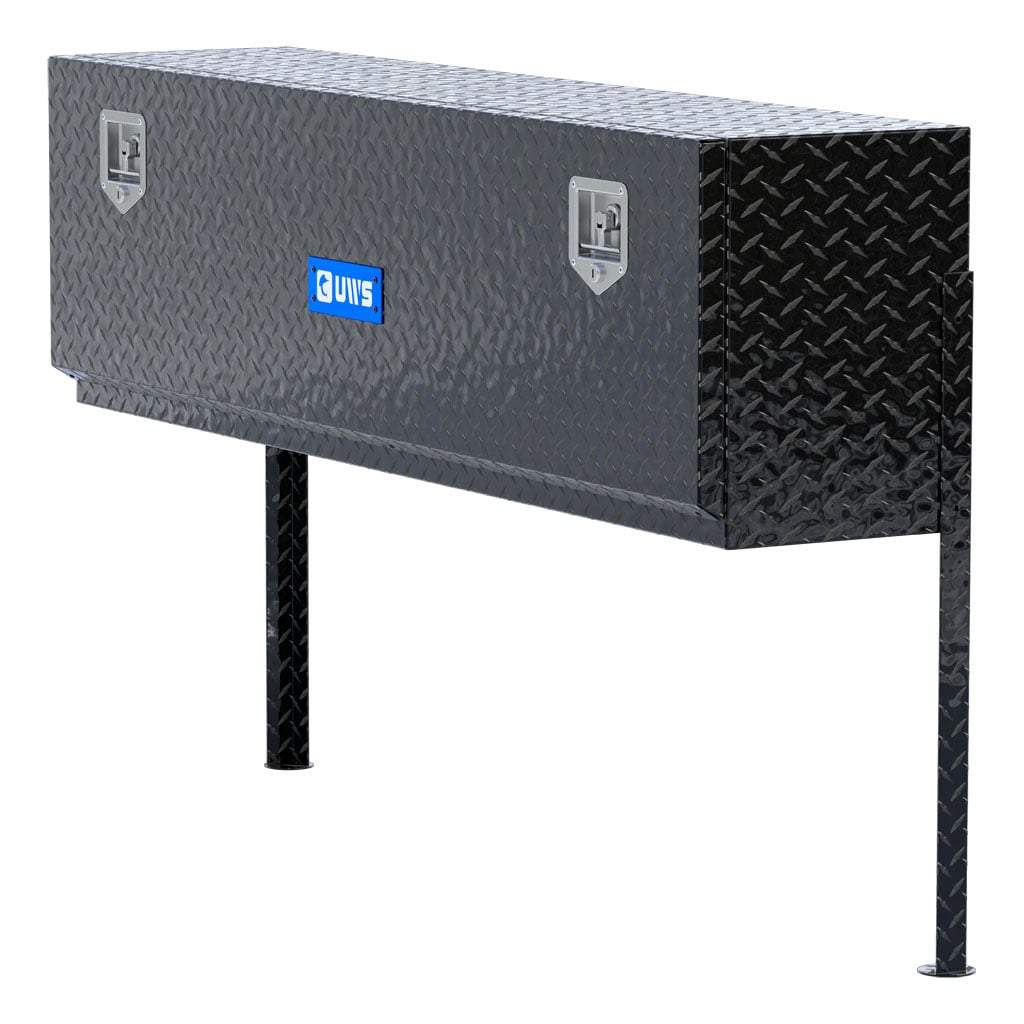
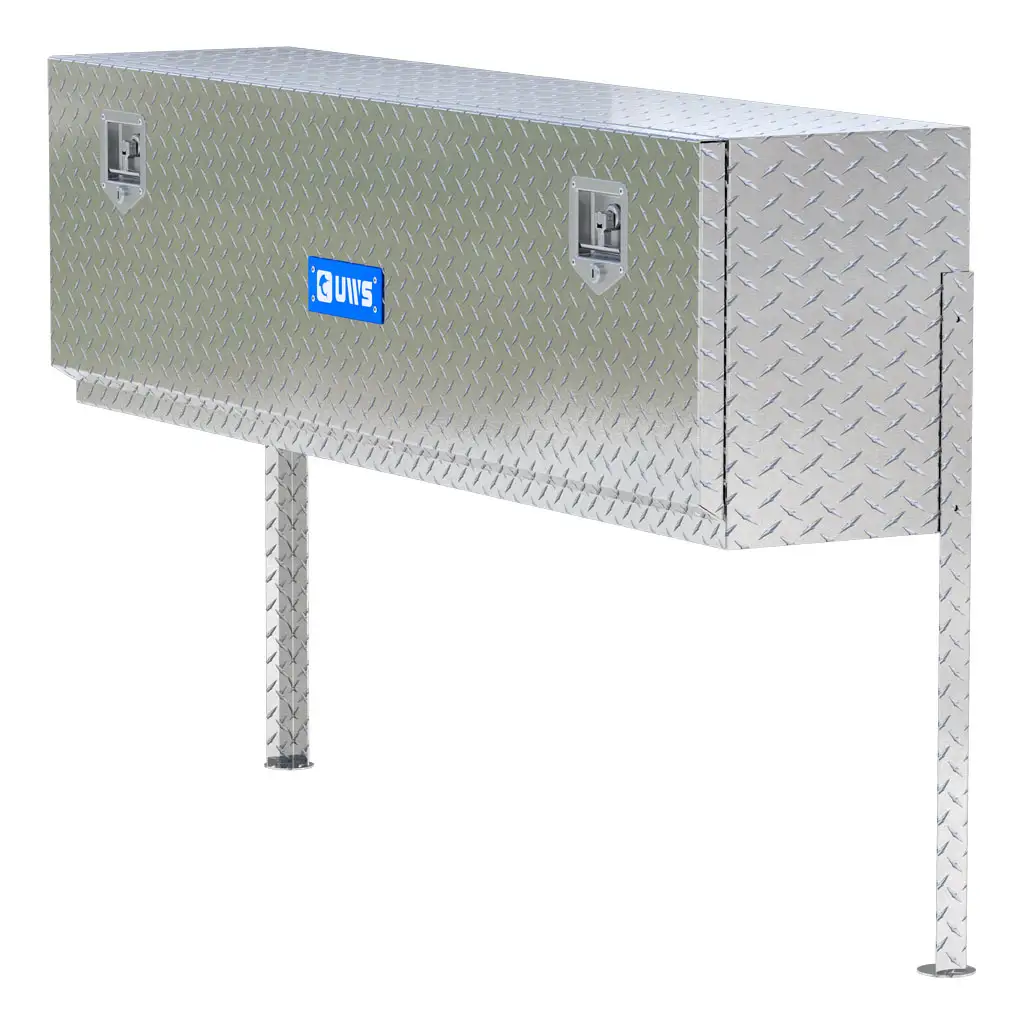
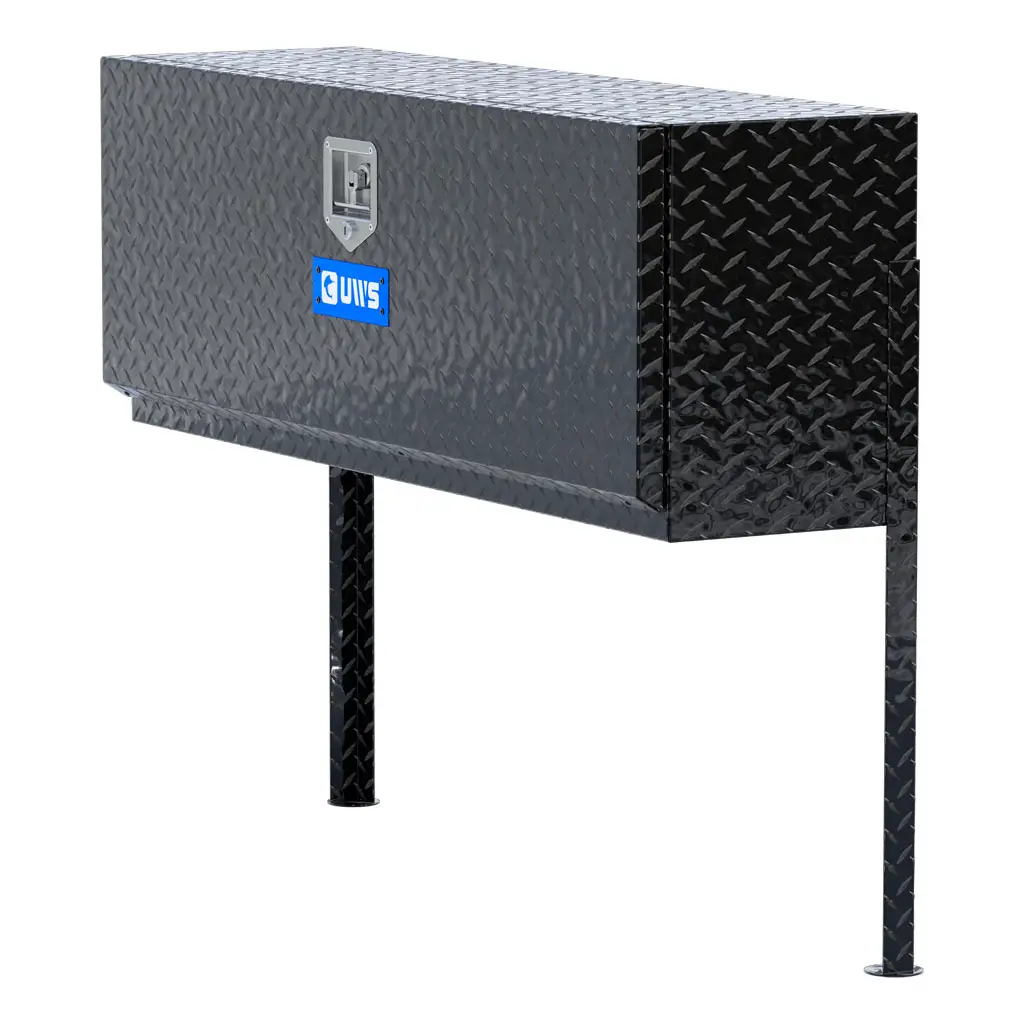
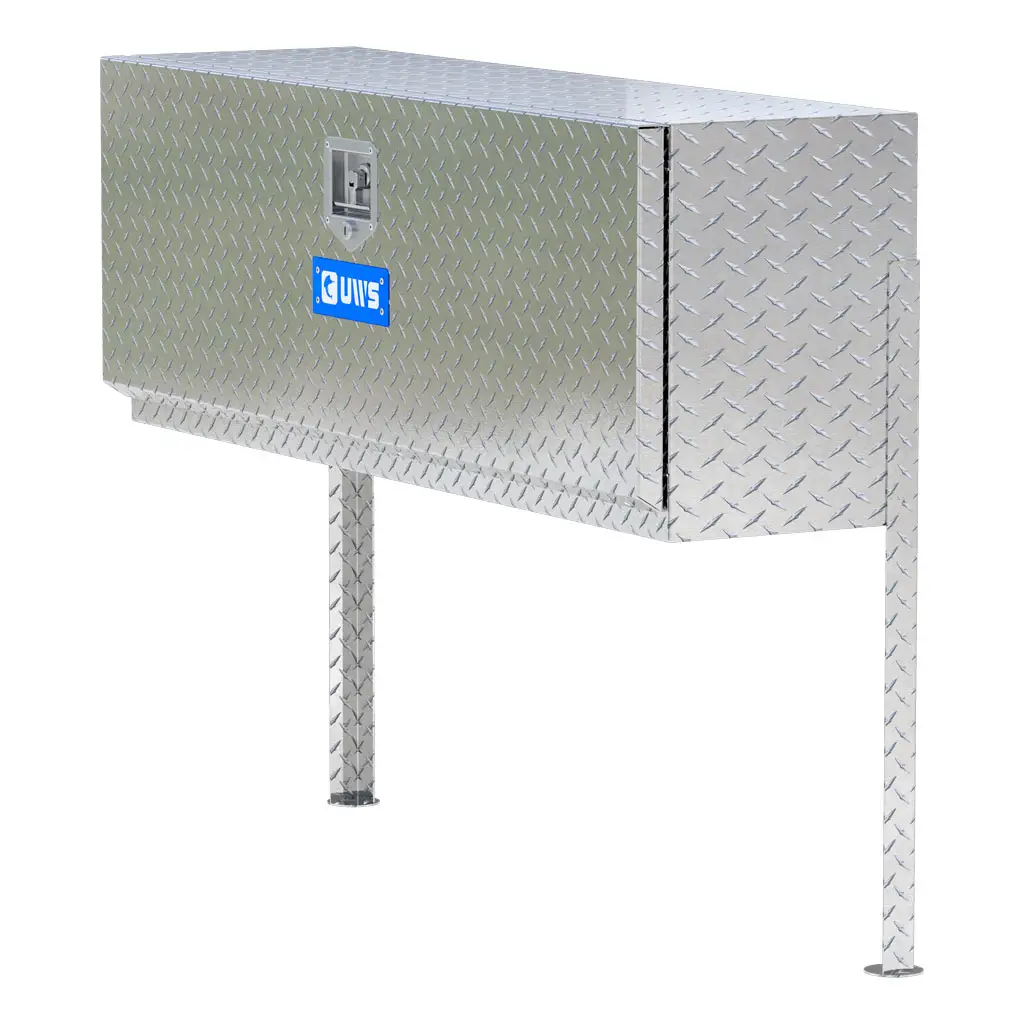
3. Side-Mount Tool Boxes
Side-mount tool boxes attach along one side of the truck bed, placing frequently used equipment within easy reach.
These are especially useful for:
- Frequently accessed tools
- Fleet applications
- Utility trucks
- Trade professionals
Rather than climbing into the bed to retrieve equipment, users can simply open the compartment from the side of the truck, saving time throughout the workday.
-
 Gloss Black Steel 60" Single-Door Underbody Tool BoxLoading Price....
-
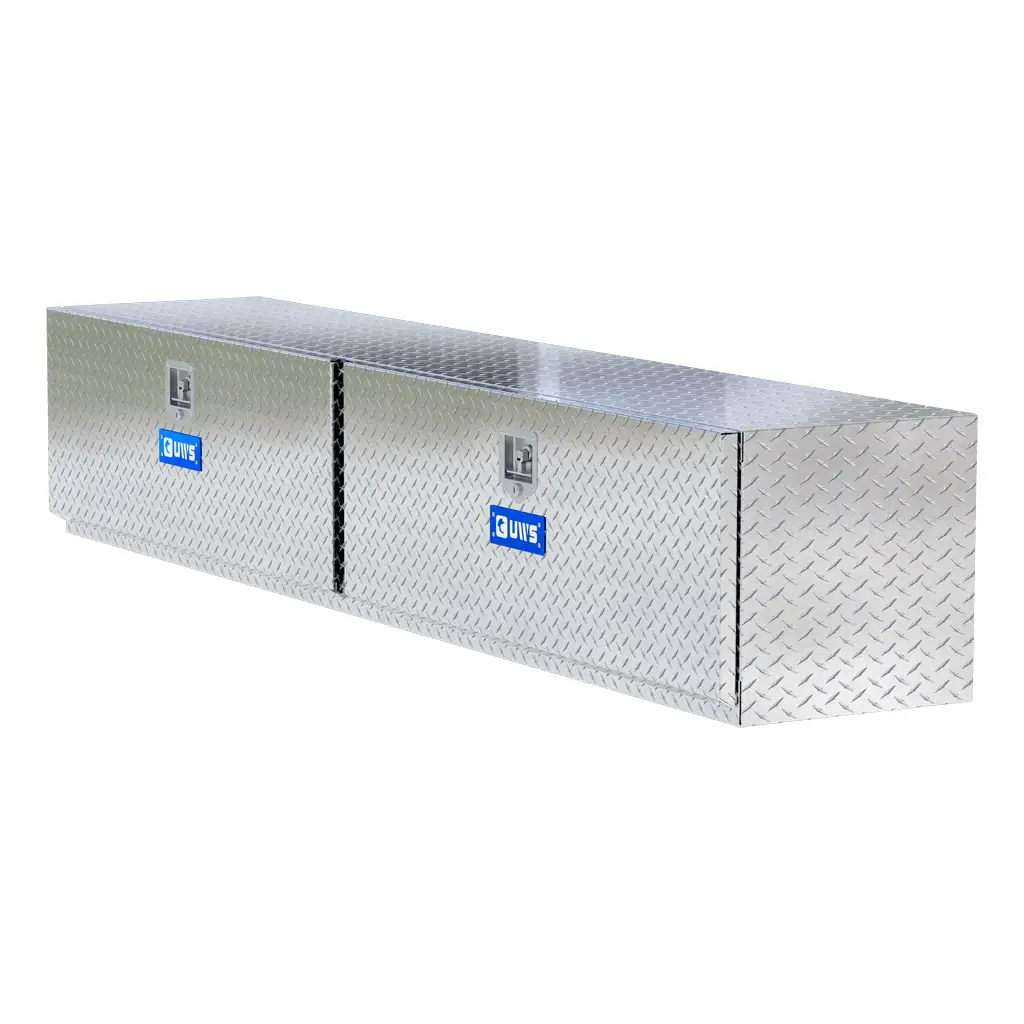 Bright Aluminum 96" Double-Door Underbody Tool BoxLoading Price....
-
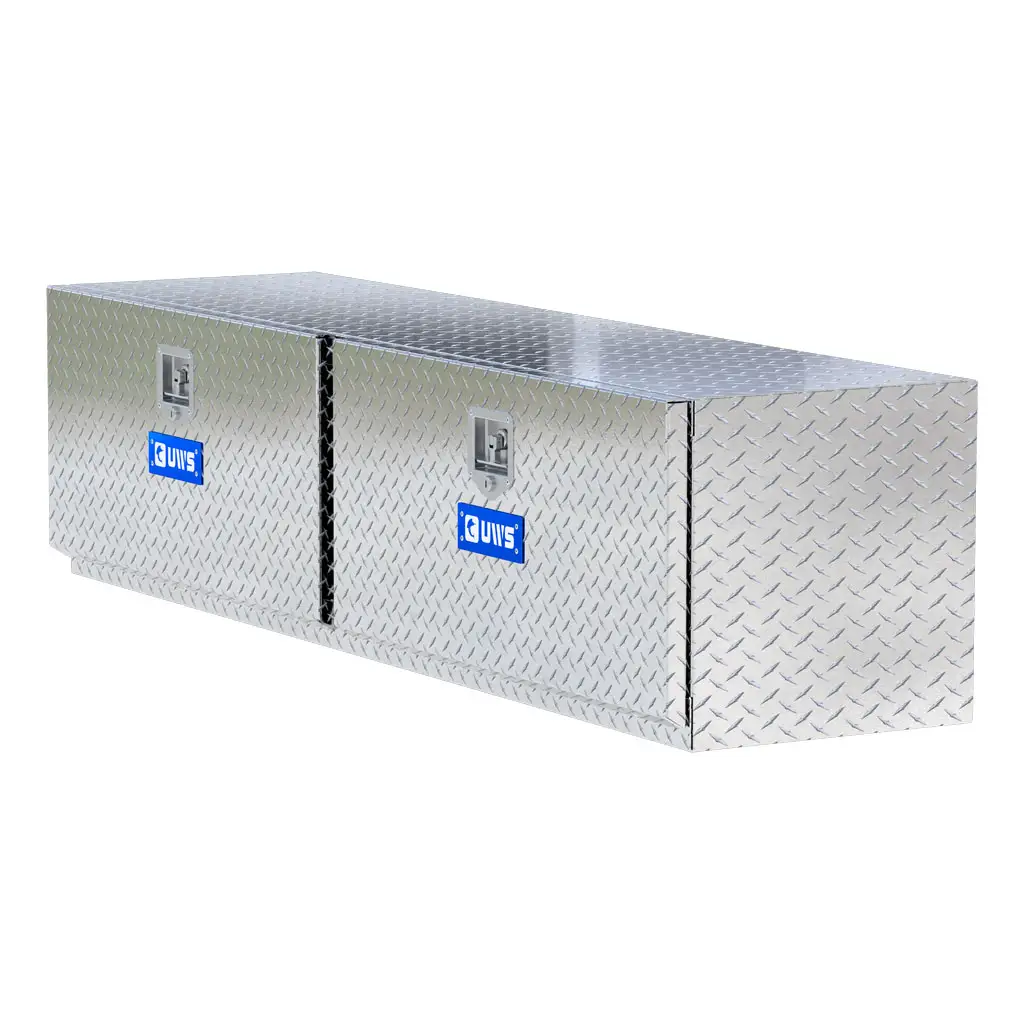 Bright Aluminum 72" Double-Door Underbody Tool Box (LTL Shipping Only)Loading Price....
-
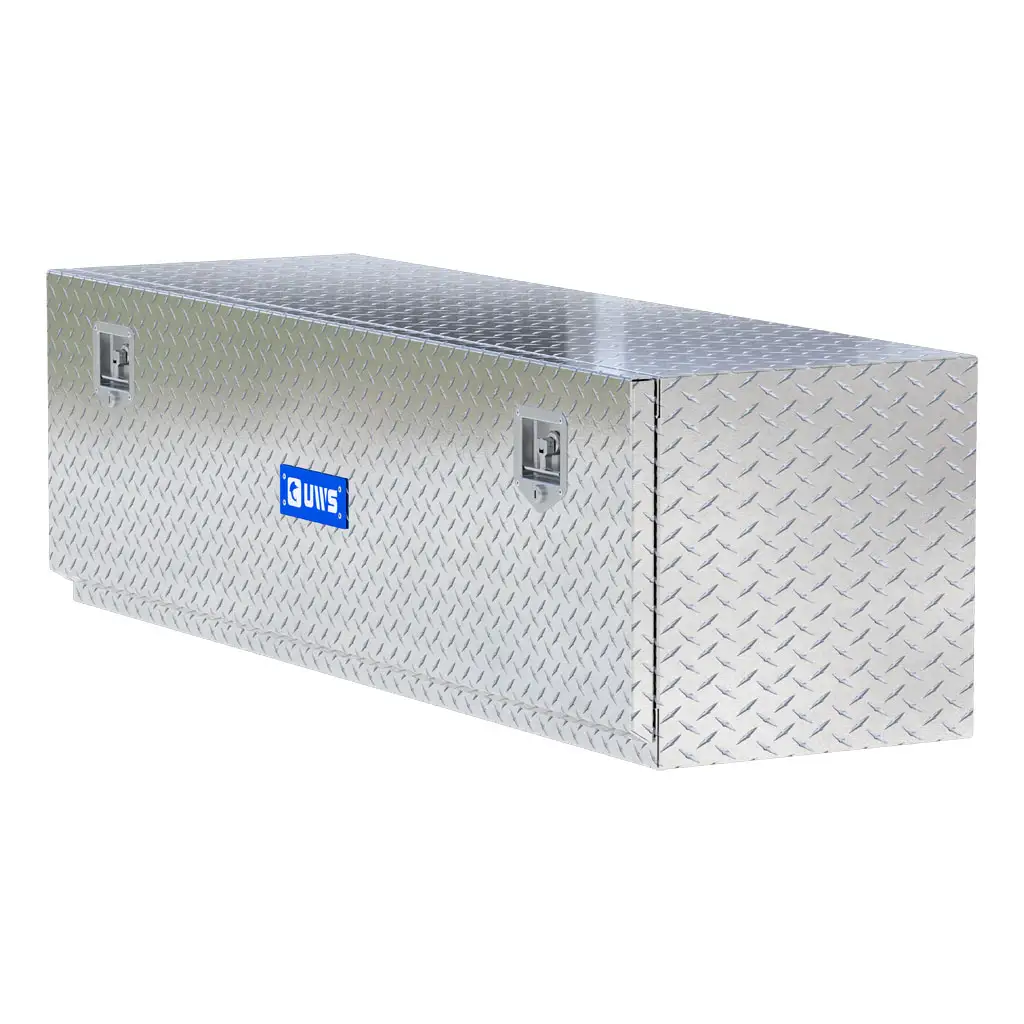 Bright Aluminum 60" Single-Door Underbody Tool Box (LTL Shipping Only)Loading Price....
-
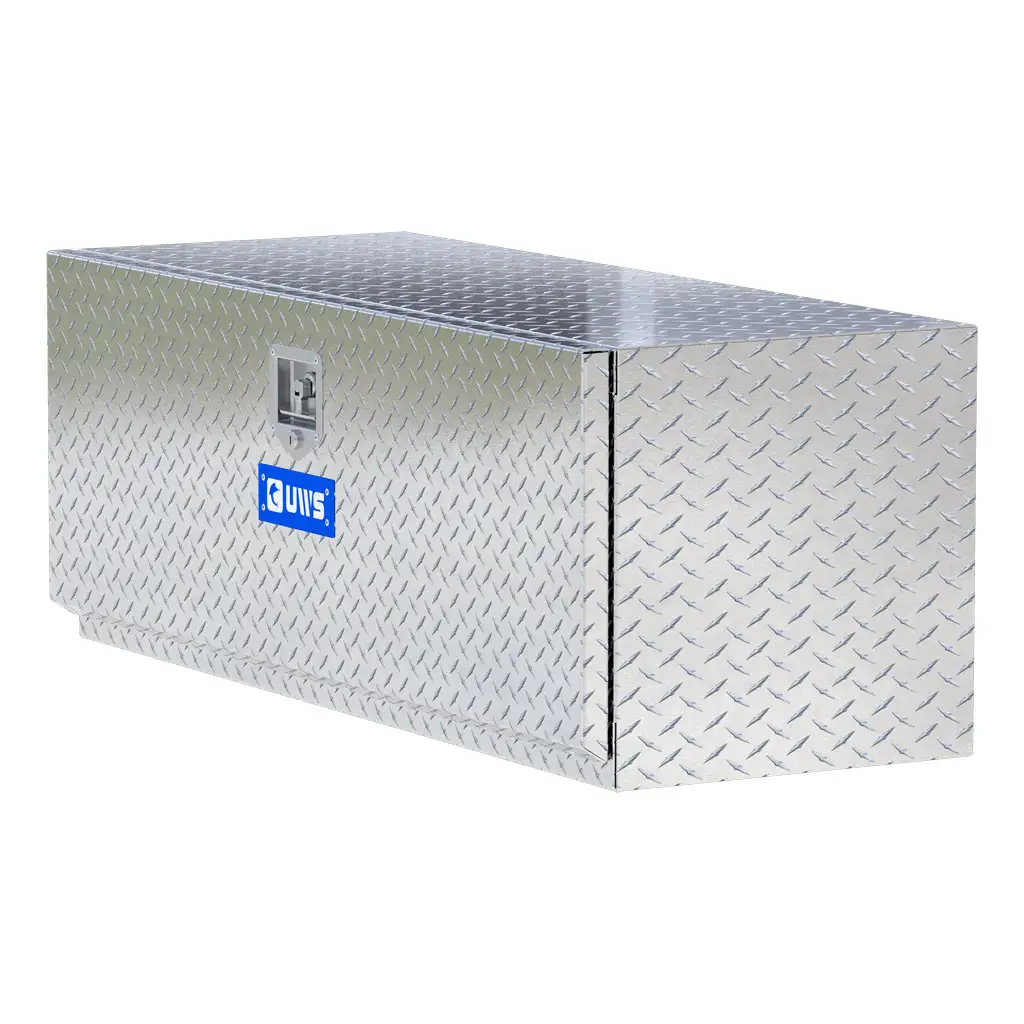 Bright Aluminum 48" Single-Door Underbody Tool Box (LTL Shipping Only)Loading Price....
-
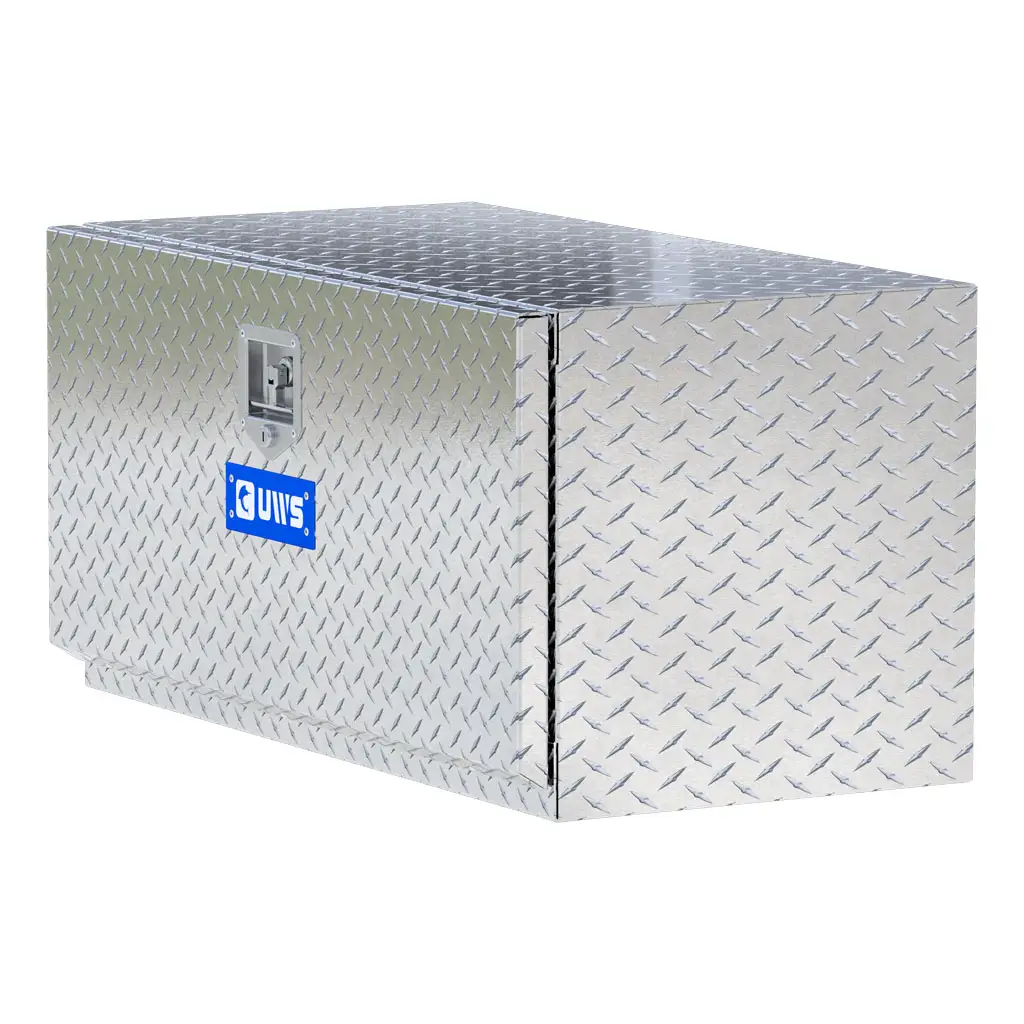 Bright Aluminum 36" Single-Door Underbody Tool Box (LTL Shipping Only)Loading Price....
-
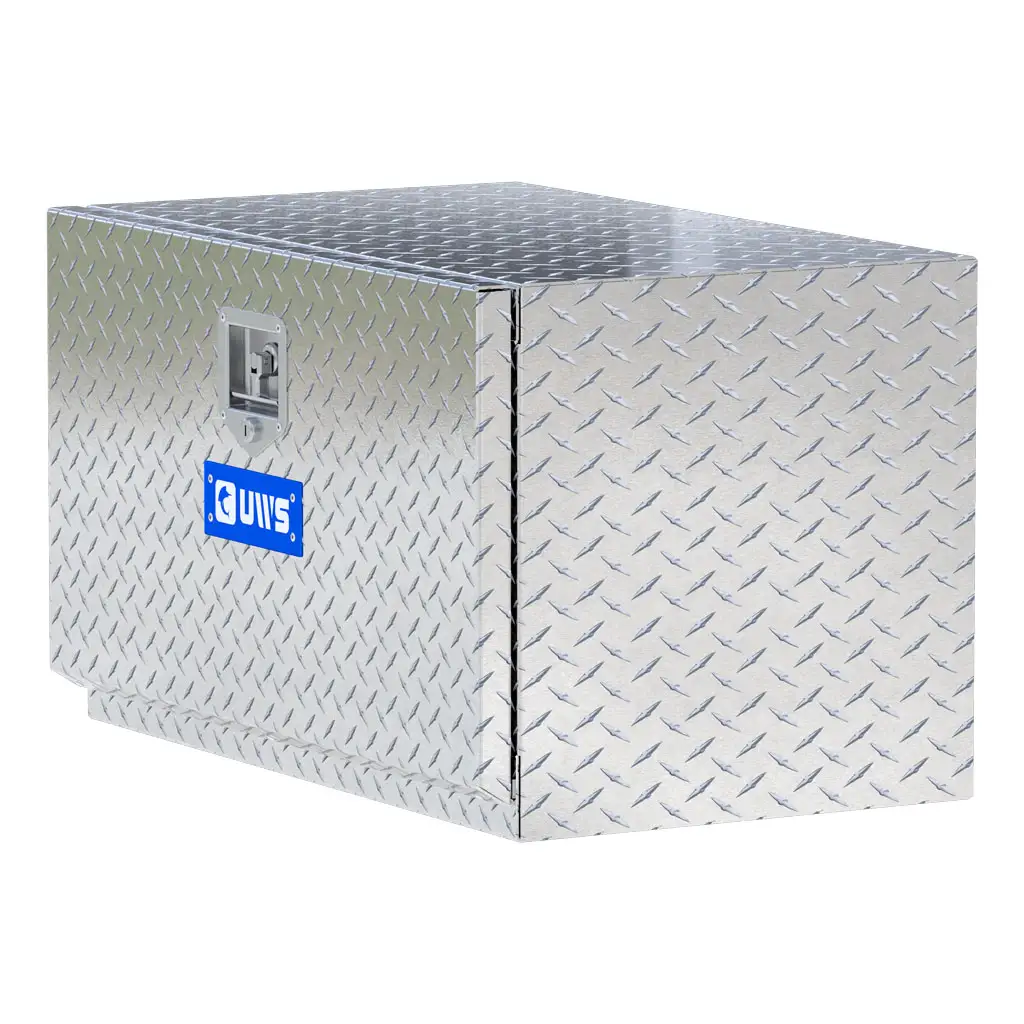 Bright Aluminum 30" Single-Door Underbody Tool Box (LTL Shipping Only)Loading Price....
-
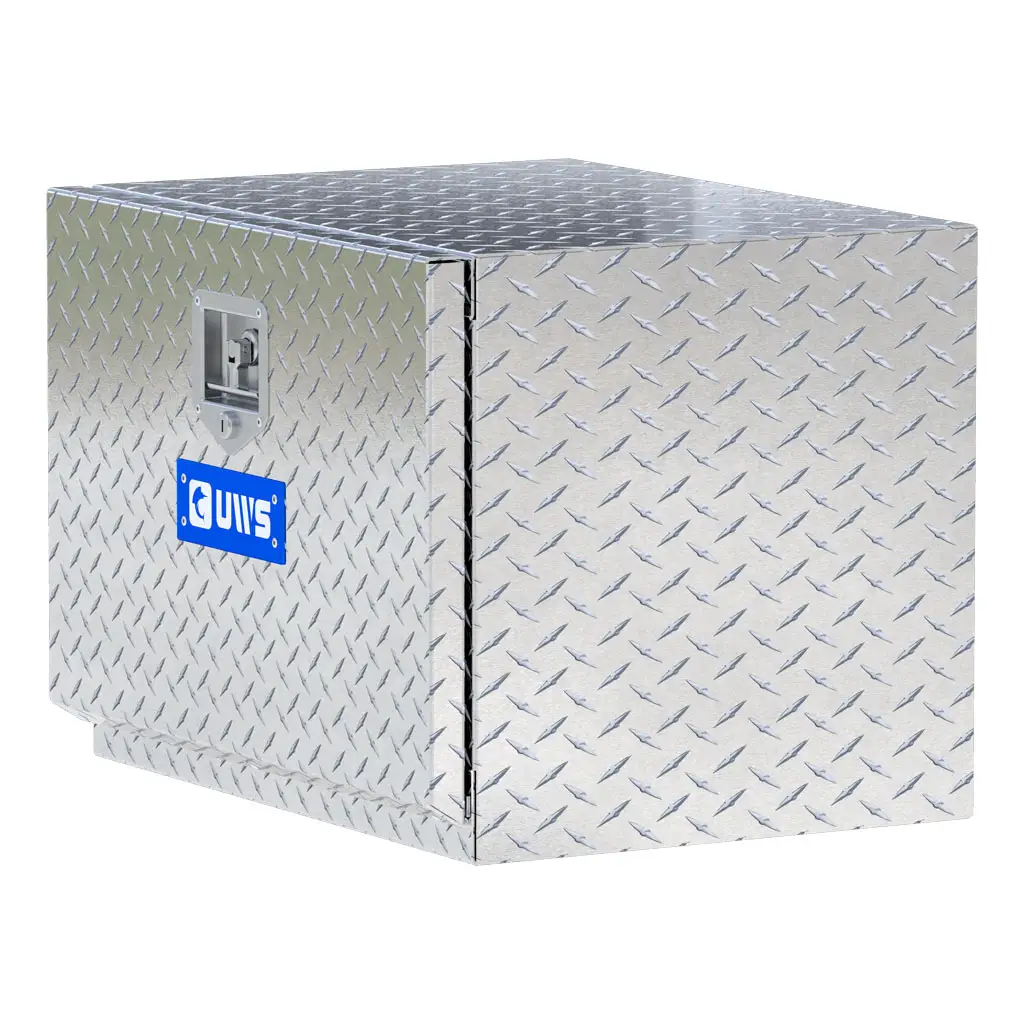 Bright Aluminum 24" Single-Door Underbody Tool Box (LTL Shipping Only)Loading Price....
-
 Gloss Black Aluminum 96" Double-Door Topside Truck Tool BoxLoading Price....
-
 Bright Aluminum 96" Double-Door Topside Truck Tool BoxLoading Price....
-
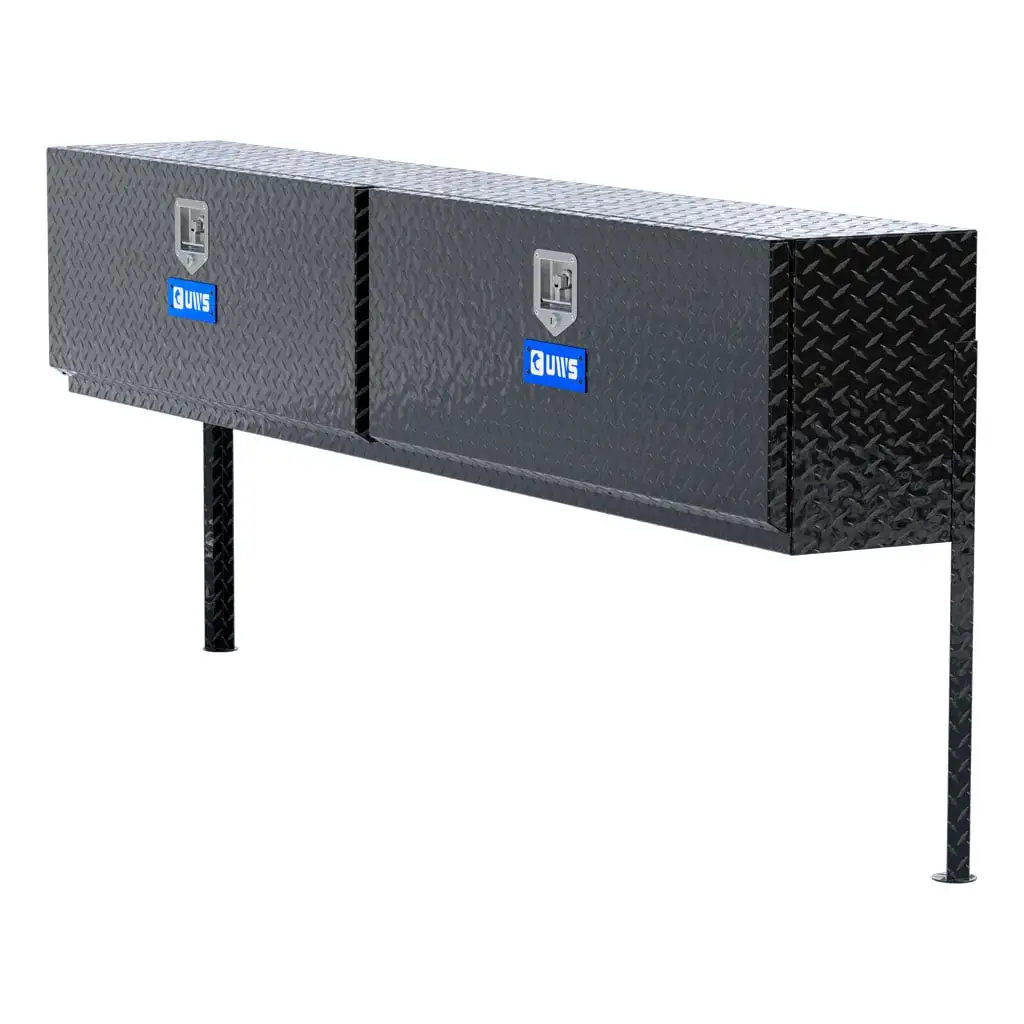 Gloss Black Aluminum 90" Double-Door Topside Truck Tool BoxLoading Price....
-
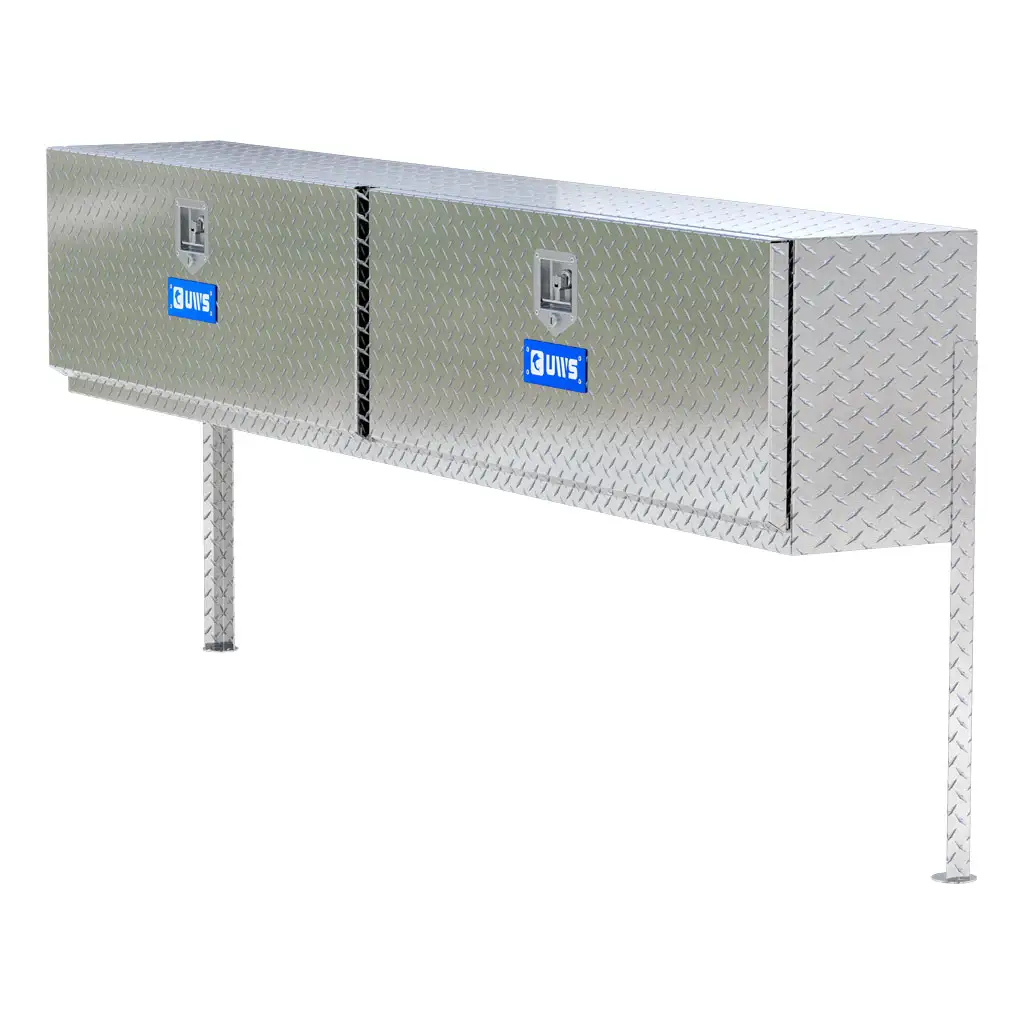 Bright Aluminum 90" Double-Door Topside Truck Tool BoxLoading Price....
-
 Gloss Black Aluminum 72" Truck Side Tool Box (LTL Shipping Only)Loading Price....
4. Chest Tool Boxes
Chest tool boxes sit entirely inside the truck bed rather than spanning across the rails. Their design provides flexibility while allowing owners to position the box according to their specific needs.
Benefits include:
- Flexible placement
- Large storage capacity
- Easy removal if necessary
These boxes work particularly well for owners who prioritize storage volume while still needing access to bed rails for additional accessories.
-
 Bright Aluminum 62" Wedged Angled Utility Chest Box (LTL Shipping Only)Loading Price....
-
 Gloss Black Aluminum 60" Wedge Utility Chest Box (LTL Shipping Only)Loading Price....
-
 Bright Aluminum 60" Wedge Utility Chest Box (LTL Shipping Only)Loading Price....
-
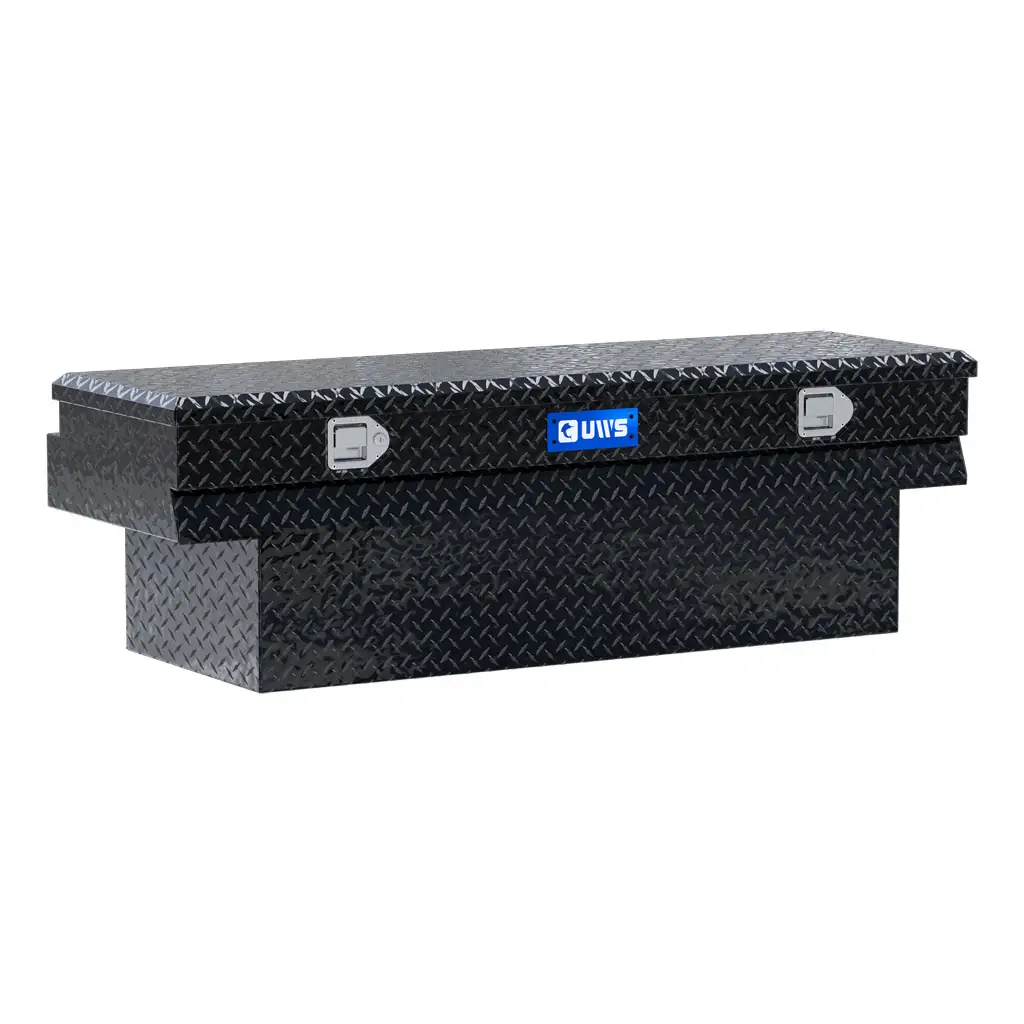 Gloss Black Aluminum 60" Notched Utility Chest Box (LTL Shipping Only)Loading Price....
-
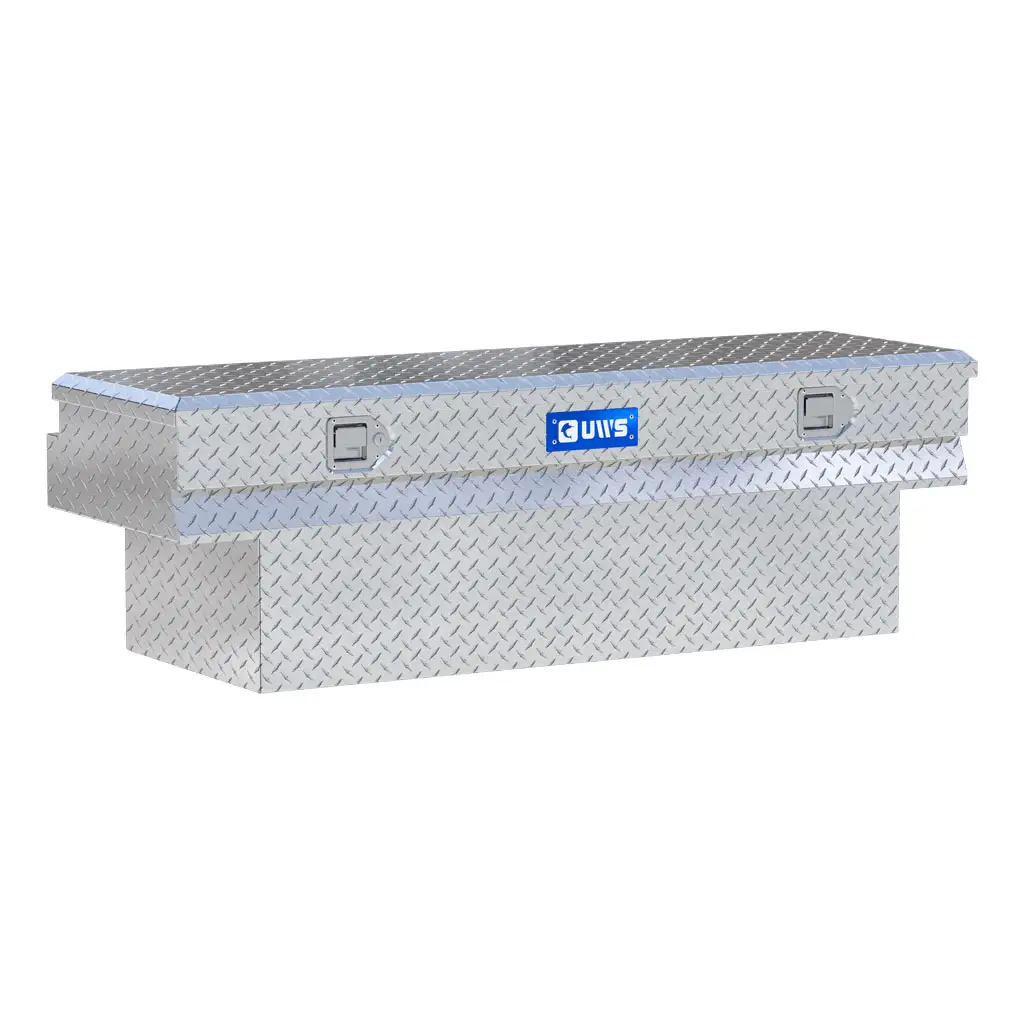 Bright Aluminum 60" Notched Utility Chest Box (LTL Shipping Only)Loading Price....
-
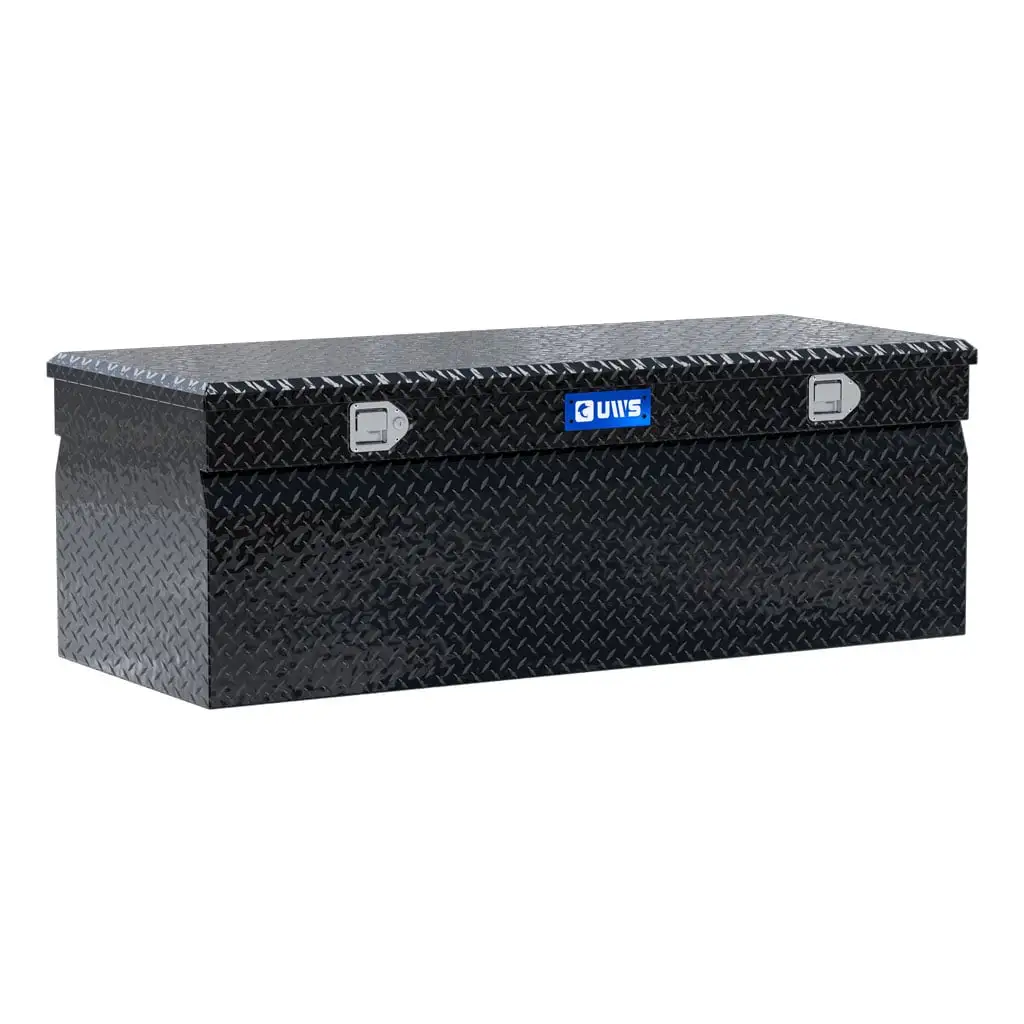 Gloss Black Aluminum 60" Utility Chest BoxLoading Price....
-
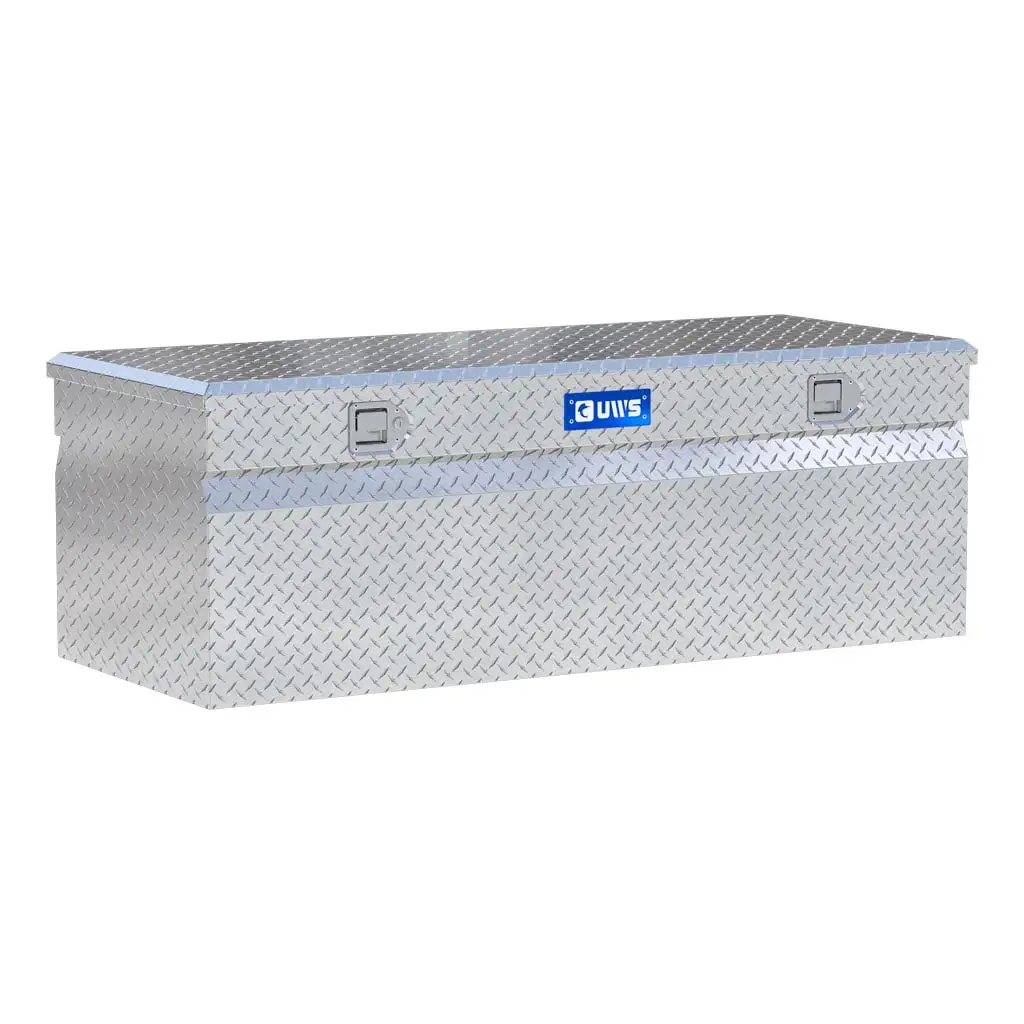 Bright Aluminum 60" Utility Chest BoxLoading Price....
-
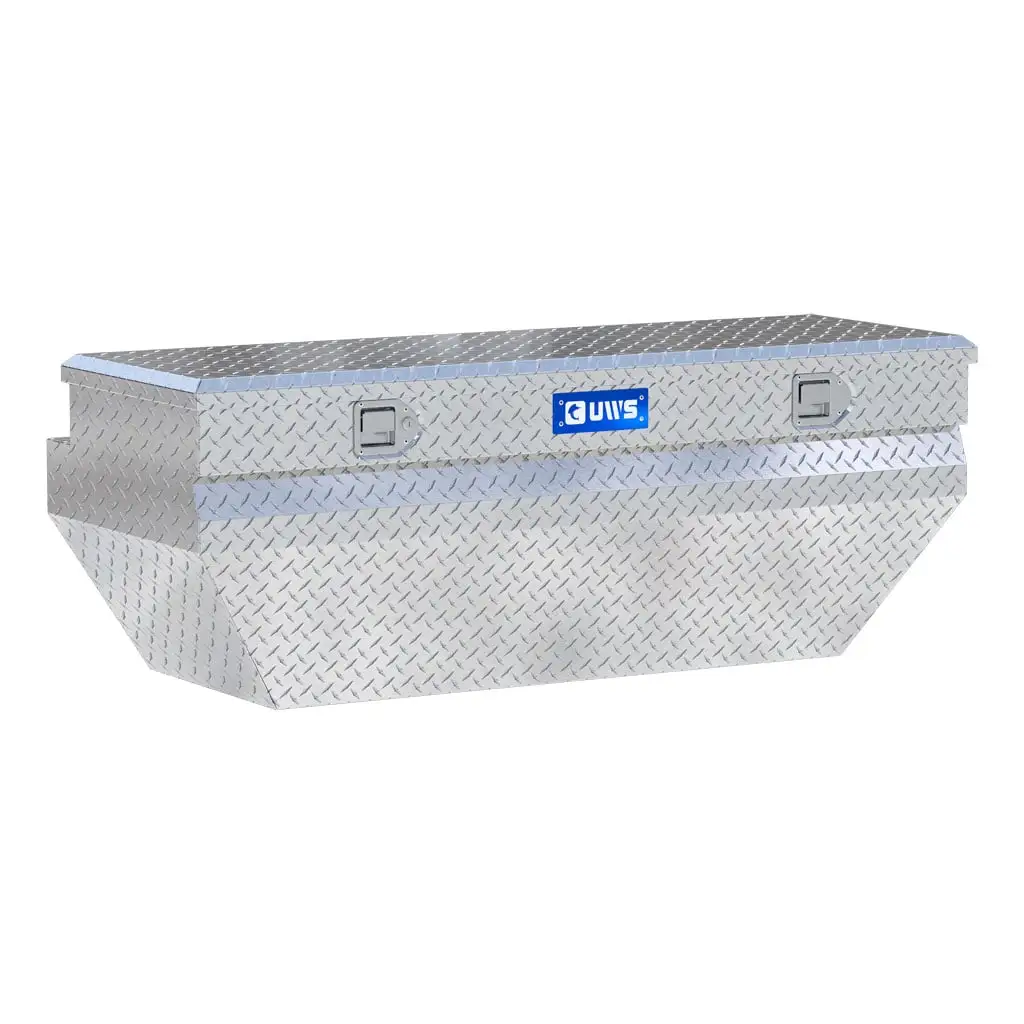 Bright Aluminum 55" Wedged Angled Utility Chest Box (LTL Shipping Only)Loading Price....
-
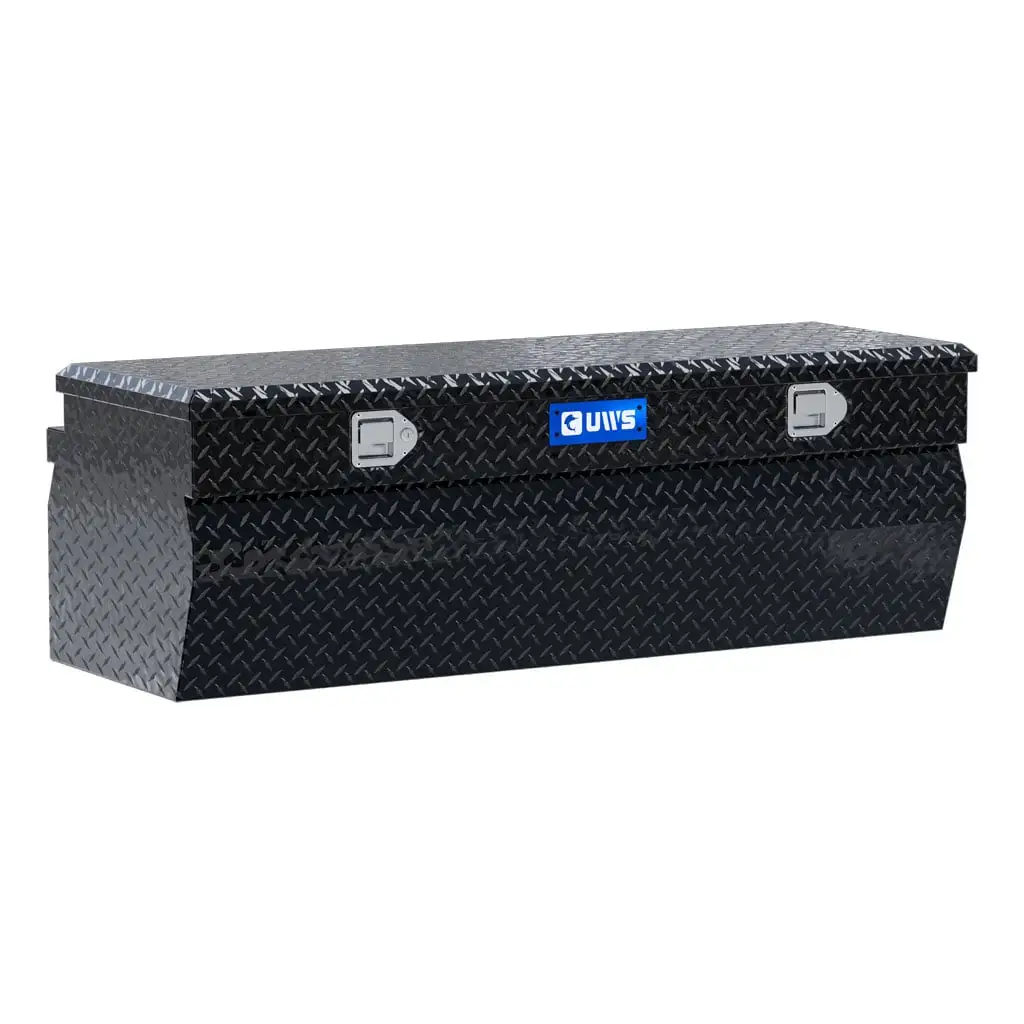 Gloss Black Aluminum 55" Wedge Utility Chest Box (LTL Shipping Only)Loading Price....
-
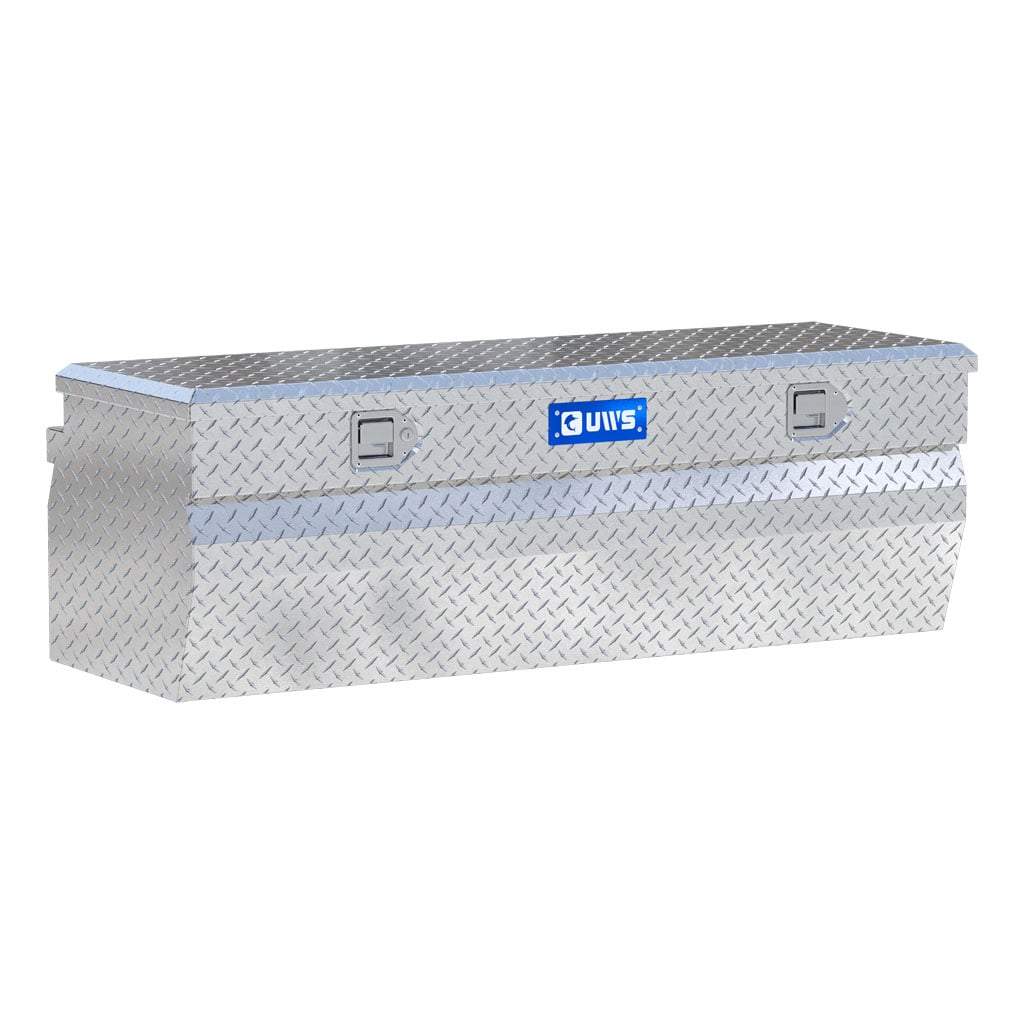 Bright Aluminum 55" Wedge Utility Chest Box (LTL Shipping Only)Loading Price....
-
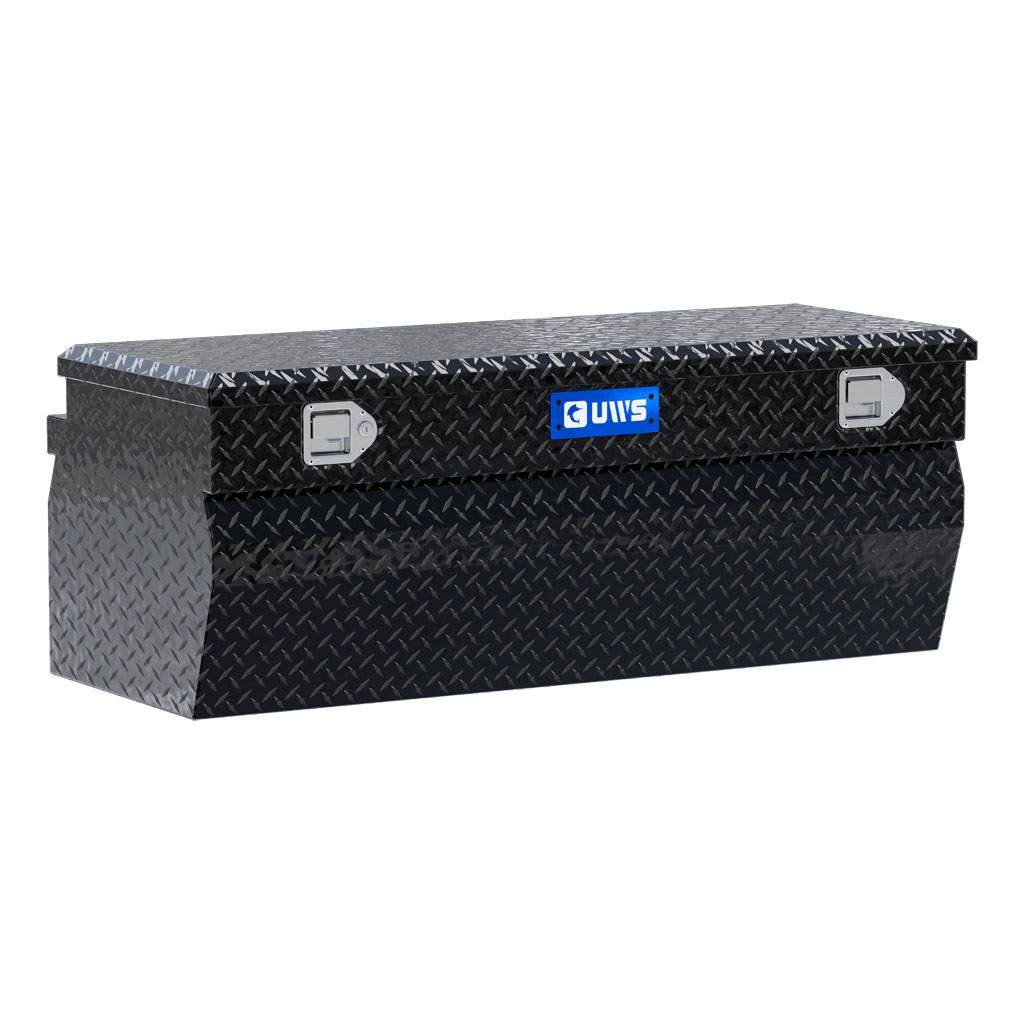 Gloss Black Aluminum 48" Wedge Utility Chest Box (LTL Shipping Only)Loading Price....
-
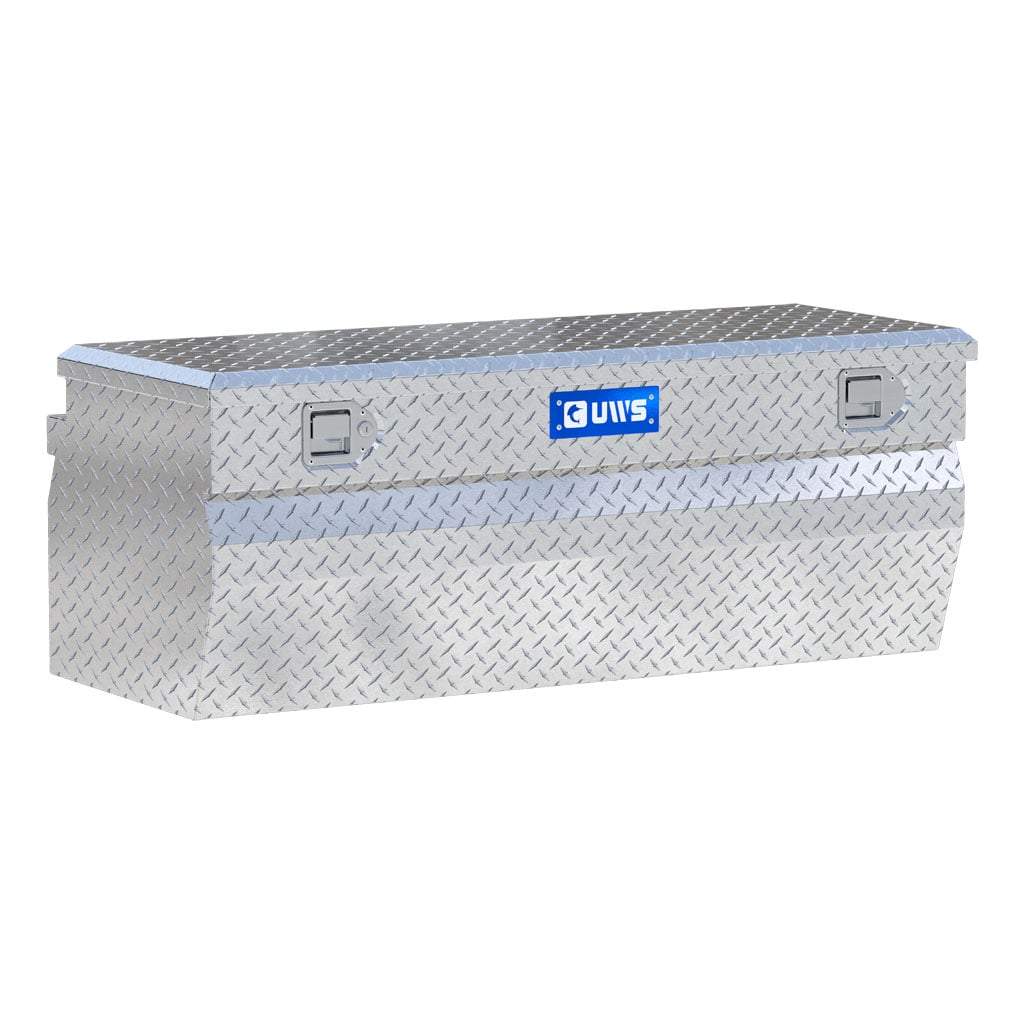 Bright Aluminum 48" Wedge Utility Chest Box (LTL Shipping Only)Loading Price....
-
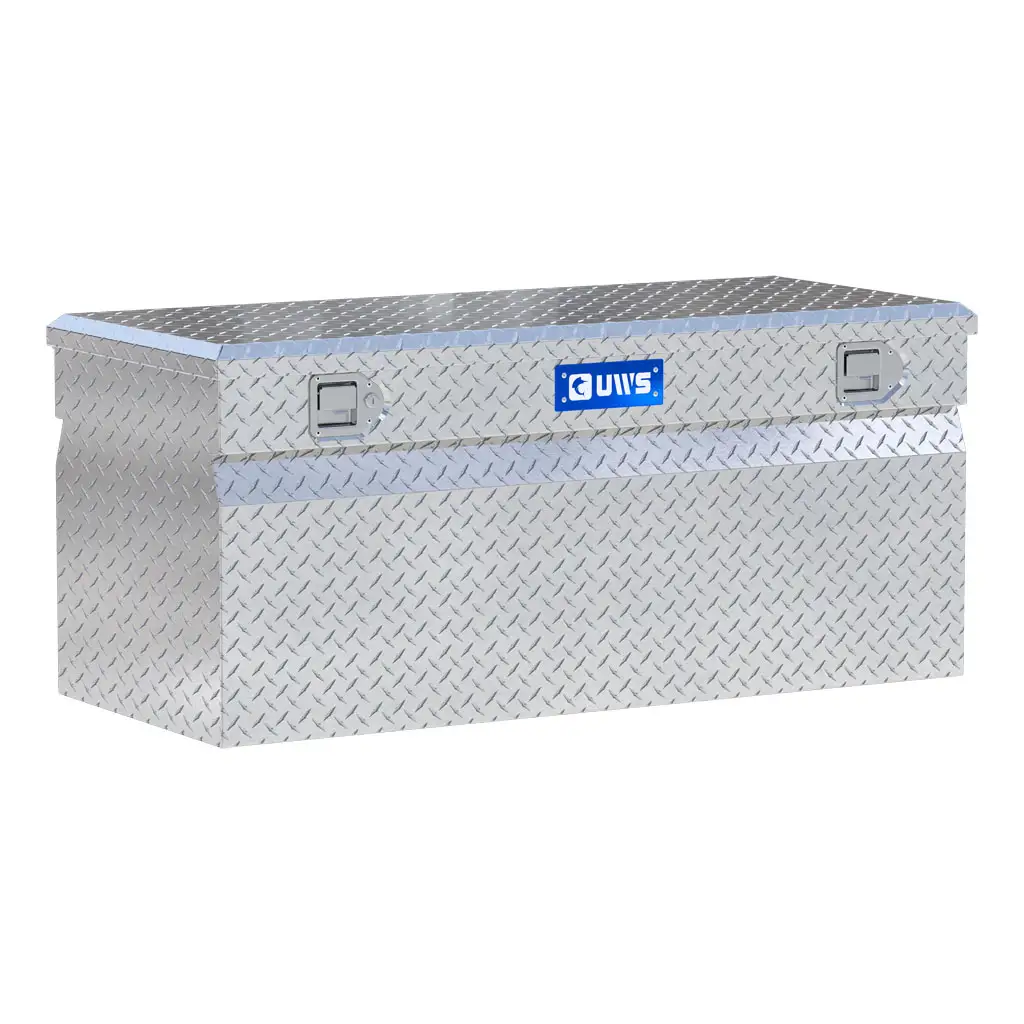 Bright Aluminum 48" Cargo Carrier Utility Chest Box (LTL Shipping Only)Loading Price....
-
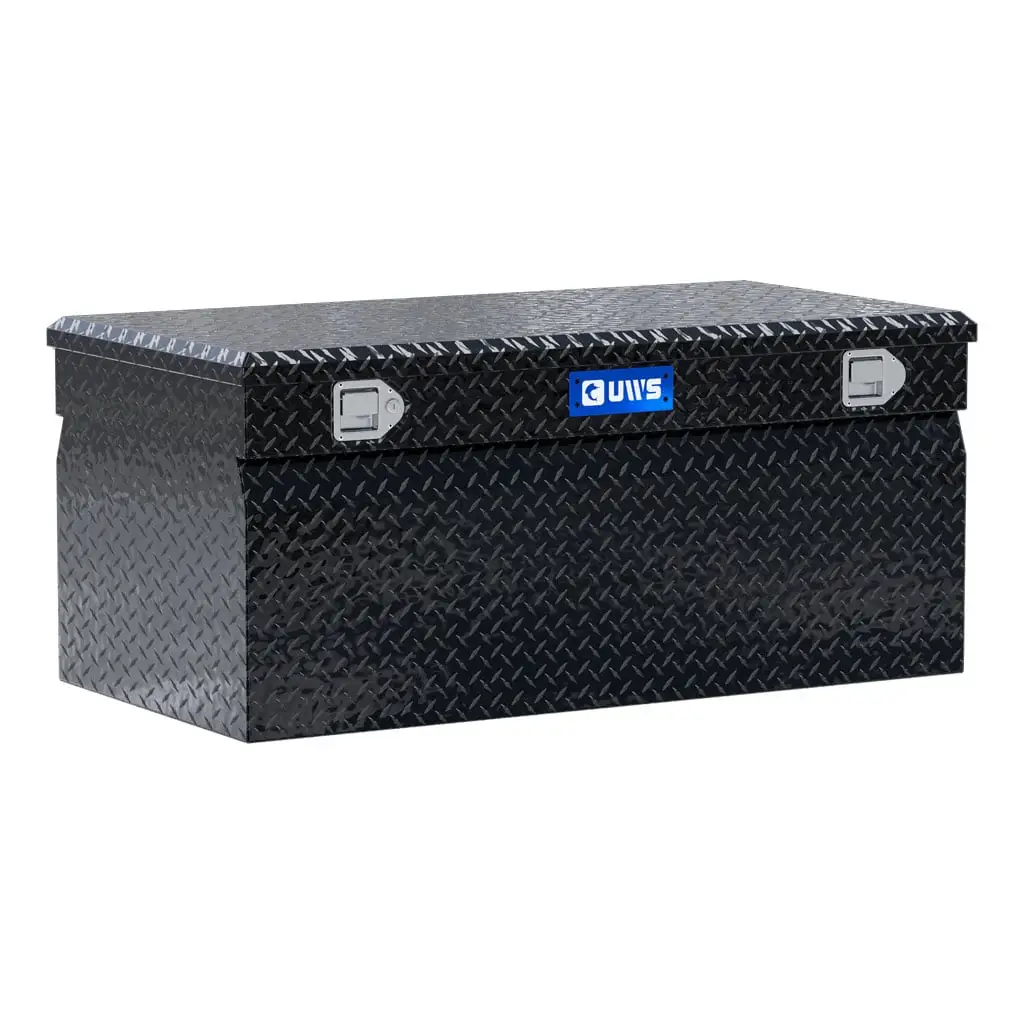 Gloss Black Aluminum 48" Utility Chest Box (LTL Shipping Only)Loading Price....
-
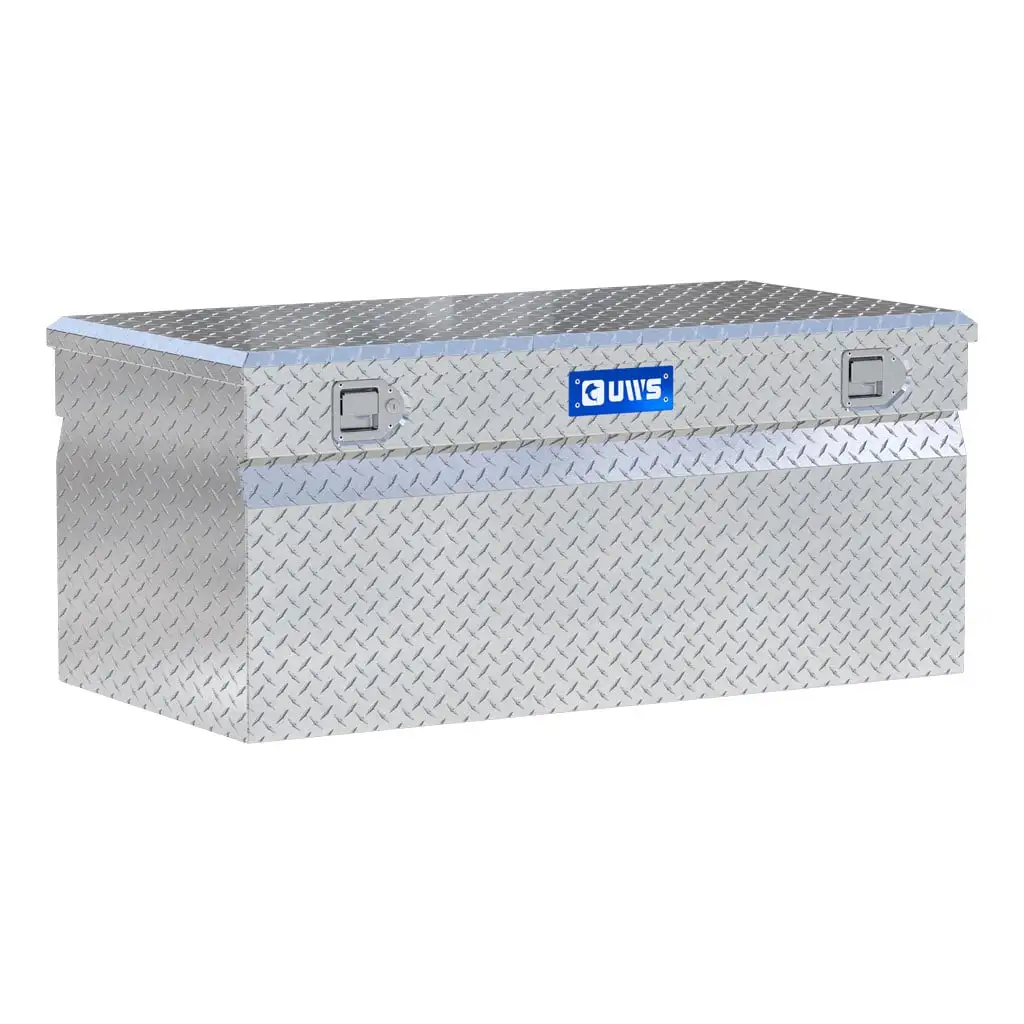 Bright Aluminum 48" Utility Chest Box (LTL Shipping Only)Loading Price....
-
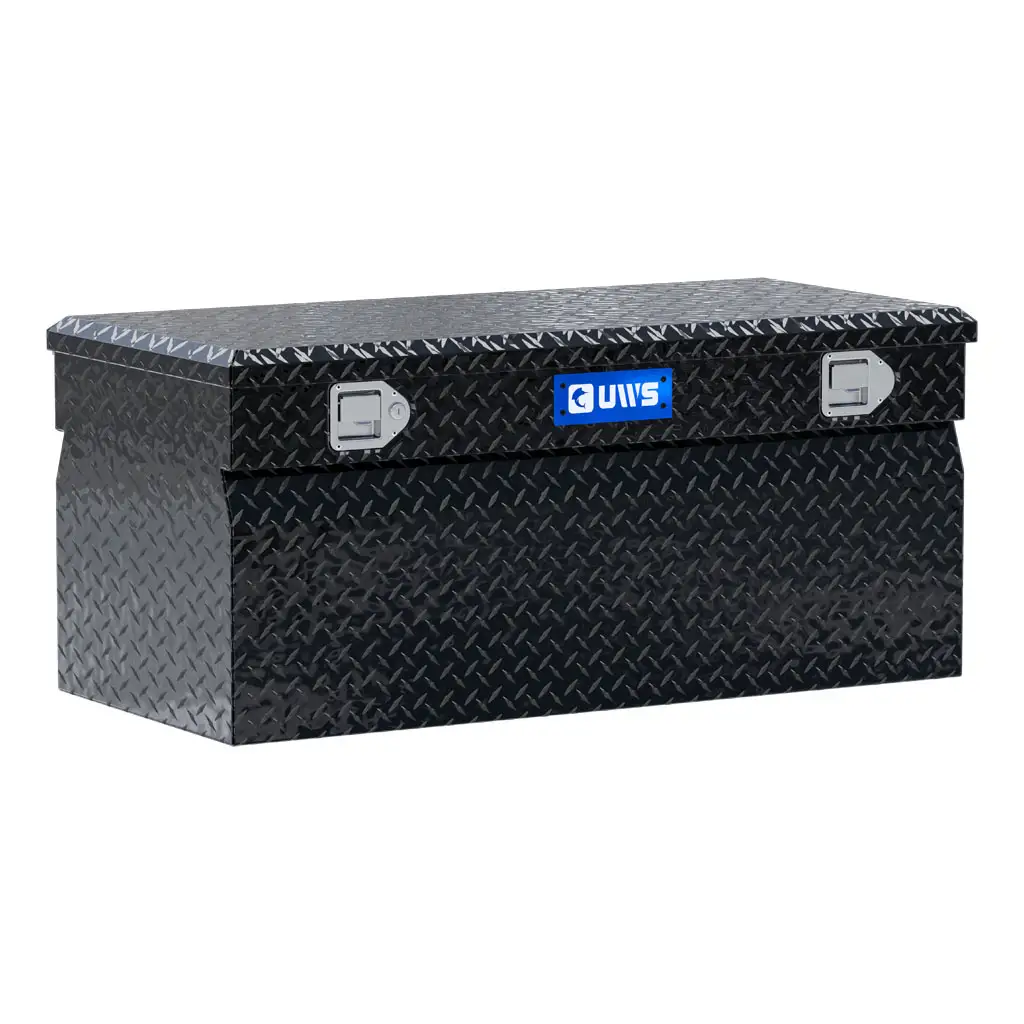 Gloss Black Aluminum 42" Wedge Utility Chest Box (LTL Shipping Only)Loading Price....
-
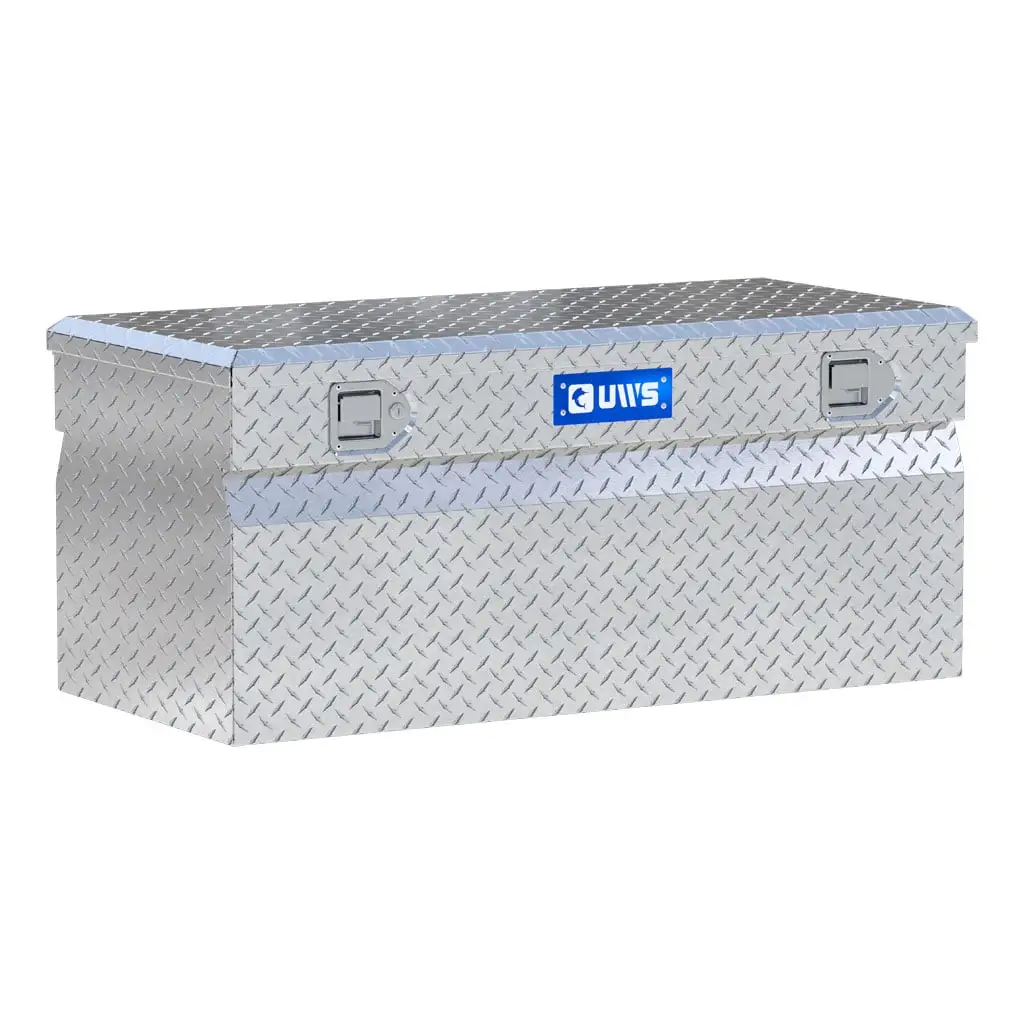 Bright Aluminum 42" Wedge Utility Chest Box (LTL Shipping Only)Loading Price....
-
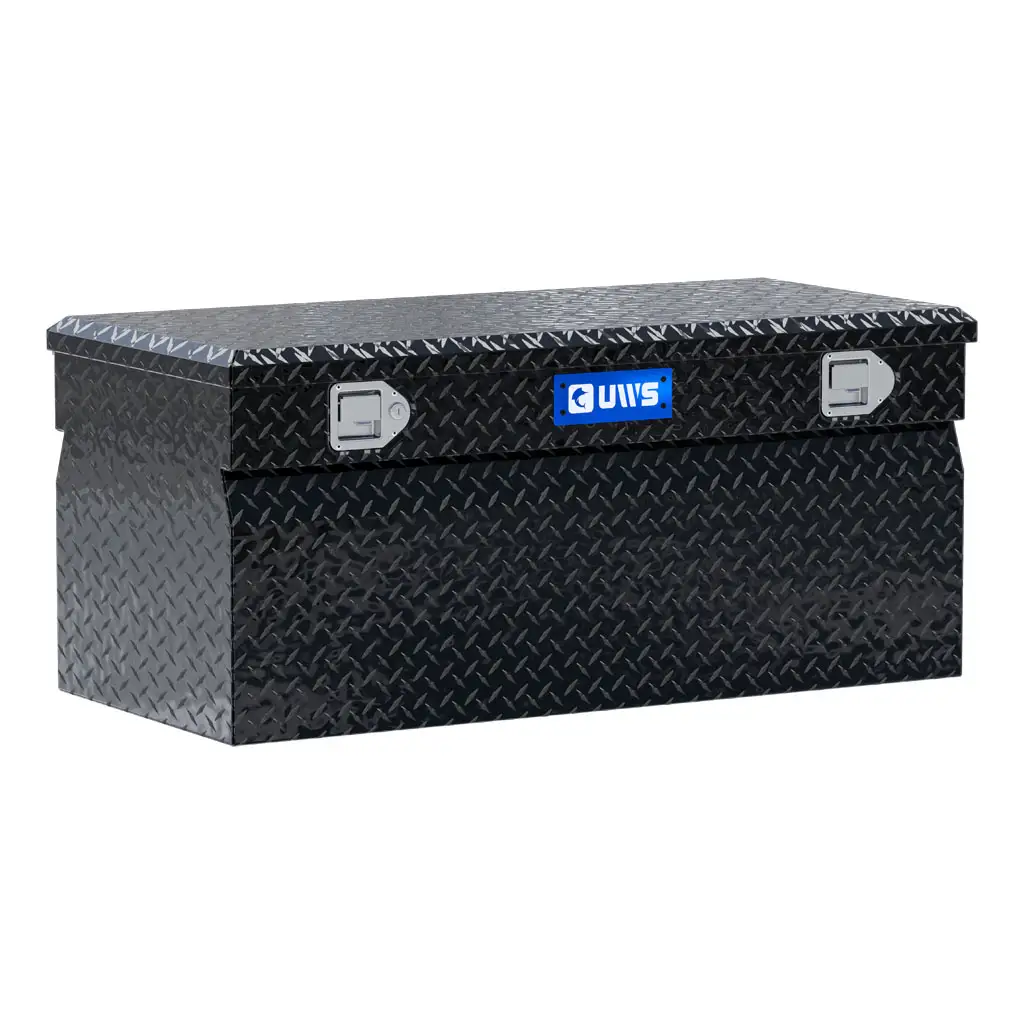 Gloss Black Aluminum 42" Utility Chest Box (LTL Shipping Only)Loading Price....

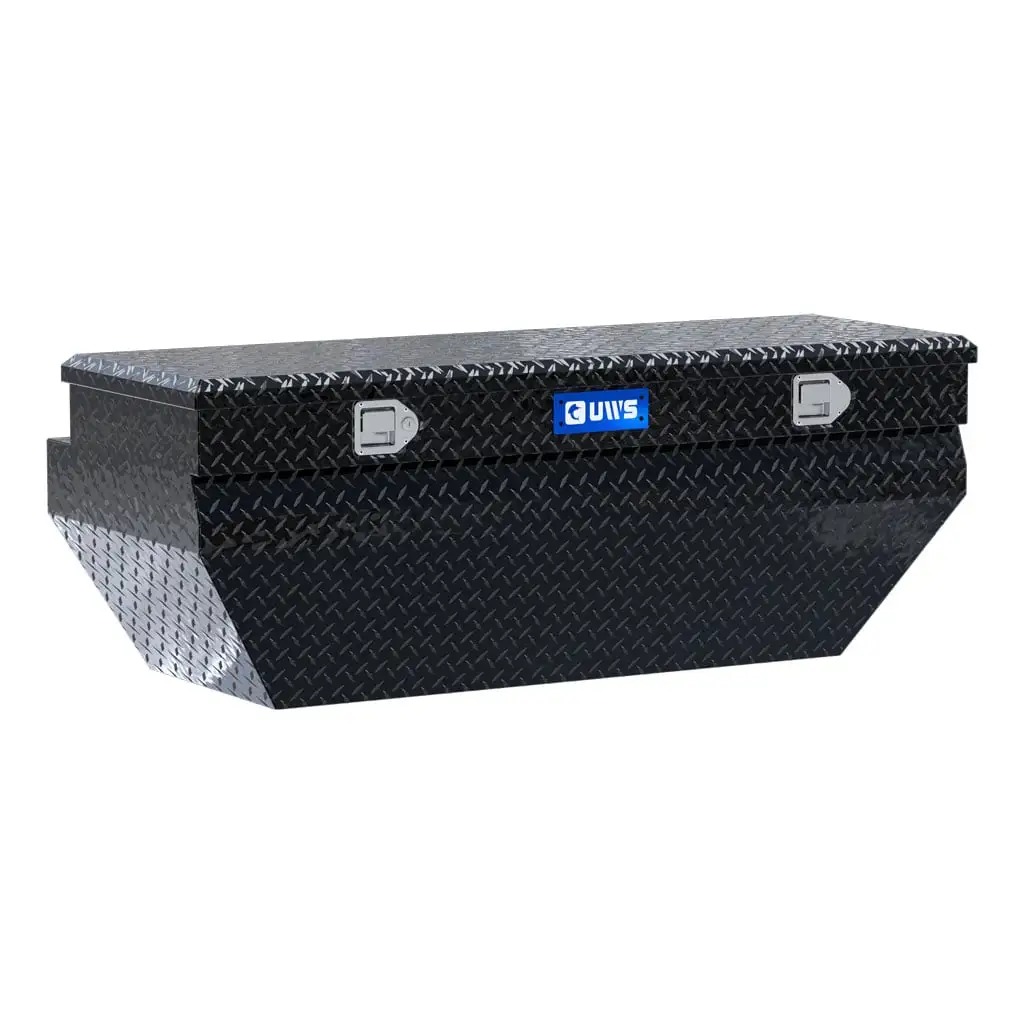
5. Wheel Well Tool Boxes
Wheel well tool boxes transform otherwise unused space around the wheel wells into valuable storage.
They're excellent for storing:
- Ratchets
- Gloves
- Tow straps
- Small tools
- Emergency equipment
Because they occupy space that is often unusable anyway, they improve organization without significantly reducing cargo capacity. Many owners pair them with crossover or chest tool boxes to create a comprehensive storage system.


Typical Tool Box Setups by Use Case
No single tool box is ideal for every truck owner. The best storage solution depends on how the vehicle is used, the type of equipment it carries, and how frequently that equipment needs to be accessed. A contractor who reaches for power tools dozens of times a day has very different storage needs than a hunter loading camping gear for a weekend trip or a fleet manager trying to standardize multiple service vehicles.
Choosing the right tool box is about more than maximizing storage capacity. It's about creating an organized workflow that saves time, protects valuable equipment, and makes the truck more efficient to use. Factors such as cargo size, weather exposure, bed length, and security requirements all play a role in determining the best setup.
While every truck owner's needs are unique, certain storage solutions have become popular within specific industries and applications because they align with the way those vehicles are used.
1. Construction & Trade Pickups
Construction professionals often transport:
- Hand tools
- Power tools
- Batteries
- Fasteners
- Measuring equipment
Large crossover tool boxes combined with organizers or additional storage systems help create an efficient mobile workspace where tools remain secure and accessible throughout the day.
2. Agricultural & Rural Pickups
Farm and ranch trucks frequently carry:
- Chains
- Recovery gear
- Fence repair supplies
- Tie-down straps
- Maintenance tools
These trucks often operate in harsh weather and dusty environments, making durable, weather-resistant storage particularly important. A locking tool box protects equipment while keeping essential supplies readily available.
3. Fleet & Service Pickups
Fleet managers value consistency as much as storage capacity.
Standardized storage layouts allow technicians to locate equipment quickly regardless of which truck they are assigned. This consistency reduces downtime, simplifies inventory management, and improves overall productivity across an organization.
Many fleet trucks combine crossover boxes with additional side storage or shelving systems to maximize efficiency.
4. Personal & Recreational Pickups
Not every truck owner needs a commercial-grade storage solution. Many simply want a secure place to keep everyday essentials organized and protected.
Common items include:
- Jumper cables
- Tow straps
- Camping gear
- Fishing equipment
- Emergency supplies
For these owners, a compact crossover or low-profile tool box provides the versatility needed for weekend adventures while maintaining the truck's everyday practicality.
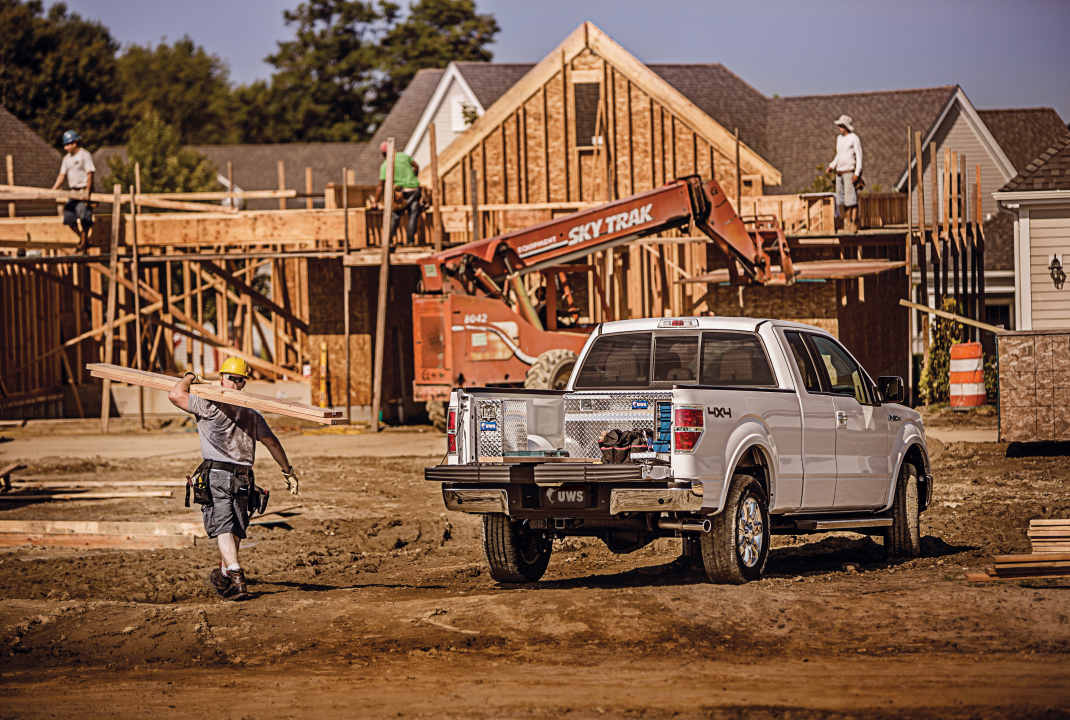
Pickup Trucks vs. Other Light Commercial Trucks
Compared with cargo vans and box trucks, pickup trucks offer exceptional flexibility. Their open beds allow owners to transport oversized materials, install aftermarket accessories, and adapt the vehicle for changing needs over time.
Advantages include:
- Open-bed versatility
- Wide aftermarket support
- Easier towing
- Modular storage solutions
- Better recreational capability
Pickup trucks also excel at serving multiple roles. A single vehicle can commute to work during the week, haul landscaping supplies on Saturday, and tow a camper on Sunday.
However, pickups are not always the best solution for every application. Cargo vans and box trucks provide enclosed storage that better protects sensitive equipment and inventory from weather and theft. Businesses that transport expensive products or require organized shelving systems may benefit more from enclosed commercial vehicles.
Ultimately, the right choice depends on how the vehicle will be used, the type of cargo being transported, and the owner's priorities.
Practical Tips for Choosing a Pickup & Tool Box Combination
Selecting the right pickup and storage solution starts with understanding your daily workflow rather than simply choosing the biggest truck or largest tool box available.
Before making a purchase, consider:
- Your typical payload requirements
- Your towing needs
- Bed length compatibility
- Daily access to tools
- Weather exposure
- Security requirements
- Future equipment needs
It's also important to think about how often equipment will be used. Frequently accessed tools should be stored where they can be reached quickly, while seasonal or emergency items can occupy less convenient locations.
The best setup is one that supports your workflow rather than creating obstacles. A thoughtfully designed combination of truck and storage accessories can improve organization, protect valuable equipment, reduce downtime, and make everyday tasks easier.
Final Thoughts
From compact pickups to heavy-duty commercial trucks, every truck category is designed to meet a specific set of demands. Understanding the different types of trucks, how they're classified, and what they're built to accomplish makes it easier to select the right vehicle for work, recreation, or everyday life.
Among all truck categories, pickup trucks remain the most versatile thanks to their combination of passenger comfort, hauling capability, towing performance, and unmatched customization potential. Pairing a pickup with the right truck tool box or storage solution further expands its functionality, transforming it into an organized and efficient workspace that can adapt to changing needs for years to come.
FAQ
1. What are the main types of trucks?
The primary categories are light-duty, medium-duty, and heavy-duty trucks. Within these categories are pickup trucks, box trucks, flatbeds, dump trucks, semi-trucks, and specialized vocational vehicles.
2. What defines a pickup truck?
A pickup truck combines an enclosed passenger cab with an open cargo bed, allowing it to transport both passengers and oversized cargo while supporting numerous aftermarket accessories.
3. What is the difference between truck classes?
Truck classes are based on Gross Vehicle Weight Rating (GVWR), which represents the maximum allowable weight of the vehicle and its contents. The system ranges from Class 1 through Class 8.
4. What is the most common truck tool box?
The crossover, or saddle, tool box is the most common design because it provides substantial secure storage while preserving much of the truck bed for cargo.
5. Which tool box is best for work trucks?
For many contractors and tradespeople, a crossover tool box offers the best combination of capacity, accessibility, and durability. Depending on the job, side-mount, chest, or wheel well tool boxes may also be excellent options.